Hand performance in product ads contains a common contradiction: the more fluent the action looks on set, the harder it can become for the audience to understand. A hand model may open, rotate, and press a product in half a second. Before the mechanism is recognized, the result has already appeared. Effective hand performance is less about making hands look beautiful and more about making approach, contact, force, and result readable while preserving the product’s weight, resistance, and intended use.
The hand explains product cause and effect
A product shot without hands mainly describes appearance. Once a hand enters, the image begins to explain how a person causes the product to change. Finger placement, the moment force begins, and the timing of the product response are information rather than decoration.
If a finger covers a button before pressing it, the viewer sees only the result. If the product is already active and the hand adds a touch afterward, the action loses causality. The performance can compress the operation, but it cannot remove the decisive point of contact.
Divide one fluent action into four readable phases
Approach and contact identify the target
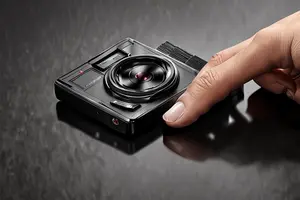
As a hand enters the frame, the viewer should be able to anticipate where it is going. An index finger approaching a control, a thumb preparing to release a latch, or a palm aligning with a handle directs attention to the mechanism. When a hand drops from outside the frame onto the middle of the product, the shot shows contact without intention.
Contact needs a brief but legible moment. It does not require a complete pause. A change of speed, fingertip pressure, or a small sound can mark the event. The viewer needs to understand which action triggered the response.
Force and result must remain connected
Pressing, pulling, rotating, and folding involve resistance. Finger joints, wrist angle, and product displacement should express that resistance together. If a light touch makes a substantial component fly open, the product feels hollow. If a light cover needs the entire hand, the operation appears unnecessarily difficult.
After the force, give the product a readable landing: the lid fully opens, the connector seats, the light activates, or the structure locks. When the beginning and result are clear, the fastest middle portion can be shortened. This follows the principle of product action match editing: viewers track a complete transfer of motion, not just an attractive cut.
Expert fluency can remove information a new user needs
Experienced users naturally combine steps. A thumb may unlock a device while lifting it, and the feature is already active by the time the palm turns toward camera. The behavior is authentic, but it may not serve someone seeing the product for the first time. Advertising performance should preserve confidence while opening up the new information slightly.
The answer is not to make every movement slow. Assign speed by phase: approach can be quick, decisive contact stays clear, force remains believable, and the result receives enough reading time. The performance remains efficient without allowing fluency to swallow the mechanism.
Finger placement serves product recognition before hand styling
A natural grip often covers a logo, connector, indicator, or material transition. Spreading every finger to reveal these features creates an obvious pose. Instead of telling the performer never to block anything, define the areas the shot must reveal and build the grip path around them.
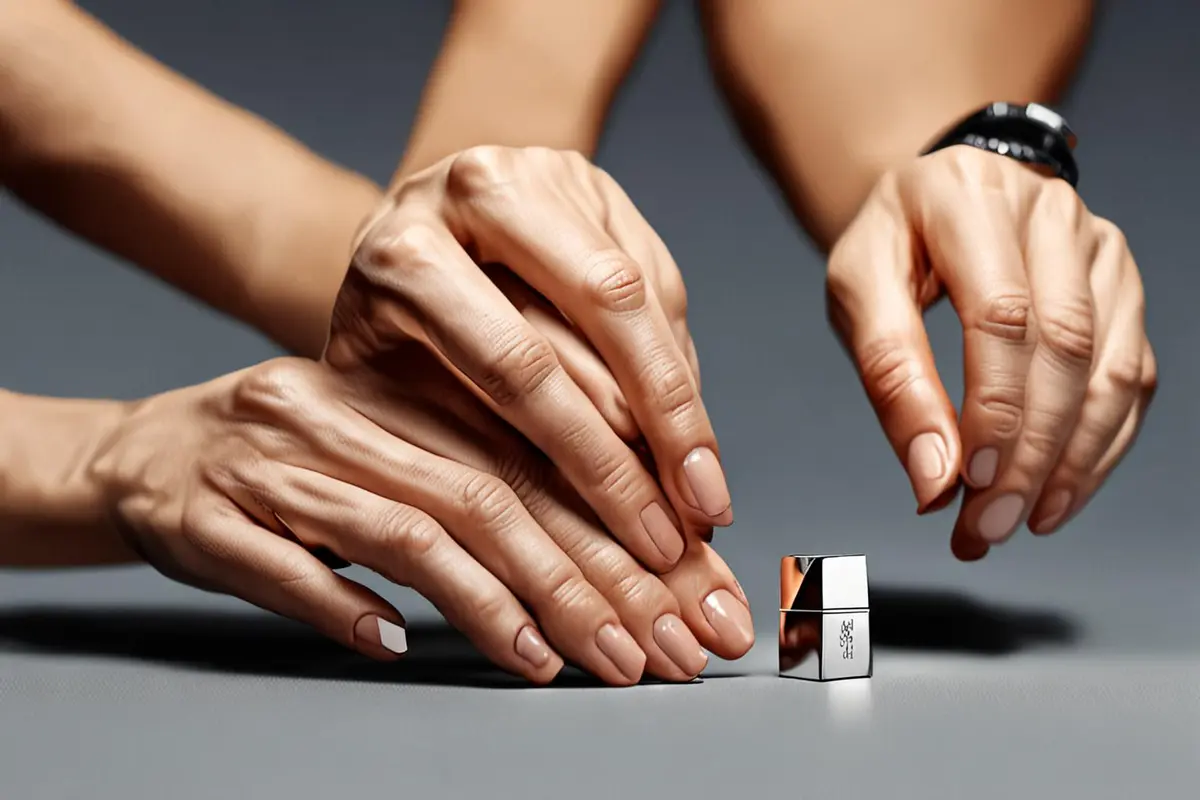
The hand can enter from the back or edge, place the thumb in a low-information area, use the palm to carry weight, and let fingertips trigger the feature. On small products, nails, jewelry, and skin highlights can easily overpower the object. Hand contrast should usually sit slightly below product contrast unless touch or personal care is the actual subject.
Composition also needs room for the action. The principles of negative space in product ads apply here: empty areas hold not only captions, but the complete route of a hand entering, lifting, and leaving.
Grip force and wrist posture change perceived difficulty
CDC and NIOSH ergonomics guidance identifies force, repetition, and posture as factors in real tasks. OSHA guidance also recommends tools that fit the user and wrist positions that remain closer to neutral. These sources concern workplace safety rather than advertising effectiveness, but they reveal a practical production issue: an elegant pose may require extra force or an unnatural wrist angle in real use.
An ad should not pretend that a two-handed operation needs only one finger, or twist a wrist into an implausible position just to reveal the product. When the product genuinely requires force, show it through tightening joints, forearm involvement, a stabilizing second hand, and a small product reaction instead of exaggerated facial strain.
Hand size also changes perceived product scale. Casting different hands can make the same device look compact, professional, or substantial. There is no universal ideal hand shape; target users, authentic grip, and product positioning should determine the choice together.
Horizontal and vertical cuts need different hand paths
A 16:9 frame can hold a full forearm entering from the side. A 9:16 crop is more likely to remove the start of the action. When a master is designed only for horizontal use, the vertical version may contain a hand that appears suddenly with no visible approach. Place decisive contact and result inside the shared safe area, then redesign the forearm and exit direction for each aspect ratio.
Close shots also need to keep the hand from pushing the product out of focus. Perspective enlarges fingers quickly as they move toward camera, and a fingertip can cover the entire object. Use that change when touch is the subject. When explaining a control or connector, move the hand closer to the image plane and preserve a stable period of product recognition.
Rehearsal means understanding the product, not memorizing a gesture
Before filming, the hand model or performer should complete the real operation several times instead of only copying a director’s demonstration. Check opening resistance, trigger location, accidental touch areas, fingerprints, and fatigue during repeated takes. Prop state must remain consistent as well. Changes in latch tension, magnet strength, or lubrication can alter the rhythm of the same movement.
Record at least one take at authentic speed, then adjust for framing and editing rather than beginning with a slow-motion pose. When several performers share the product, the principles of group choreography in ads help assign different jobs to each hand instead of letting every movement compete for the object.
The best hand performance reveals the product first
Beauty, skincare, and jewelry films may treat the hand itself as an aesthetic subject. Tools, appliances, consumer electronics, and medical products depend more heavily on clear operation and believable effort. There is no single correct speed or pose. The performance must answer which product action most needs to be understood.
If your product video needs hand-model rehearsal, macro camera positions, action editing, and horizontal and vertical framing designed together, ONCE can separate each approach, contact, force, and result during its TVC and brand video production process.