Shadows in product ads are often treated as a shortcut to visual sophistication: add one hard light, place a blind or plant pattern on the background, and the frame gains instant depth. Their real value is more specific. A shadow can tell the viewer where the light comes from, how far the product sits above a surface, what time a scene suggests, and which parts of the product silhouette matter. When it has no relationship to shape, action, or space, it becomes decoration rather than information.
Treat the shadow as a second product outline
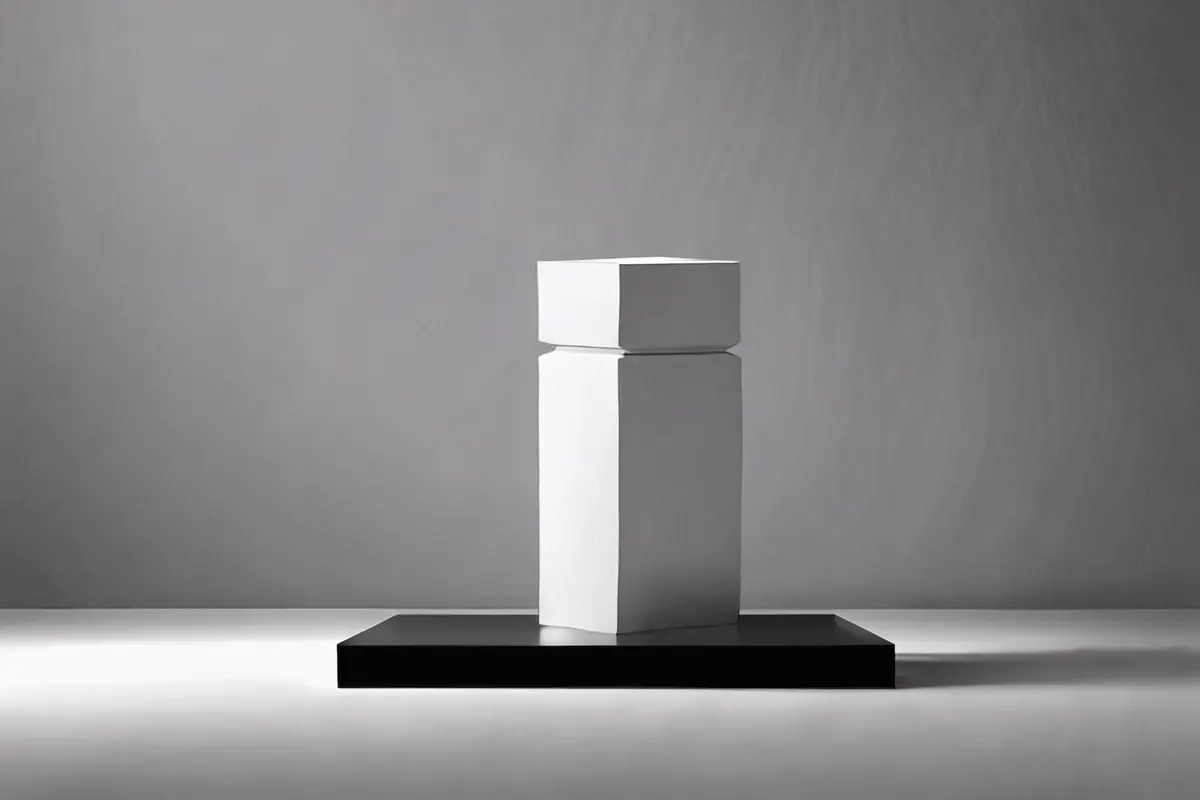
The product creates one outline; its cast shadow creates another. If they sit too close together, the edge can look dirty. If they separate too far, the shadow may read as an unrelated graphic. Before lighting, decide what the second outline should reveal: the tall proportion of a bottle, the hinge of a device, or the state change created when a product opens, lifts, or rotates.
Nikon describes shadows as a way to create dimension in photographs. Broncolor product examples use hard shadows to emphasize bottles and the fine structure of a design chair. In moving commercial images, the same principle must survive beyond the hero still. Once the product moves, the shadow must continue to belong to the same space.
Shadow edges explain the source, not just a hard look
A small, distant source produces clearer edges
A source that is small relative to the product and placed farther away is more likely to create a defined transition between light and dark. Fine structures can remain visible in the cast shape. Broncolor’s official explanation of hard, soft, and diffused light stresses that hardness depends on the source’s relative size and distance. The same fixture can behave differently when its position or modifier changes.
A hard shadow can express geometry, cuts, speed, and strong sunlight. It also reveals surface irregularities, dust, and packaging creases. The more precise the shadow becomes, the more demanding the product cleaning, positioning, and retouching become.
The receiving surface changes the edge as well
When a product sits close to the background, its cast shape usually stays tighter. As the product or gobo moves away from the receiving surface, the edge spreads and the shape changes. If blinds, leaves, or a geometric cut need to remain recognizable, control the distances among the light, mask, and background separately. Power changes exposure; spatial relationships determine the shadow.
A shadow can suggest time without becoming a clock
Long diagonal shadows suggest a low sun angle. Short, steep shadows feel closer to a high source. A moving window pattern can imply time passing as the same product moves from morning to afternoon or evening use. These are visual associations rather than precise proof. Without environmental cues, one long shadow does not automatically establish 6 a.m.
When a story moves from a workbench to a living room, the shadow can change direction before the product enters the new space. If the product stays still while the background shadow suddenly reverses, the viewer will sense a lighting discontinuity. Time changes work best when shadow length, direction, color temperature, and ambient brightness evolve together.
Contact shadows determine whether the product has weight
The place where a product meets a surface needs a small, believable contact shadow. If it is too dark, the object looks glued down. If it disappears, the object appears to float. In white cycloramas, composited environments, and AIGC backgrounds, the contact point often reveals spatial errors before the larger cast shadow does.
Shadow offset also implies height. When a product lifts, the cast shape should move with its height, the light angle, and the receiving surface. Sliding one static shadow beneath a moving product weakens the sense of weight. As with motion blur and product weight, viewers do not calculate every physical parameter, but they quickly notice when motion cues disagree.
Protect product recognition before making the shadow dramatic
Labels, ports, buttons, and material transitions carry the main information in a product shot. A cast pattern should not cover them. Let the shadow cross the background and tabletop, then reduce its contrast as it approaches the product. A separate fill can preserve label readability while keeping a hard shape behind the hero object. The shadow describes space; the product delivers information.
Transparent, mirrored, and highly reflective products combine shadow, reflection, and refraction. Establish the product outline first, then add the cast shape. One hard source rarely solves every surface at once. The principles in lighting transparent products help separate edge definition, surface gradients, and background treatment.
Practical and composited shadows solve different problems
A practical shadow reacts naturally. When the product moves, a performer crosses the light, or smoke and fabric change, speed, deformation, and occlusion happen together. This suits tactile scenes and continuous action, though it adds coordination among lighting positions, movement paths, and version framing.
Compositing helps when a campaign needs several aspect ratios, market versions, or precisely repeatable background patterns. Four properties must remain coherent: source direction, edge softness, contact position, and movement speed. A shadow cannot move before the object that creates it, and a light direction designed for 16:9 should still make sense after a 9:16 crop.
A reliable hybrid captures the contact shadow and main spatial relationship on set, then adjusts the background pattern in post. This keeps product weight while allowing negative space to change across horizontal, vertical, and still versions. See negative space in product ads for the relationship between subject placement and usable empty areas.
Some products do not need a beautiful hard shadow
Medical procedures, precise connectors, pale packaging, and products that require accurate color may benefit from softer, lower-contrast shadows. If the creative idea depends on transparency, cleanliness, or lightness, a strong cast pattern can introduce pressure and clutter. Shadow design should serve the product value instead of forcing every object into the same late-afternoon aesthetic.
A useful product-ad shadow lets the viewer understand shape, position, and moment before noticing the technique. If your campaign needs lighting tests, product action, and horizontal and vertical framing designed together, ONCE can define shadow direction, edge, and landing during its TVC and brand video production process.