Your production partner in China has delivered approved product images, and a tool has supplied alt text for every file. The spreadsheet looks complete. But the same photograph appears in a product gallery and in a clickable campaign feature. Does one saved description finish both jobs?
ONCE recommends reviewing each image’s actual use. Procurement needs to distinguish the facts supplied with photography, the editorial decision made for a page, and the implementation that a customer encounters. AI can assist the wording without deciding all three.
Current documentation supports assistance, not automatic acceptance
Shopify’s media editor guidance says it may suggest AI-generated alt text for images without it; merchants can accept, edit or replace the suggestion. Its alt-text help page says accepting a suggestion saves it to the file. Neither page provides a publication date. Both were checked November 3, 2026; this is not presented as a launch today.
The W3C WAI alt decision tree, updated May 13, 2024, makes purpose central. Informative photographs convey relevant meaning; an image essential to understanding a link or button needs the destination or action conveyed. Decorative or redundant uses can call for an empty alternative. Those categories require page context.
These sources support a practical distinction between recognizing an image and editing a page. They do not establish that AI always fails, that filled fields make an entire store accessible, or that a completed spreadsheet will improve rankings or sales.
Start with the buyer’s information task
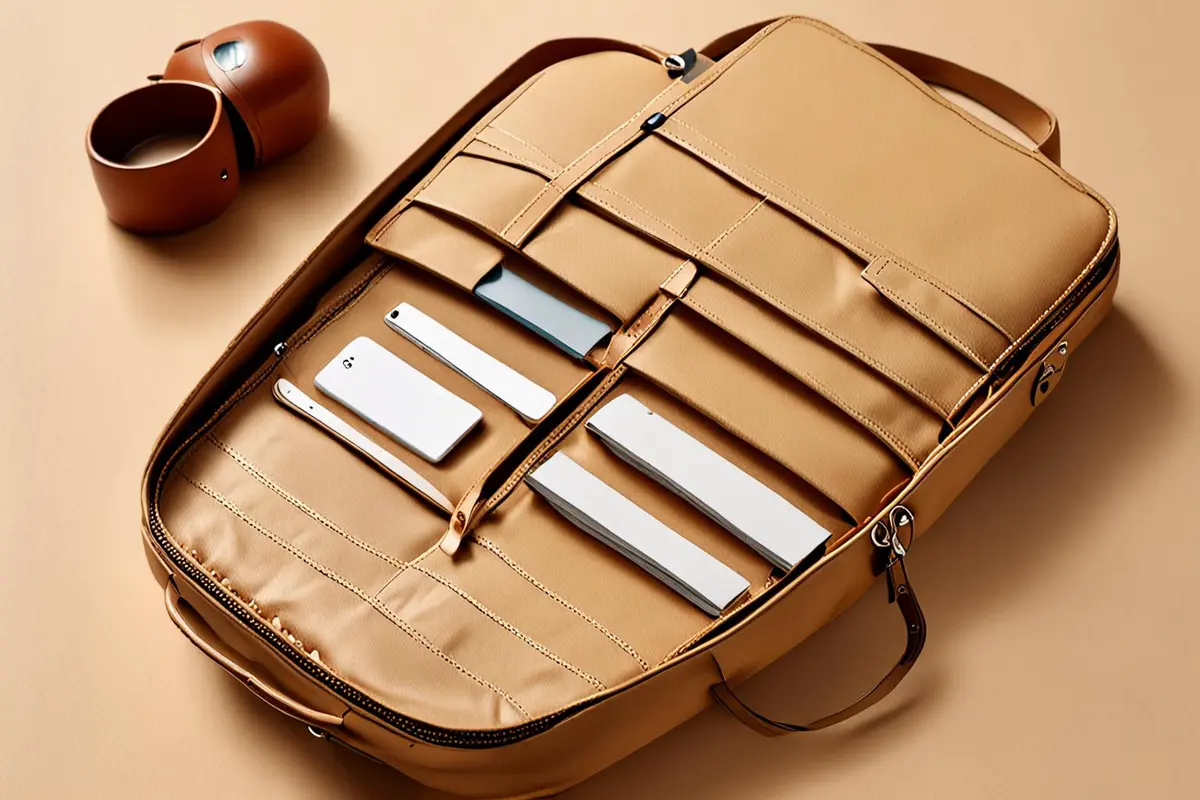
Imagine a travel brand selling an organizer made by a Chinese supplier. Its photograph shows the open bag alongside a charger and cables. This is an invented briefing example, not an observed AI output or customer project.
A description may identify objects visible in the photograph. It should not silently turn props into included accessories. Where confusion is possible, clarify the offer in ordinary customer-facing product content as well; an important correction should not live only in alt text.
Next ask why the image appears at that location. If it explains internal compartments, a list of colors and background objects may miss the useful information. Do not infer capacity, materials or performance ratings from appearance.
If the photograph alone is a link, review its destination and accessible naming with the implemented component. If sufficient text already exists within the same link, the treatment may differ. A product-description sentence is not automatically an appropriate action label.
Use an ONCE image-use card
This is a proposed project record, not an additional Shopify feature. Keep one row per actual placement, identifying the image version, product and variant, page location, purpose, adjacent copy, interaction and destination, verified facts, proposed alternative, implementer and review result.
| Review | Question to resolve | Required input |
|---|---|---|
| Product facts | Which variant is shown, and which accessories are props? | Brand product owner and production partner |
| Page purpose | Does the image explain something, trigger an action or decorate? | Page editor or designer |
| Text relationship | What is already explained nearby, and what remains necessary? | Copy editor and implementer |
| Published result | Does the actual page use the intended image and wording? | Implementation and acceptance owners |
Approve facts before polishing language
The production team can identify the image and describe its visible contents. The brand confirms the product, variant and offer. The page editor establishes purpose. Bring the AI draft into that review, remove speculative features and irrelevant keywords, and revise for the specific use. Unclear objects should prompt a source check rather than an invented answer.
A Chinese internal product name may also need a different, natural English expression for the customer. Review the localized wording rather than simply translating the working label. This article does not assume that any app synchronizes every language or page automatically.
Check the implementation as a separate deliverable
Ask the web team how the current theme and component expose image alternatives and control names. Appropriate screen-reader and keyboard checks should examine understanding and operation, with the page, language, environment and issues recorded. Automated checks can help, but a nonempty field is not a substitute for judging purpose. No live-store or assistive-technology test was performed for this article.
Where one reused file needs different treatments across pages, have the implementation team assess how component or content configuration can represent them. Do not promise that a single file edit will make every placement correct without knowing how the store is built.
Commission the missing work
Scope three responsibilities: photography and verified product information, editorial treatment for each use, and implementation with checks. One supplier may cover all three; separate suppliers can also cooperate. Acceptance should name the result each party delivers.
Photography alone does not imply a store-wide theme change. Automatic text generation does not imply contextual review of every placement. Quote editing and checks against agreed uses and languages, rather than multiplying every photograph by an assumed universal unit price. Ten uses of one image are not ten shoots, but can require different editorial decisions. Decorative uses do not necessarily need elaborate descriptions.
This is a scoping approach, not ONCE pricing or a market average. If the missing ingredient is offer information or page configuration, fix that first. Consider new photography when the image itself cannot communicate the required information. Related briefs can draw on the ONCE production collection and marketing collection.
Run a small, reviewable handover
Take one approved product image and locate three actual uses. Complete the use cards, compare what can be reused and what must change, then retain the approved file, wording and release-check record.
For ONCE’s progression toward recurring content services, those decisions can become maintainable product-content assets beyond a single photography job. Reduced rework, better margins and commercial growth remain outcomes to validate in real projects, not results claimed here.
The official documents linked above were checked November 3, 2026. The image-use card and scenario are ONCE’s original recommendations. The AI-generated cover is an illustration of the production theme, not a customer photograph.