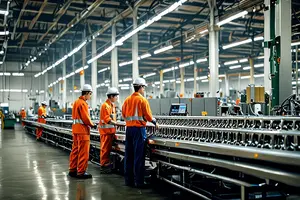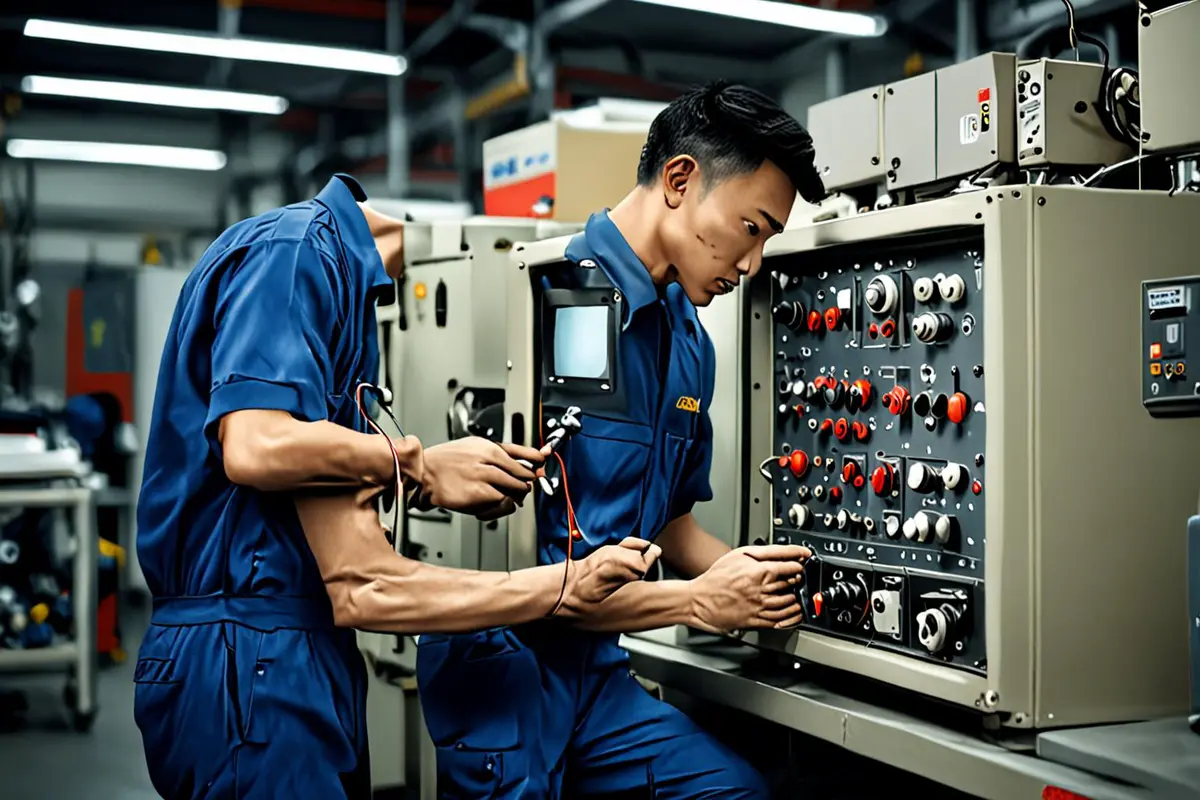
Industrial brand films often show machines at full speed: robot arms repeat a pick, conveyors move under load, and indicator lights flash in a steady rhythm. These images communicate scale and throughput, but they do not always answer a longer-term question. After years of use, how is the equipment inspected, understood, and returned to a reliable state?
Maintenance scenes answer that question during the moments when the machine is still. A panel opens. Wear becomes visible. An engineer uses sight, sound, and tools to judge condition. The system then returns to work. This does not have to suggest that the equipment has failed. It can show how a company cares for capability after it has been delivered. When filmed accurately, a planned stop can say more about long-term reliability than another high-speed montage.
Maintenance is a story of continuity, not a failure scene
A failure story usually begins with surprise: equipment stops, people respond under pressure, and production eventually returns. A maintenance story begins somewhere else. The stop has a known reason and a defined window. People know what they are checking and how completion will be confirmed. The emotional tone can remain calm because the subject is not rescue. It is sustained understanding.
A wrench and a serious face are not enough. Viewers need to see three relationships: where the machine belongs in production, how the engineer judges its condition, and how the system rejoins work afterward. Together, these relationships turn a technical task into brand meaning.
Production planning determines whether a maintenance window can be filmed at all. This article begins after that permission exists and asks a different question: how can the scene make long-term reliability visible?
Show the moments before the stop
A still machine can be misread. If the edit begins after everything has stopped, viewers may assume the plant has no work, the machine is broken, or an incident has just occurred. A maintenance sequence needs a short prelude that makes the stop feel deliberate.
The prelude does not require a long explanation. An operator completes the last unit and records the current state. The interface enters an approved maintenance mode. Tools and replacement parts arrive at a defined station. People confirm their positions before moving components stop. These details make it clear that production is entering another professional phase rather than being interrupted by surprise.
The most useful image may not be the stop button. It may be the preparation already in place. The right tools, an ordered work area, and clear positions reveal organizational ability. One or two wider shots can preserve these relationships instead of reducing the sequence to disconnected hand close-ups.
Real traces of use make reliability more than a slogan
Corporate films often polish equipment until it looks unused, removing time along with dust. Maintenance allows controlled evidence of real work to remain: normal lubricant on a moving part, wear on a fixture contact surface, dust on a filter, or the softened handle of a frequently used tool. These traces show that the machine has a working life.
They should not be dramatized. Adding dirt, oil, or scratches for the camera can make routine care look like a loss of control. Cleaning away every sign of use leaves the engineer with nothing to inspect. The site lead should first identify which conditions are normal and which cannot be shown, then the crew can choose distance and light.
Side light can reveal surface change without turning a small texture into an apparent crack. Macro photography can explain a contact point, but it needs a medium shot that locates the detail within the machine. Credibility comes from continuous scale: establish the system, move into the component, and return to the whole.
Professional judgment appears before the tool moves
Maintenance is easily reduced to a tool montage: loosen, remove, replace, tighten. The more revealing moment often comes first. An engineer pauses, compares two states, listens after a run, checks a reading, and only then decides what to do. The pause does not slow the film. It tells viewers that the action follows judgment.
Looking needs a clear object
The person cannot simply look down and appear to inspect. The shot should show the object of attention: a seal edge, a connection, a surface color, or a component returning to a reference mark. Cutting from the engineer's gaze to a specific condition communicates experience more clearly than a generic close-up of tools.
Listening can become part of the diagnosis
Some judgments happen during low-speed operation, an unloaded cycle, or the moments after the machine stops. An engineer listening does not automatically imply an abnormal sound. It can show that the machine has a familiar rhythm that can be compared. Record the real environment first and let technical staff confirm what may be shared. Do not add exaggerated grinding or alarms merely to create industrial drama.
Measurement must connect a question to a result
A measurement shot should reveal more than a changing number. Viewers need to understand where the measurement happens, how the tool relates to the component, and what follows. When the value itself is confidential, framing, focus, or masking can protect it while preserving the logic of locate, measure, record, and confirm.
A still machine needs a different camera rhythm
When equipment runs, its movement gives the image variation. Once it stops, crews may compensate with too many slider moves, pans, and rapid cuts. The scene becomes visually busy while the maintenance action becomes difficult to follow.
A locked-off shot provides a stable reference. It keeps the entry of a hand, the opening of a panel, the travel of a component, and the return to position directly comparable. In industrial maintenance, that reference also protects process continuity.
Camera movement still has a role when it reveals new information. Moving along an opened housing can connect the complete machine to its internal structure. Following an engineer from the machine to a record station can connect physical work to management. A camera that simply circles a stopped machine describes form, not maintenance.
Light must reveal structure while preserving the workplace
Maintenance areas can be darker than the main line, and interiors combine deep cavities, reflective metal, and dense cabling. Flooding everything with one strong lamp removes depth and can make a working environment look like a display case.
Start with the site's existing light direction, then use small fixtures or reflectors to reveal the exact area of attention. After a panel opens, the relationship between inside and outside should remain believable. When a hand enters the machine, the hand, tool, and contact point should all remain legible. A beautiful highlight on metal is not enough.
Light should remain consistent for the return-to-state shot. A dramatic change between before and after can make the two conditions look like different machines or different days. Our article on physical weight and contact in product films explains how objects settle into surfaces. Maintenance scenes use the same visual discipline to show that structures return to an intelligible relationship.
Sound keeps the workplace alive after the stop
A factory does not become silent when one machine stops. Other lines, ventilation, footsteps, and tools on a bench continue around it. These layers prevent the maintenance area from feeling like a closed studio and keep the stopped equipment inside a working production environment.
The sound can form a restrained arc. The operating rhythm recedes. Close tool and contact sounds become clearer. After confirmation, the machine rejoins the wider environment. The goal is not an oversized startup impact. Each stage should sound as if it belongs to what the image shows.
When the real site depends on warnings, instructions, or protective equipment, filming must follow the site's established rules. Recording is never a reason to remove necessary protection or suppress an important signal. A film may reorganize sound, but it should not rewrite the actual safety relationship.
Editing should preserve the result of maintenance
If a sequence shows only opening and replacement, it ends before the most important information. Viewers also need the return: the panel closes, tools leave the work area, the record is completed, and the machine reaches an approved state. The result does not have to be full-speed operation. It may be a restored indicator, a confirmed travel range, or a completed handover.
A small adjustment can still form a complete story. The engineer notices a difference, confirms its cause, makes a correction, and checks another state for the result. This differs from a recoverable mistake in a product ad, where the user's error explains product value. Industrial maintenance shows how people understand a system and leave the change in both the record and the machine.
Do not combine different machines, revisions, or maintenance states into one apparently continuous action. Similar housings do not guarantee identical procedures. When a complete step cannot be filmed in one place, use a clear section change, approved graphic, or explanation instead of manufacturing false causality through continuity editing.
Some maintenance actions should never be repeated for a film
Energy isolation, confined spaces, heat, pressure, chemicals, cleanrooms, and other specialist conditions must remain under the site's existing procedures and authorized personnel. A crew should not ask someone to skip a confirmation, remove a guard, or perform a real service action differently because another angle looks better.
Confidentiality also changes the visual language. If internal structures, customer materials, interface values, or special tools cannot be public, the film can turn toward collaboration, external inspection points, record keeping, and the relationship between opening and return. A scene can communicate professionalism without exposing every detail. Generated imagery and unrelated close-ups should not pretend to show a real internal structure.
If the machine is in an unresolved abnormal state, the maintenance conclusion is not approved, or the people involved do not want public exposure, the sequence does not belong in the brand film yet. Reliability includes knowing what can be explained, what needs to wait, and what should remain internal.
Restarting the machine is an ending, not the whole answer
A complete maintenance sequence does not need full-speed production as its only climax. The engineer returns the tools, the operator confirms state, the record is updated, and the machine rejoins the system at an appropriate rhythm. The audience sees a cycle: production creates value, maintenance understands condition, and return-to-state extends capability.
An industrial brand film can therefore show more than how much equipment a company owns. It can show how people live with that equipment. When preparation, traces, judgment, action, and result remain clear, a few still minutes can express long-term reliability more honestly than another wall of hero shots.
If you are planning a factory film, industrial brand story, or corporate technology film, ONCE corporate film production can map production windows, maintenance actions, engineering judgment, and return-to-state into the storyboard without disrupting real work.