The safest choice in a product ad seems to be showing the product clearly, completely, and centrally from the first frame. Yet when every shot rushes to announce the hero, the image can lose its sense of space and discovery. Viewers understand the outline immediately, but they have little reason to keep watching the next second.
Foreground occlusion offers another option. A doorframe, a shoulder, the edge of a package, steam, or a soft plant shape can briefly cover part of the product. The purpose is not to hide information for its own sake. It is to control the order in which information arrives. Material, reflection, sound, or a partial action can enter first, followed by the complete product at the right moment. This works only when the occlusion has a clear narrative job, rather than serving as an automatic layer of cinematic style.
Foreground changes the order in which the product is seen
A clean hero shot often presents silhouette, color, logo, and environment at once. It is complete, but it may also be fully read in an instant. Foreground separates those signals. A highlight appears before a hand approaches. A mechanism starts before the body emerges from behind a person. Packaging moves away before the front face is finally revealed.
That delay needs a payoff. Whatever the shot withholds should become clearer later, and the new information should matter more than the first glimpse. If a logo is covered, the reveal can coincide with use. If a port is hidden, the next beat should clarify the connection. Covering the product for half a second and returning to the same flat still life only delivers late information.
Occlusion creates space when the foreground belongs there
Objects close to the camera move and defocus differently from the subject, so they can quickly divide a flat composition into foreground, middle ground, and background. A person crossing close to the lens, a glass cutting into one corner, or a doorframe limiting the view can make the product feel embedded in a space that can be entered.
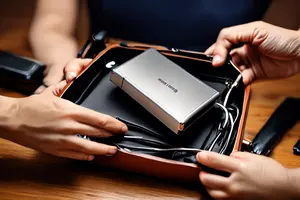
A blurry object alone does not create meaningful depth. Foreground for a kitchen appliance may come from a cup, a counter edge, or ingredients in use. Outdoor equipment can be partially covered by a branch, a backpack strap, or a sleeve. Consumer electronics can use hands, cables, or packaging. Adding an unrelated plant for depth may enrich the frame while making the product's world less specific.
An earlier ONCE article about practical foreground in an LED virtual production stage examined how the screen, real floor, reflections, and contact shadows connect. The foreground here has a different role: it controls how much of the product viewers are allowed to see, and when. One supports spatial credibility; the other directs attention.
Three kinds of occlusion do three different jobs
Static occlusion gives the viewer a position
A doorframe, shelf edge, tabletop, or package insert does not move by itself. It tells viewers where they are looking from. Static occlusion is useful for lived-in observation, partial glimpses, and wide frames with empty edges. The complete product is usually revealed by a camera move, a product move, or a person lifting it.
Its greatest risk is an imprecise edge. If the edge cuts through a logo, control, or display reading, it feels like a framing error rather than anticipation. Before the shoot, the team should check the final aspect ratio and decide whether the occlusion crosses an unimportant area or a structure viewers need to recognize.
Moving occlusion writes the reveal into an action
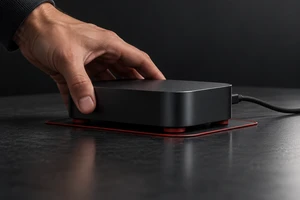
A person walking past, a hand lifting packaging, a drawer opening, or fabric being pulled away can remove the occlusion itself. The reveal then has a cause. The camera does not suddenly find the product; an action in the scene makes it visible. Movement speed determines how long the anticipation lasts, and the end position determines the product's first complete composition.
Moving occlusion needs a credible beginning and end. A hand suspended in front of the product solely to block the lens feels staged for the camera. Packaging that leaves the frame without a plausible destination weakens the everyday logic. Our article on hesitation and product value in performance looks at how a choice is acted; here, the action carries attention from the environment to the product.
Translucent occlusion gives material before silhouette
Glass, steam, sheer fabric, reflection, and projection do not fully cover the product. They alter clarity, color, or highlights first. This kind of foreground can express heat, humidity, cleanliness, fragrance, or speed, but it can also become a decorative filter with no useful relationship to the product.
The translucent layer should connect to product value. Steam can establish a hot-drink situation, but it should not hide the control state that viewers need to confirm. A reflection can bring a city environment into a metal housing, but it should not erase both silhouette and logo. After the atmosphere arrives, the shot still needs a clean recognition window.
Different products tolerate delayed visibility differently
Transparent products depend on edges, refraction, and background contrast for their shape. If the foreground shares the same brightness or dense texture, a glass bottle, clear cover, or acrylic structure can disappear. A broad light or dark shape can cover part of it while one stable rim light keeps the product visibly present.
Highly reflective products bring the foreground back onto their own surfaces. A nearby flag, a person's clothes, or a package edge can become a large reflection on the housing. Composition therefore has to consider both how much is covered and what new shape appears on the product. When the foreground moves, its reflection should move continuously. If the occluder has left but a dark patch remains fixed on the surface, the composite will feel artificial.
Small products require restraint. Earbuds, rings, and compact accessories already occupy little of the frame. A large foreground can reduce the recognition window until viewers see only the setting. The edge can stay at the perimeter, or cover the support rather than the product. For functional products, the critical step must be identified first. A hand and foreground should not jointly hide the moment of opening, connecting, pressing, attaching, or closing.
Camera movement should not compete with the reveal
Foreground occlusion is often paired with a slider move, a handheld lateral move, or actor blocking. As the camera moves, foreground travels faster across the frame than the product. If the person also lifts the product while the light changes, viewers may experience a wash of motion without understanding where the reveal occurred.
The action can be divided into two beats. First, the foreground exits or the camera clears it. Second, the product performs its main action. The order can also be reversed: let the product start, then move beyond the foreground to complete its silhouette. Each beat should carry one main change.
A locked-off product shot makes action easier to compare because the frame provides a stable reference. Foreground can give the same static camera a sense of progression. The product enters from behind an object, or a person removes the foreground. The viewpoint stays still while the viewing relationship changes.
Editing must preserve space before and after the occlusion
Occlusion naturally creates transitions. A dark object crosses the lens, and the next shot can begin with a similar dark edge. Matching color is not enough. Direction, speed, focus, and product position should also connect. If packaging exits to the right and a person enters from the right in the next shot, viewers process the directional conflict before they understand the product.
The reveal needs time to settle. If the cut happens as soon as the foreground clears, the product may have appeared completely without being recognized. The required hold depends on the amount of new information. Completing only the silhouette can be quick. Revealing a logo, operating state, and human reaction together requires time for the eye to move.
Sound can bring the product into the scene early. A button, a closing panel, or a change in room tone appears first; the foreground moves later, and viewers actively search for the source. Sound cannot replace a functional result that remains covered. Whether a product starts, connects, or settles still needs clear visual confirmation. Our discussion of weight and physical contact in product ads shows how visible and audible contact support each other.
Each aspect ratio needs its own occlusion line
Landscape frames can use left and right foreground to create a lateral path, with enough distance for a person to enter. In portrait, the edges sit closer to the product, so a broad side occlusion can squeeze the subject away. Vertical frames can instead use a hanging light above, a table below, or a hand moving upward. Square formats need care when all four corners contain foreground and leave only a narrow central window.
Automatic reframing cannot decide what the foreground means. A doorframe that occupies one fifth of a landscape image may become half of the portrait crop. Packaging that exits from the side in landscape may never appear in the vertical version. Before shooting, each primary format should define its occlusion line, recognition window, and the frame in which the product first becomes complete.
CG and AI shots often fail at the occlusion edge
When practical foreground meets a generated background, the overlap has to remain continuous through time. As a finger passes a product edge, depth of field, motion blur, contact shadow, and reflection must change together. A one-frame delay can make the product look pasted onto the foreground. Hair, sheer fabric, steam, and transparent glass are especially difficult because they contain partial transparency and fine edges rather than a simple front-and-back relationship.
Hybrid production can keep the most complex overlap practical. A real hand passes a real sample, preserving occlusion and reflection, while the environment is extended or the distant background replaced. If the entire shot must be generated, record an action reference at the intended speed and lock the frame where the product first becomes fully visible. Generative variation can enrich the environment, but it should not make the occlusion line jump across the product.
Effective foreground makes the complete view more valuable
Foreground is not proof of a complicated shoot. It gives viewing a position, gives the product an entrance, and lets material, action, or sound build anticipation before the full silhouette. When the occlusion ends, viewers should know something more than they did in the first frame: how the product is used, what space it belongs to, or why it deserves attention.
If the logo, critical structure, or functional result remains covered, the foreground has failed. If removing the foreground changes neither information nor rhythm, it is merely decoration. Useful occlusion changes the order of attention while preserving a clear recognition window.
If you are planning a product commercial, studio key visual, or hybrid live-action and generated film, ONCE product video production can map foreground, performer blocking, multi-format occlusion lines, and the moment of full product reveal into the storyboard and camera tests. The product can arrive later and matter more when it does.