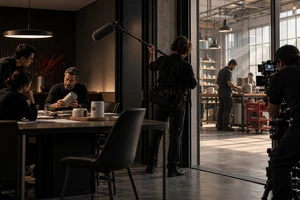
An overseas brand books product imagery and presenter videos with a China-based production partner. The proposal offers two crews working at once. That arrangement is valuable only if both can produce usable material while the other is operating.
ONCE proposes three checks before committing: simultaneous operation, set changes and shared-resource handoffs. This is a planning method, not a report of a completed client trial.
A production-hub announcement points to a better question
In its September 23, 2026 announcement for Devon’s Point in East London, WPP describes modular spaces divisible into studios with lighting isolation and their own power and cooling, intended to support simultaneous productions.
The release establishes what WPP says the facility includes. It does not independently demonstrate utilization, savings or delivery speed. The practical procurement question is whether another crew can light, speak and move equipment without stopping your shot.
A smaller studio need not reproduce a large group's infrastructure. Staggering tasks and sharing resources may be appropriate. But if two units must record at the same time, assess their interaction rather than comparing floor area alone.
Check one: run both intended setups
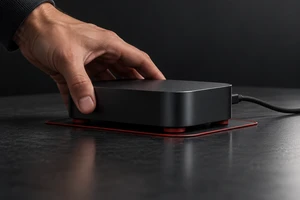
Consider a reflective coffee machine on one set and a presenter recording on another. Testing each separately does not establish that they work together. Run the lights, cooling and equipment planned for the session, let the presenter speak normally and inspect the actual recordings.
Look for neighboring light in the background, product reflections or glasses. Record sound at the intended microphone position and listen for the other crew's instructions, actions and equipment. Casual listening in the room cannot replace checking the recording.
This rehearsal is not an electrical or building certification. Venue staff and qualified technicians should confirm power arrangements. Do not create additional loads informally to preserve a schedule.
Check two: change one set while the other records
The overlooked moment is often the transition. One unit is recording while another moves props, changes a background or resets a sample. Include those activities in the walkthrough rather than leaving both crews motionless in finished sets.
| Activity | What to check | Possible arrangement |
|---|---|---|
| Neighboring lighting adjustment | Changes in the recorded image and reflections | Suitable isolation or staggered adjustment windows |
| People and props moving | Access, sound and frame interference | Separate routes or agreed movement windows |
| Product cleaning and reset | Shared people, samples and tools | Independent resources or timed handoffs |
| Talent preparation and approval | Both units waiting for the same person | Grouped decisions or a revised talent schedule |
There is no universal partition thickness or quiet distance in this method. Solutions depend on the task and facility. Where interference cannot be resolved, group sound-sensitive or lighting-sensitive work into protected periods.
Check three: schedule the handoff, not just the equipment count
Two photographers can still share one pristine product sample or one product specialist. List when each critical shared resource is occupied, when it can transfer and what condition it must be in.
A machine moving from beauty photography to a water demonstration needs more than transport. Check its appearance, accessories and reset requirements. If the demonstration changes its condition, revise the sequence or provide another sample. Another camera does not solve that dependency.
Approval also consumes capacity. If one brand representative must approve both units, agree review windows or delegated authority. Improving coordination should not mean removing necessary approval.
Compare completed batches rather than studio count
Define required shot batches and their acceptance conditions. Then compare sequential production, staggered preparation and recording, and independent parallel units. Include venue time, crew and equipment, isolation and coordination, shared-resource waiting and any anticipated remedial work. Label estimates separately from known costs.
A simple internal comparison is planned total cost divided by batches completed and checked against agreed conditions. This is a budgeting aid, not an industry benchmark or a demonstrated saving. More rooms do not automatically increase the denominator.
Parallel production merits consideration when the tasks are independent, interference is controlled and each unit has the resources and approvals it needs. Staggering may suffice when only preparation can overlap. More space may add little when the bottleneck is a single performer or sample.
Keep a short operating agreement
Record what can happen together, what requires a pause, when shared resources transfer and who adjusts the plan if interference occurs. Recheck affected conditions when the work changes, such as adding sound recording or new equipment. One successful rehearsal is not a permanent guarantee.
For a recurring content program, retain the tested conditions and actual blocking events. They can improve the next schedule without turning studio size into a promise of throughput. Further planning guidance is available in the ONCE video production articles.
Source and limits
WPP's official facility announcement was checked on October 28, 2026. Only facility descriptions inform the signal here; promotional performance claims are not treated as client outcomes. The three checks, comparison method and examples are ONCE's proposals.