A useful storyboard for cross-border product video starts with a buying question. What concern should this shot answer, what action will demonstrate the answer, and which platform versions will use it? Decide those tasks before considering how beautiful the shot might look. That gives the shoot a clear purpose and leaves the editor with footage that can serve product pages, ads and retargeting.
Start with Buyer Questions, Then Arrange the Shots
The first column of the storyboard should contain a real question from a buyer in the target market, rather than “close-up” or “push-in.” How do I start using the product? Can I see a result in one use? Will cleaning or storage be difficult? A clear question gives the shot a task. On a Shopify store, the product-page video should address hesitation, rather than replace all the page copy. The page team can consult Shopify’s product media guidance when planning where video fits into the product information and checking media requirements.
Turn Selling Points into Evidence You Can Film
“Dual chamber,” “fast” and “easy to clean” are selling points, but they are not yet a storyboard. On set, ask how to show the dual chambers: different ingredients in the same frame, loading separate compartments, or the sequence of serving the food? Should speed be explained through a countdown, the food’s condition or the user’s waiting time? For easy cleaning, should the camera show drawer removal, residue being cleared or the product being put away? Give each selling point at least one main demonstration shot, one detail pickup and an action with an edit point that also works in a portrait crop. That coverage makes the script workable in the edit.
Make Each Storyboard Entry Ready for the Crew
ONCE’s storyboard usually records the visual, action, props, camera position, sound cue and delivery use together. For example: “Overhead shot: load different ingredients into both compartments at the same time, keep the complete hand action in frame and leave room for subtitles at the top; use for the landscape product-page video, the middle of a 15-second ad and a 9:16 cutdown.” This turns a creative idea into an executable task. It also aligns the camera, lighting and styling teams with the client on the campaign assets the shoot needs to produce.
Plan Landscape, Portrait and Square Framing Early
The landscape master establishes the relationship between the setting and the product. Portrait framing must protect the hands, key operation and product itself, while a square frame can hold the core action in a tighter composition. Do not leave the crop to chance in the edit. Mark safe zones, the start and end of each action and self-contained 3–5-second clips before filming, so editors can test different hooks. When planning short-form ads, use TikTok Creative Center to study how comparable creatives establish the product, setting and reason to act in the opening.
Find Reusable Action Sequences in Existing Work
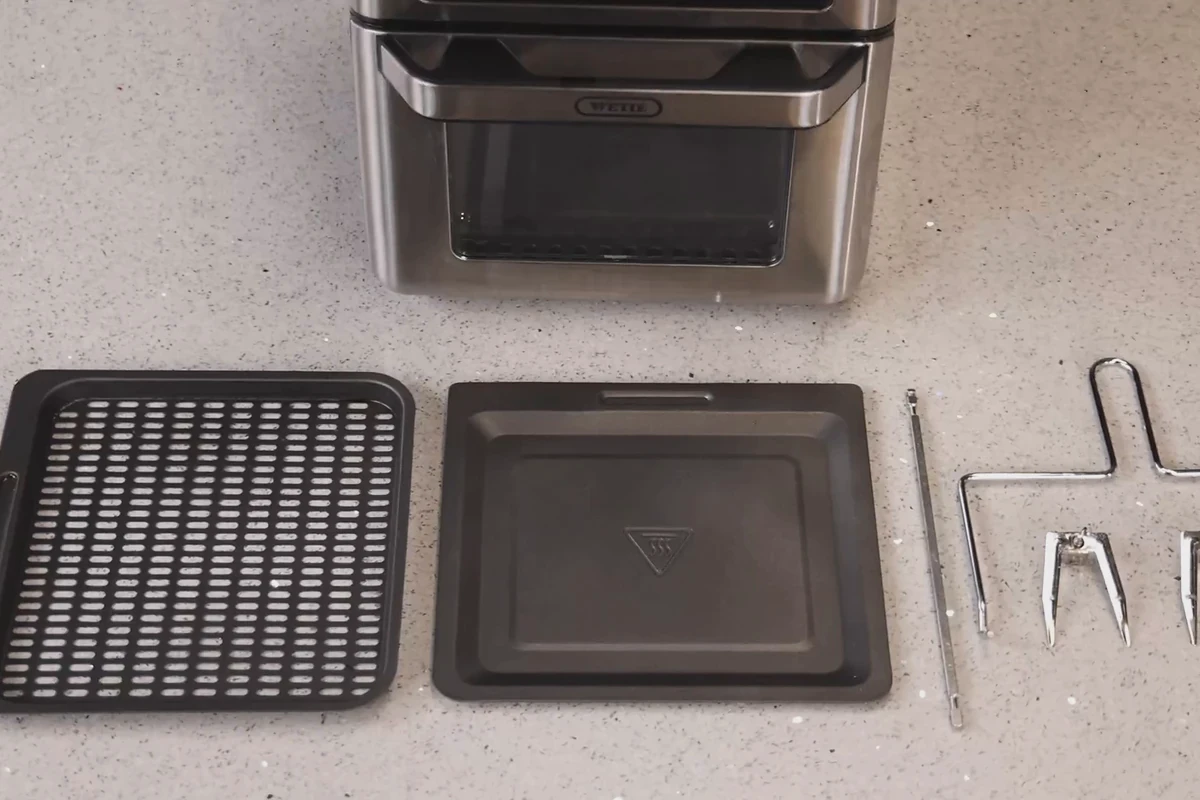
The FO12B air fryer case offers a useful model for more than attractive food shots: a storyboard can connect loading separate compartments, cooking in parallel and taking out the results into a sequence the viewer can follow. The same approach applies to cleaning appliances, personal-care devices and tools. Give viewers a recognizable starting point, establish credibility through the process and finish with a result that makes the reason to buy clear. Brands can adapt this narrative rhythm without copying the same images.
Leave Enough Shot Coverage for Reuse
For each selling point, capture at least four layers of coverage: a wide shot, a medium shot of the operation, a structural close-up and a reaction to the result. Leave two clean seconds before and after every action. This supports the full rhythm of the master and gives the overseas marketing team room to assemble new CTA endings for campaign milestones without arranging another shoot for every revision. To plan the workflow from script and storyboard to delivery in several aspect ratios, see ONCE’s video production services and solutions.
Use the Storyboard for the Final Delivery Check
Before launch, add references to the completed footage back into the storyboard. Which selling point does each shot demonstrate? Which page or ad placement can use it? Are landscape, portrait and square versions ready? Is there a version that makes sense without subtitles? This simple check can reduce rework. Planning should leave useful footage for the next campaign, seasonal promotion and product-page update, starting with the first storyboard rather than ending when one film is delivered.
If your team is planning a shoot for a new product, a redesigned product page or an overseas campaign, share the product details, target market and existing assets with ONCE. We can turn the selling points into practical storyboard tasks together, then decide which shots belong on the shoot list.