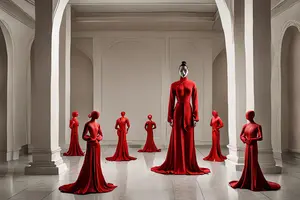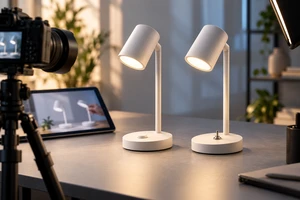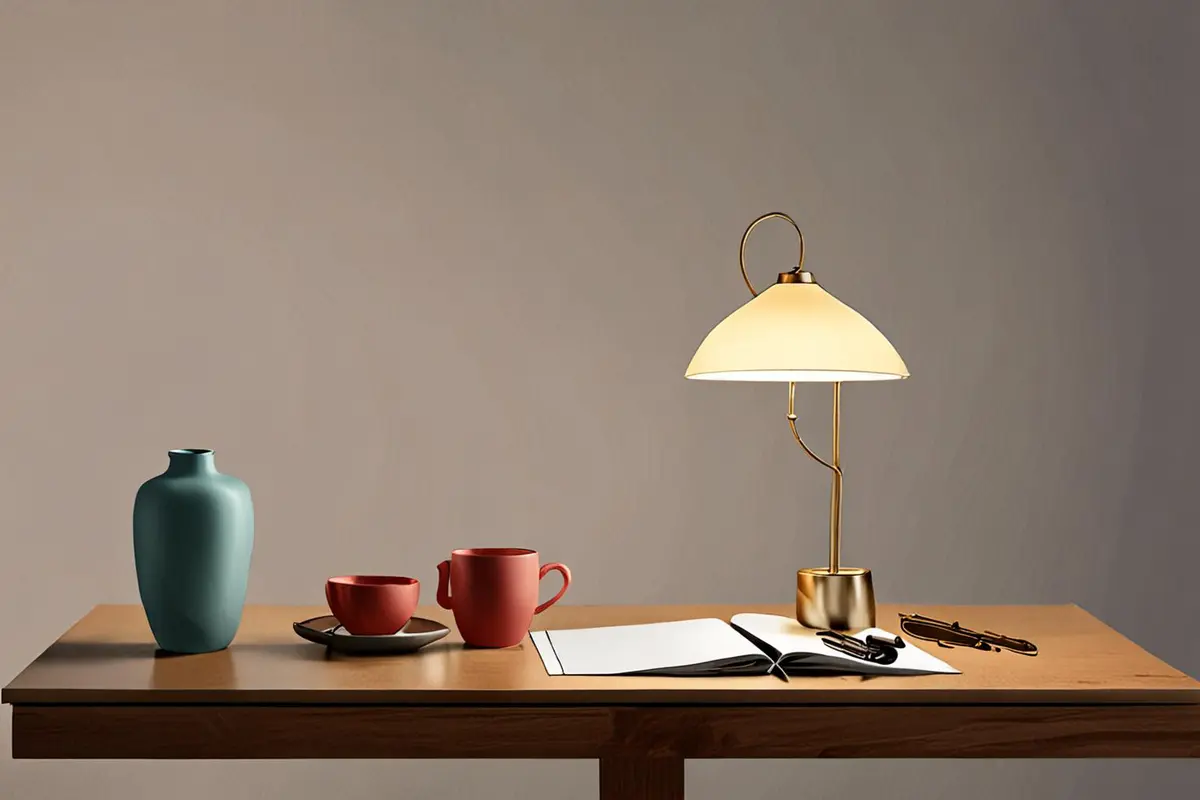
A room filled with books, cups, plants and an old camera does not automatically feel lived in. Life appears through cause and effect: why the cup is half full, why the chair has shifted away from the table, and why a charging cable reaches exactly where a hand would look for it. Props in a brand film work the same way. Their purpose is not to fill empty space. It is to make character, time, action and product value visible.
The hard question is rarely what else to add. It is what must remain. Props need to make the environment believable without turning the product into one more object on the shelf. The product does not always have to be the brightest, largest or most central element, but it should remain the causal anchor: why the character acts, why the situation changes, and why the audience remembers the scene.
Start with who lives here and what just happened
Professional set decoration begins with the script and the character, not with a shopping list. ScreenSkills describes set decorators as storytellers who use the background to establish context, mood and visual interest. Its overview of the production designer's role likewise starts with translating the script into a visual world of composition, colour, texture and light. The order matters: define the dramatic job first, then find the object.
The same cup can express three different things. Clean and inverted, it suggests order. Half-finished, with ice still melting, it says someone has just left. Resting on a document, it may indicate interrupted work. The object category has not changed, but its state has changed the story.
A prop should therefore perform at least one clear task. It can reveal a habit, carry a trace of time, enable an action, or establish scale and conditions around the product. If removing it changes nothing about the character, the action or the product relationship, it is probably decorative filler.
A lived-in space is used, not merely cluttered
Weak set dressing often makes every object too complete, too straight and too new. Books are evenly aligned, fruit is distributed by colour, and a towel looks as if it has just left its packaging. The frame is busy, but nobody seems to live there.
Believability does not require artificial ageing or random mess. It often comes from a small state change: a notebook open to the page relevant to the action, a chair left at the angle of a recent exit, one knife in use rather than a complete display, or a bedside lamp aimed at the position from which someone reads. These details are not extra stories. They are evidence left by the main action.
In a BAFTA interview with set decorator Stephenie McMillan, she makes a useful distinction: set decoration should not take attention away from the actors or leave the audience staring at furniture instead of the action. In brand work, the same principle means that props should support the viewing path, not advertise the size of the art department's inventory.
Make the product the object that causes change
The product differs from ordinary props not because it carries a logo, but because of its causal position in the scene. A product beautifully placed on a table has been displayed. A product that makes an action easier, changes how people approach each other, or alters the state of the room has entered the story.
Check the product through verbs. Is it searched for, picked up, connected, opened, passed or stored? Does its arrival change the character's next choice? Do nearby objects show a meaningful before and after? A light can change the usable area of a desk. A storage product can shorten the path to frequently used objects. A drink entering the frame can change the distance and tempo between two people.
This is distinct from designing concealment and reveal in a product ad. Concealment asks when the product should become visible. Prop design asks how the surrounding objects prove that the product is affecting life after it appears. Both can work in the same scene, but they solve different problems.
Build hierarchy through relationships, not only darkness
When every prop has saturated colour, a crisp silhouette and its own highlight, the frame becomes a cast of minor protagonists. The fix is not simply to darken the background in post. Visual weight should be assigned in art direction and cinematography.
The hero product can receive the clearest silhouette, the most accurate material rendering and the most stable light. Supporting props that participate in the action keep enough information to be understood. Atmosphere props can sit partly outside the frame, carry lower contrast or fall gently out of focus. Colour also needs a job: one echo of a brand colour can return the eye to the product, while equal repetition across many objects can dilute recognition.
Hierarchy does not mean placing the product in the centre of every shot. A character can look at an ordinary object, then redirect their gaze after the product changes the action. The audience follows that relationship. Our article on spatial storytelling through thresholds explores how frames, corridors and depth organise a viewing path. Space establishes the path; props make something specific happen along it.
Continuity is part of performance
Prop state participates in the edit. The liquid level in a glass, the position of a package flap, the fold in a sheet of paper, the angle of a chair and the place where an actor sets something down all determine whether adjacent shots connect. If one action is filmed in several shot sizes, the prop does not merely need to be present. It needs to be at the same stage of use.
This is why reset photographs and state notes have creative value. They do more than help the crew restore a set. They tell the director and editor which changes belong to the story and which are accidents of shooting order. Consumable, melting, mark-making or fragile props need replacements. Objects handled by performers need to enter blocking and rehearsal, rather than being encountered for the first time when the camera rolls.
Vertical versions make this stricter. A row of small objects that reads as atmosphere in a wide frame may crowd the character and product after a 9:16 crop. Instead of applying the same dressing and cropping mechanically, define the vertical action and safe area first, then remove peripheral objects so hands, product and eyelines remain clear.
AIGC can extend the set, but not replace prop logic
Generative tools can now use references to preserve selected traits of characters, scenes and objects. Runway's current Gen-4 References guide recommends high-quality source images and, for complex changes, iterating on individual elements before reusing successful outputs as new references. The important idea is individual control: the more objects a shot asks the system to manage, the more clearly a team must decide what stays fixed and what may vary.
In a hybrid live-action and AIGC brand film, lock the hero product, hand contact and scale relationships of key props before extending background areas that do not participate in the action. If one generation is allowed to redesign product shape, hand interaction, tabletop objects and light direction at once, drift in any one of them can weaken credibility. Hero products and handled props are safer when protected by live action, 3D or tightly controlled references; atmosphere layers and distant, non-contact areas are better candidates for generative expansion.
Remove one prop during the review
There is a simple way to test whether a prop is working: take it out of the frame. If the character loses a history, the action loses friction, the product loses scale, or time becomes less legible, the object has a job. If nothing is lost and the frame becomes easier to read, it was visual noise.
Good brand film prop design does not ask viewers to admire a well-decorated room. It makes them believe that someone actually lives there and that the product has genuinely changed something. The room gains warmth, the product gains a reason, and the two stop competing for attention.
If you are developing a brand film, send ONCE the target audience, the product reason, the central character action and the key delivery ratios. We can evaluate the script, boards, set dressing and live-action or AIGC approach together, including which objects belong in the frame and which should be removed.