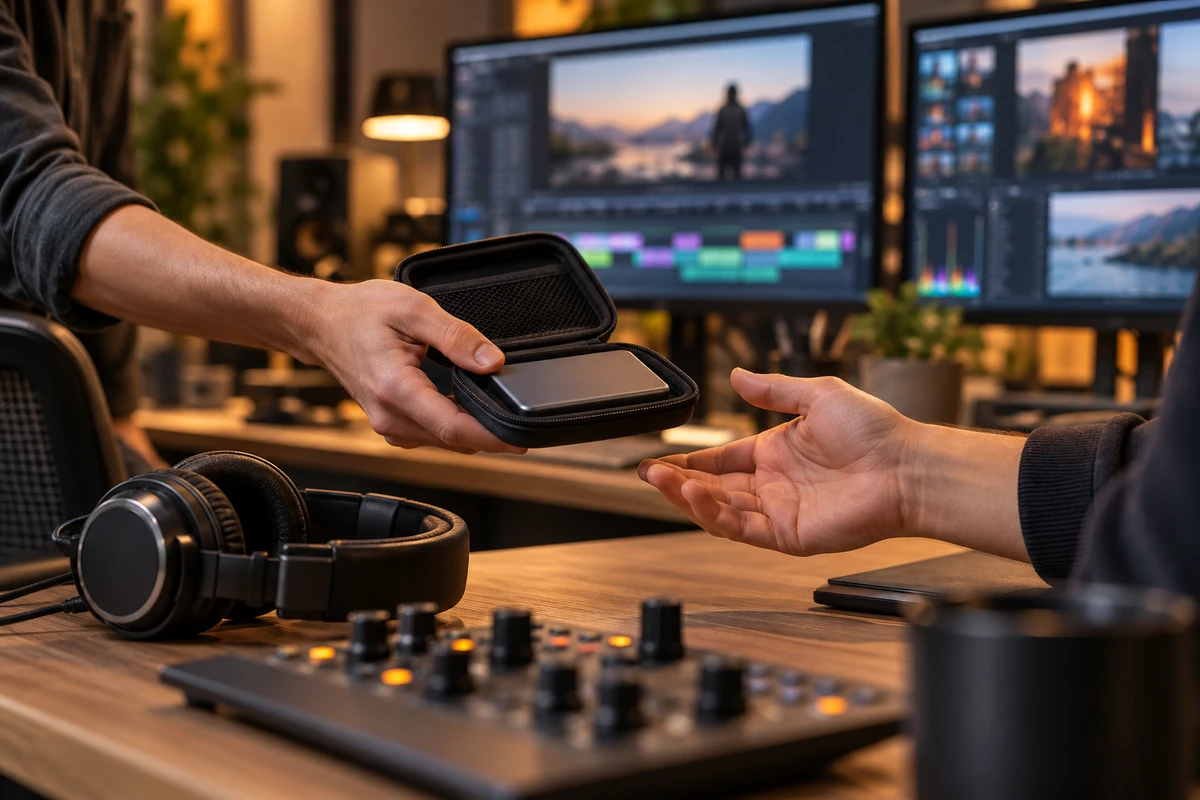
An overseas marketing team commissions a product film in China and expects its local editor to make later campaign changes. Asking for the editable project is sensible. Asking who can obtain and use the music inside it is equally important—and should happen before the soundtrack is approved.
ONCE recommends buying a workable next edit, not simply a larger delivery folder. The agreed outcome should identify the future operator, the change they need to make and a permitted route to the required materials.
Start with the library’s actual handover terms
Artlist’s Understanding Artlist’s license, checked October 25, 2026, permits completed client projects under its Pro license but says the underlying assets cannot be shared with clients or independently modified or used by them.
TunePocket’s licensing agreement, checked the same day, includes an exception for passing a license to a client when contracted to create a final product requiring music. It also restricts standalone audio redistribution. That exception should not be stretched into permission to transfer a whole library, every source file or unlimited future uses.
These are different providers’ terms, not a market-wide rule or a recommendation to buy either service. Ask about the named recipient, actual files and intended work. Where the answer is unclear, obtain written clarification before promising a handover. This is production-procurement guidance, not legal advice on an individual agreement or jurisdiction.
ONCE’s next-edit rehearsal
Consider a hypothetical overseas appliance brand arranging a shoot with a Chinese production company. A regional agency will later replace the closing promotion and adjust the ending. This is a planning example, not an ONCE customer result.
Before selecting music, complete four statements:
- Operator: the regional agency will edit, rather than an unspecified “client.”
- Action: it will replace the closing picture and retime the ending.
- Dependency: identify whether that requires the original track, an edited music bed, a full mix or picture without music.
- Permission route: record applicable existing permission, a suitable authorization obtained by the recipient, or a specifically confirmed arrangement.
This original method tests a future task. It is not a library standard. Even when nobody intends to change the song, the receiving editor’s access and use still need checking. Owning the commissioned pictures does not settle the third-party music question.
Choose how the next edit will be supported
Keeping updates with the original studio can suit infrequent changes and a consistent sound. Specify retention, availability and revision scope, and recheck permission for new versions. Do not describe that service choice as a universal technical requirement.
Independent editing requires a route the next operator can actually use. Confirm whether they can obtain suitable permission for the same material and proposed work, and how it relates to the existing project. A new subscription alone is not evidence that every intended use of an old project is covered.
Where satisfactory permission cannot be arranged, plan a replacement soundtrack. Include selection, retiming and mixing rather than treating replacement as a file swap. Product reveals, voice pauses and the final cadence may all depend on the original cue; review that dependency before picture lock.
Compare the work needed to complete the planned update: authorization checks, project preparation, material access, editing and review. No universal price, actual ONCE project cost or savings percentage is assumed here. An inexpensive first film can still be inconvenient to update; that is a scope question to resolve, not an invented financial forecast.
Package only what can be handed over
List what is included, what the recipient must obtain and what is excluded. If a timeline depends on music that cannot be supplied, identify the track and its use positions with the agreed resolution. Do not conceal missing media or quietly include prohibited audio in a project archive.
Picture without music and separate dialogue or effects can be useful deliverables when their own permissions allow them. Exporting a stem does not itself remove a licensing restriction. Nor should anyone extract music from the finished mix and treat the extracted file as a newly authorized asset.
The production provider Degird separates editable-file delivery from third-party licensing in its published process, and says it flags non-transferable licenses before use and offers alternatives. That is evidence of its stated service design, not verified execution quality. The practical lesson is to describe handover capability as part of the service instead of leaving it to the final invoice discussion.
Accept a permitted task, not just a folder
After permission is established, have the designated recipient make the agreed small change on a copy and export it. Check linked media, the revised music transition and any outstanding dependencies. Record an owner for unresolved items before launch.
Technical success and licensing confirmation are separate acceptance checks. One cannot substitute for the other. There is no need to test unauthorized sharing to discover whether an archive opens.
When briefing ONCE’s production team, name the next editor, their first expected change, its timing and whether retaining the same soundtrack is essential. This lets the shoot, edit and handover be designed around the brand’s real operating model.
Sources checked October 25, 2026; precise publication dates were not established for these current pages. This is evergreen procurement analysis, not a claim that a new rule took effect today. The original AI cover is conceptual, not a customer handover or licensing test.