The new product is live on the store. An existing customer still owns the previous generation. Replacing every tutorial with the newest film may simplify the content folder while making that customer’s next action harder to find.
For overseas brands sourcing products and production in China, launch content and ownership support need different release decisions. ONCE recommends approving the new tutorial separately from retiring the old one. Start with the physical products still in customers’ hands, not the age of the video file.
Match the product before presenting the instructions
Bosch’s US Specification Library, checked October 25, 2026, describes documentation for current and past products and provides model-number lookup. Its owner-manual search directs owners to the model number on the rating label.
That is evidence of one brand’s public information architecture, not a test of every historical model or proof of a video-production result. The useful principle is modest: identify the relevant product before selecting its support material.
GS1’s resolver destination explanation, updated August 20, 2024, also describes a default destination unless the request indicates another need. Multiple resources in a backend do not establish that an ordinary scanner has identified a particular physical revision. This article does not assume that scanning automatically distinguishes every product generation.
Make three different decisions about an older film
Still applicable: if the responsible product team confirms that the old instructions remain correct for an older model, keep an appropriately identified support route. It need not remain on the new product’s sales page.
Needs correction: an inaccurate or no-longer-appropriate instruction should not stay publicly available merely because it is labelled historical. The brand’s responsible product and specialist teams must determine the correction or withdrawal. Production staff should not invent safety guidance or use a launch advertisement as the correction notice.
Applicability unknown: help the owner identify the product or reach support. Do not silently offer the latest tutorial. A short identification sequence may be worth filming, using brand-approved distinguishing features. Similar names and matching colours do not establish identical operation.
These are content decisions, not a promise of universal support periods or indefinite retention. Internal archiving and public availability are different states.
ONCE’s two-product acceptance check
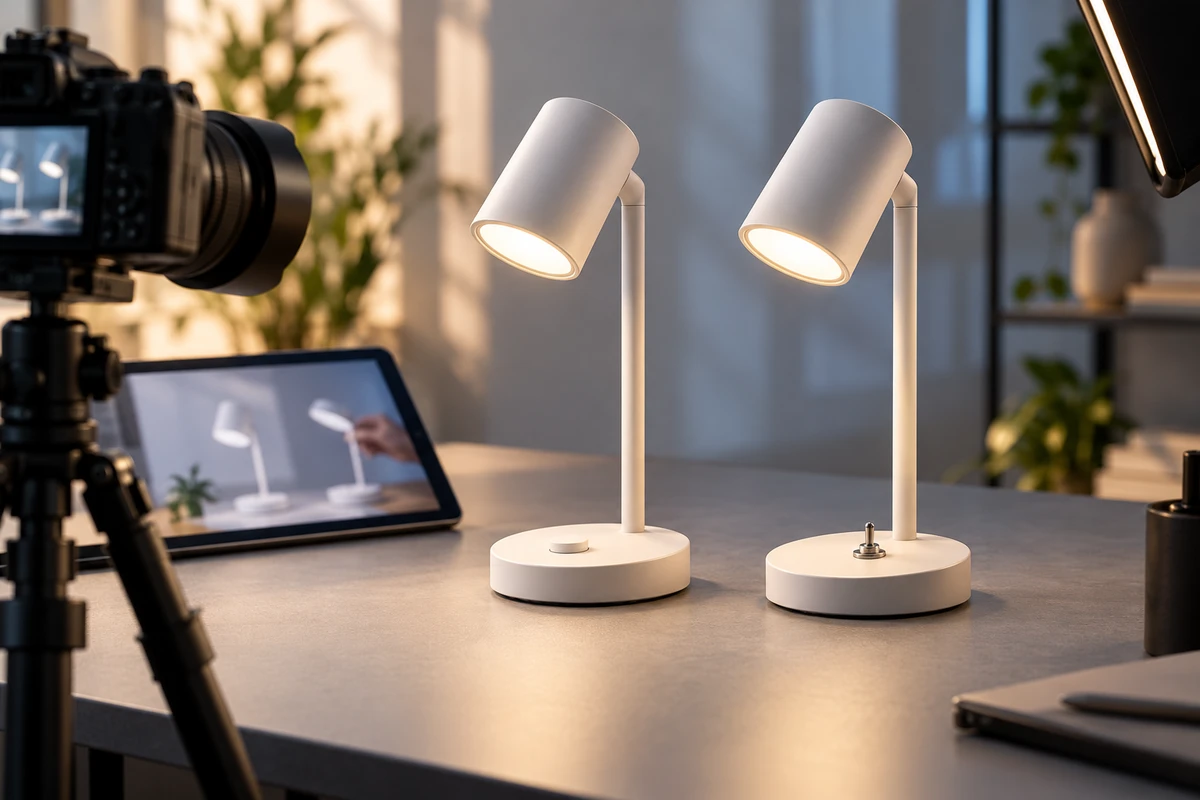
Imagine a hypothetical desktop product whose push button becomes a toggle in the next generation, while its name and appearance remain similar. This is a planning example, not a real product procedure, customer case or completed ONCE test.
Obtain clearly identified old and new samples, or reliable approved references where samples are unavailable. Have the product owner confirm what each tutorial applies to before shooting replacement details.
In a controlled pre-release environment, follow the intended owner journey twice: once for the older product and once for the new one. In each journey, verify:
- The owner can establish which product the instructions cover.
- The route opens the intended video and language.
- The pictured controls and approved steps match that product.
- An unmatched or uncertain product has a clear next step rather than a guessed tutorial.
This is ONCE’s proposed acceptance method, not a platform standard. If packaging carries a code, include a real printed sample in the route check. A functioning redirect is only part of the result; the destination must still be appropriate.
Produce the differences without erasing the common work
Maintain a small applicability record: approved model or revision information, visible identifying features, video, language, public entry points and the person authorized to approve changes. Base it on product confirmation, not an editor’s inference from file dates.
Shared steps can reuse footage when their applicability is confirmed. Changed controls, supplied accessories or action sequences need distinct treatment. Replacing one close-up is not enough if the surrounding narration and captions still describe the old control.
Keep approved legacy support films separate from withdrawn archival copies and current-generation material. Check language variants against the same product relationship. A newly translated subtitle file should not drift onto footage of an incompatible older unit.
HowFilm’s publishing guide, updated September 30, 2026, recommends an inventory connecting tasks, product versions, publication locations and owners. The additional decision here is parallel support: a product change requires checking what must continue serving existing owners, not only what should be updated. That comparison makes no claim about the provider’s execution quality or industry-wide adoption.
Scope an ongoing responsibility, not an unlimited subscription
For initial production, specify identification material, shared footage, changed sequences, languages and route checks. For maintenance, agree which revisions, corrections, link checks and support period are included. The brand approves product applicability, the studio implements approved audiovisual content, and the site team configures its delivery. Assign the connections between those responsibilities explicitly.
If both generations operate identically, clear applicability information may be sufficient without filming twice. If a critical action differs, a short runtime does not remove the need for separate confirmation. No actual project cost, savings rate or reduction in support tickets is claimed here.
Before briefing ONCE’s production team, provide the supported generations, approved differences, available samples and a named product reviewer. Ask for the older owner’s route to remain usable alongside the new launch. That is a more durable deliverable than a folder in which everything is simply called “latest.”
Sources checked October 25, 2026. Precise publication dates were not established for the current Bosch pages; the other pages’ update dates are identified above. This is evergreen production analysis, not a newly announced requirement. The original AI cover is conceptual, not a customer site or acceptance-test result.