After three days of advertising, clicks begin to fall and the team asks whether it needs a new video. A more useful question is whether Meta Advantage+ has been given genuinely different creative approaches or just the same travel-organizer film with three lines of copy. For DTC brands, plan four kinds of footage: hooks for new audiences, product proof, recognizable use situations, and explanations for retargeting. These give the delivery system distinct assets and the media buyer clear variables to assess.
Automated Delivery Still Needs Clear Creative Decisions
Advantage+ can help advertisers improve efficiency in terms of audience targeting, placement, and creative combinations, but it won't magically create effective big ideas. It's more like a rapid dispatcher: if you only have one "travel is freedom" video, it can only repeatedly show the same emotion to different people. Only if the asset pool includes expressions such as waterproof storage, unboxing organization, quick packing before boarding, size comparison, and travel anxiety will it have the opportunity to deliver different story angles to different viewers.
At the brief stage, ONCE asks three questions: What makes someone stop scrolling? What gives them a reason to believe the product? What does someone who has already watched still need to know? These correspond to the hook, evidence, and retargeting. A version matrix involves more than horizontal and vertical crops. Each testable version should change at least one core variable: a distinctive visual cue, the promise, a product action, or the intended audience.
Cold start: First, make users recognize their own problems.
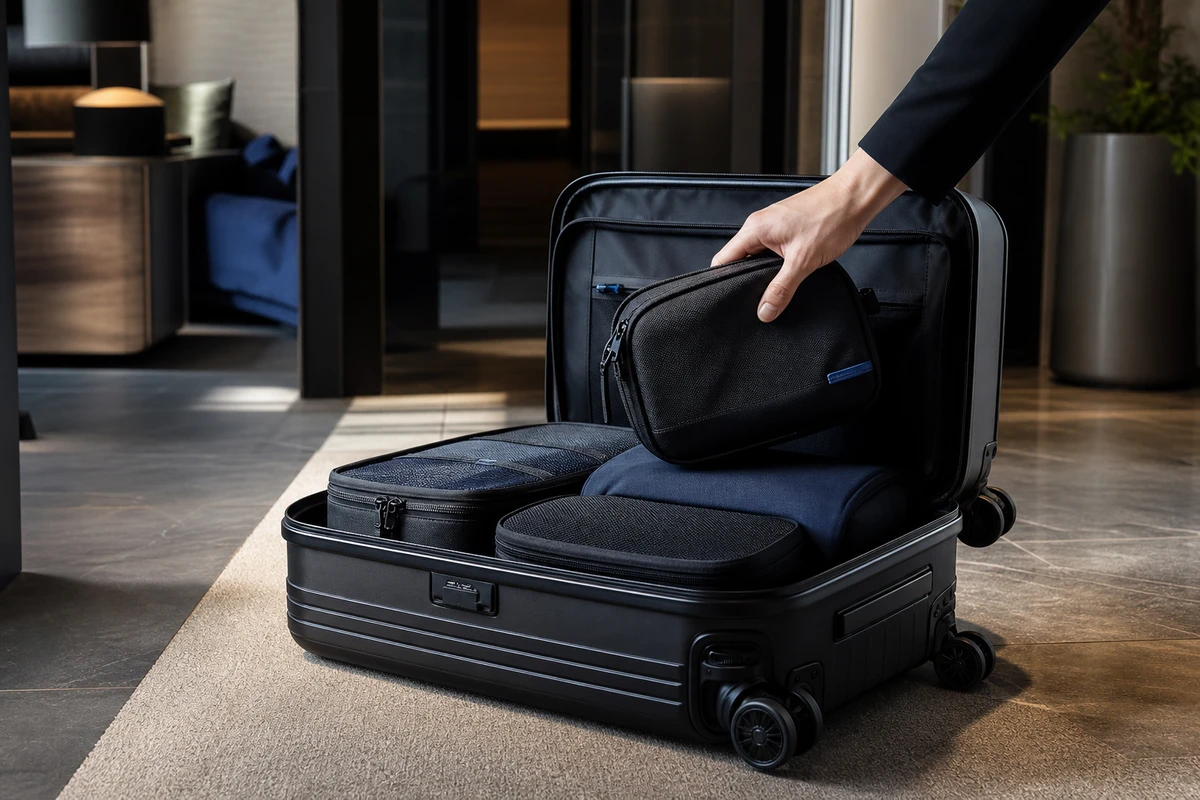
For example, when showcasing travel organizers, the first two seconds shouldn't feature a brand logo or a scenic view of a hotel. Instead, it should immediately depict relatable pain points like "a suitcase opened to reveal a jumbled mess" or "fumbling for documents, chargers, and toiletries." Then, use a clear action to solve the problem: placing organizers into compartments, zipping up the bag, and instantly creating organized sections within the suitcase. The purpose of this visual hook is not to introduce all the features, but to let unfamiliar users know that "this is exactly what I experience before leaving home."
Google’s ABCD framework separates Attention, Branding, Connection, and Direction. Use it to check whether an emotional opening delays the product reveal. The Google Ads ABCD guide offers a useful creative checklist: Does the opening use tight, engaging framing? Does the product appear early? Does the CTA follow the video’s promise?
Mid-stage product proof: Only explain one “reason why it’s worth buying.”
The biggest mistake when showcasing travel accessories is to present them as a series of specifications. For example, including terms like "compression," "categorization," "durability," "visibility," and "carry-on compatibility" in the script, but only showing each point for half a second. A better approach is to have each product demo focus on one key takeaway: one video demonstrating how clothes can be organized, another showcasing how toiletries and electronics can be separated, and a third illustrating how items can be quickly retrieved before departure. Let the visuals convey the selling points, and use subtitles only as supplementary information.
Key shots should include hands actually placing items inside, the zipper closing, the location of transparent windows or labels, a before-and-after comparison inside the suitcase, and how quickly items can be retrieved just before departure. The shots must flow continuously; avoid jump cuts that make the process seem magical. On set, credibility often comes from small details: the resistance of the zipper, the thickness of the fabric, and the actual space occupied by the items. Product parameters should be translated into user-understandable scenarios, which is much more effective than simply saying "advanced storage system."
Remarketing: Don’t just replay ads; address the hesitation.
Viewers who watch the main video but do not purchase may still be hesitating about size, storage capacity, material, or luggage compatibility. Retargeting should answer those questions directly: what fits in one organizer, how to arrange it inside a carry-on, and whether the charger is easy to reach. Shoot these FAQ shots separately so they can become 6-second explainers, looping product-page clips, comment replies, and follow-up emails.
Use audience insight here instead of relying on hard selling. Business travelers value efficiency, families need clear separation between items, and people packing lightly for a weekend need space. Organize the shots for each group while preserving the real product structure. Personalized creative should still follow the brand’s key visual and visual language. When creative fatigue appears, test a different hesitation point and opening action before remaking the entire film.
How can a single shoot deliver a working version matrix?
On set, shoot four groups of assets: A, a conflict-led hook; B, a complete demonstration; C, close-ups of materials and structure; and D, the result in context and a CTA. For each group, allow a primary 9:16 composition, a crop-safe 1:1 composition, and a 16:9 composition for product pages. Retain three kinds of master: text-free, editable-copy, and replaceable-voice-over versions. One shoot can then supply 12–18-second cold-audience cuts, 6–10-second retargeting cuts, a 30-second product-page demo, and organic social content.
Do not wait until editing to discover that the vertical version cuts off the product. Google’s creative guidance recommends horizontal, vertical, and square formats for ad groups. This supports ONCE’s delivery principle: multi-format is a compositional discipline established at storyboard stage, not a post-production rescue. TikTok’s creative best practices can also serve as an external reference when reviewing each asset round.
When reviewing, don’t just look at ROAS metrics; be able to go back to specific shots.
If three-second retention is low among new audiences, first check whether the hook makes the problem clear. If clicks are good but product-page visits are brief, look for a gap between the ad promise and the landing-page demonstration. If retargeting frequency is high while conversion remains weak, check whether the ads merely repeat the brand film instead of answering a hesitation. Deliver every asset with shot labels for scene, selling point, opening, person, product action, and funnel stage. The media buyer’s feedback can then identify the next specific footage gap to fill.
Cross-border content growth does not replace production with AI or automation; it uses those tools to distribute, test, and reuse well-produced assets faster. If the same materials are planned for Meta, an independent site, and overseas social media, start with ONCE’s AIGC and content-asset categories to build a more actionable shot list. Distribution can be automated, but product validation, shot selection, and creative rhythm still need correct decisions from the brand.