A car and a horse can lead to very different advertising ideas. Two AI concept films added to ONCE on September 15, 2026 make a useful comparison: a white car and a black horse in a snowy landscape, and a pink car meeting a white horse in a colorful city.
The films are Lynk & Co Z10: Snow and Wind and Lynk & Co Z20: Color City and Wind (Chinese case pages). Both are AI-generated concept films. This article examines their visible creative choices; the roads, weather and movement are conceptual imagery, with no vehicle testing or performance claims implied.
Establish the world before introducing the encounter
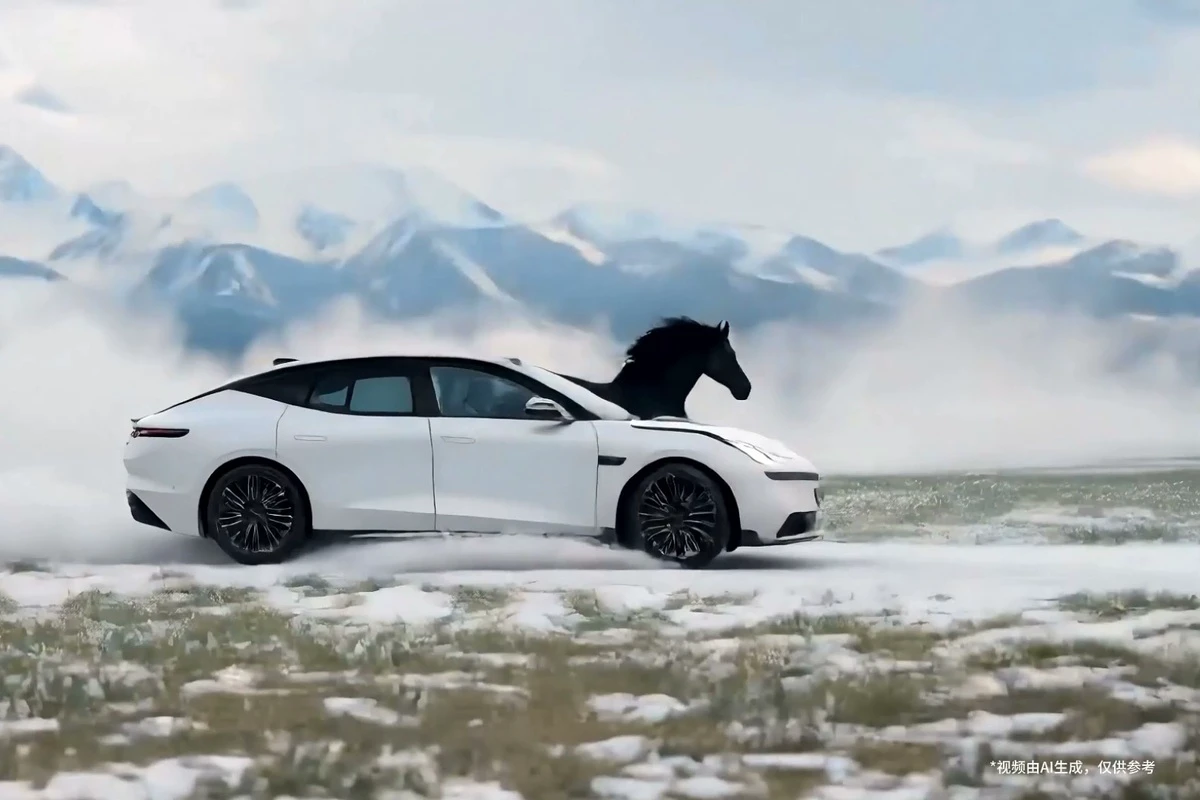
The snow film opens with a mountain and forest landscape, then shows the black horse beside a stream. Nature has a presence before the car takes center stage. The horse belongs in this setting, so the arrival of the white car creates the possibility of two travelers sharing a landscape.
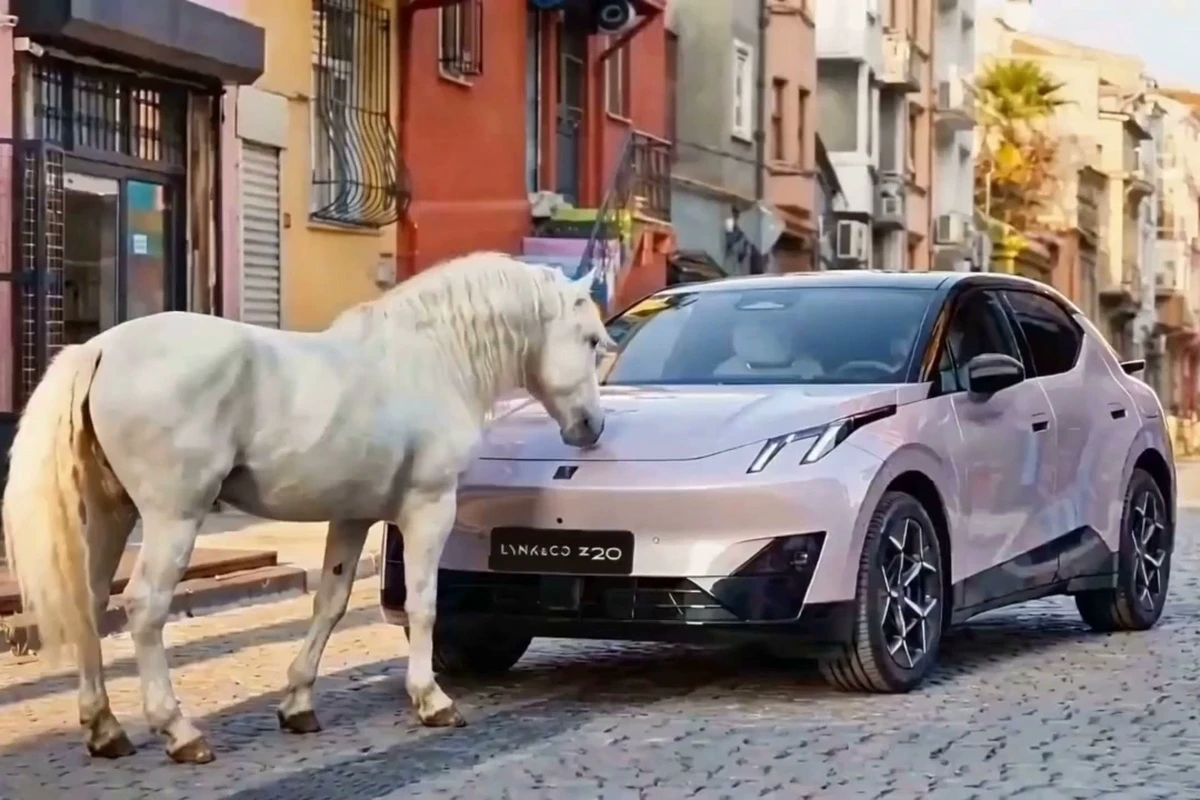
The city film starts with a different kind of everyday movement: closely packed colorful buildings, cobblestones, a skateboard and passing feet. The pink car sits among yellow, blue and orange facades. When the white horse enters the street, the established urban setting gives its arrival a sense of surprise.
For an AI car commercial, the environment can do narrative work before the main interaction begins. A horse feels at home beside a mountain stream. The same animal in a lively street interrupts an ordinary scene. A creative brief becomes more specific when it describes the world the audience enters and the change the encounter brings.
Give the animal a role expressed through action
A horse can suggest movement, strength or freedom. Those associations leave many practical questions unanswered. When does the audience first see it? How close does it get to the car? Does it approach, lead, wait or move alongside it?
In the snow film, the horse's appearance by the stream develops into movement shared with the car. The space opens out as the film progresses. The black silhouette stays distinct against the snow, while the horse's bodily movement offers a different rhythm from the moving vehicle. Read visually, this direction suggests companionship across a journey.
In the city film, the white horse enters the street and later appears close to the front of the car. Its pale body has a distinct presence among saturated buildings and the pink vehicle. The encounter becomes the interesting event: an unexpected character enters a familiar urban world.
These are interpretations of the finished images. When developing a related concept, start by assigning the animal an action such as accompanying, guiding or meeting. That decision gives each shot a question to answer: what is the animal doing for the story at this moment?
Use color to organize attention around the car
The snow film has a direct contrast between its black horse and large areas of white. The white vehicle sometimes sits close to the surrounding tones, so nearer views of the front, wheels and rear help re-establish its shape. Flowers and warmer light appear toward the end, adding a change in mood; a single label such as “cool palette” would miss that development.
In the city film, both the pink bodywork and the architecture carry strong color. This makes the edges around the car useful places to look during a review. Does its outline remain clear? Do lines in the facade cut across important body shapes? When the horse approaches, which subject attracts attention first?
A reference image should show how the product reads in its setting as well as the desired palette. For a finished brand campaign, vehicle geometry, badges and product details also need a separate shot-by-shot review. A convincing atmosphere does not establish the accuracy of those details.
Make each change of location continue the relationship
Both films move from a more enclosed setting toward wider space. The snow film continues through forest, road and open snow. The city film moves from dense architecture to a coastal road, sand and grass. Its changing surroundings give the images more room as the film develops.
A useful storyboard question is: how does the next location continue what has already happened between the car and the horse? An encounter might develop into a wide composition containing both subjects. An established journey might continue through changes of distance and framing. Each setting then has a reason to appear in that sequence.
Write a short purpose beside each location change: establish the meeting, bring the subjects closer, or open up the space. A setting without a clear purpose can stay out of the first storyboard until the team knows what it contributes.
Turn the idea into three frames a team can discuss
Before expanding a car-and-animal idea into a full treatment, prepare three key frames for each direction. This gives a brand team concrete decisions to discuss during an early visual exploration.
- The world: What kind of place does the audience enter before the encounter? Show its everyday character and overall color relationships.
- The interaction: What does the animal do, and where is the car? Give the idea a readable action within the frame.
- The product view: After that interaction, how will the audience see the car clearly again? Decide how the vehicle, animal and background share attention.
Place the frames side by side and add one sentence describing the action. A snow direction might explore a horse appearing first, with a car entering the same landscape. A city direction might explore a horse walking into the street and meeting the car at close range. These descriptions make sequence, distance and viewpoint easier to discuss before moving into a detailed storyboard.
The two films show how a shared motif can develop into different visual stories through setting and staging. To explore a concept for a brand, see ONCE's AI commercial production service or share the vehicle, campaign use and relationship you want to express. Those inputs give the first set of key frames a practical starting point.