A product promo video should help a viewer understand what a product does, where it fits into their life and why they might want to learn more. Choosing attractive locations is part of production, but each setting also needs to support a clear product action. For appliances, consumer electronics and home products, that connection is often what makes a film understandable.
This guide is for brand and marketing teams commissioning product video production. Using two real U-STUDIO location photographs, it explains how to turn a feature list into a scene plan that a production team can assess. The product examples below are planning examples, not claims that those products were filmed in these photographs.
Give the film a specific job
A launch audience may need to understand what the product is before considering individual features. Someone already on a product page may be looking for a closer explanation of operation, scale or accessories. A brand website may place more emphasis on the product's role in a particular lifestyle.
Write the task in one sentence: who is watching, what should they understand, and where should they go next? For a portable projector, the task might be to show a renter how it moves from storage into an evening viewing setup. That suggests a sequence involving unpacking, positioning, connection and use. The actual sample must support every operation and result shown.
Translate features into observable actions
Words such as convenient, premium or family-friendly describe an intention. A scene plan needs to explain what a viewer can see that makes the intention credible. Use questions like these when reviewing a treatment:
- Storage and portability: Where is the product kept, how is it picked up, and which accessories travel with it?
- Home use: How does it sit beside furniture and people, and is there enough space for the intended action?
- Simple operation: Can the viewer follow the action from input to visible response without a cut concealing an essential step?
- Material and construction: Which handling or close-up views reveal the detail, and does the sample match the final retail version?
When an image cannot substantiate a performance claim, the brand should provide the supporting information and agree on the wording. Speed changes, substitute props and visual effects can alter how viewers interpret an operation. Identify those choices while planning the film.
A living-room set: show how the product enters daily life
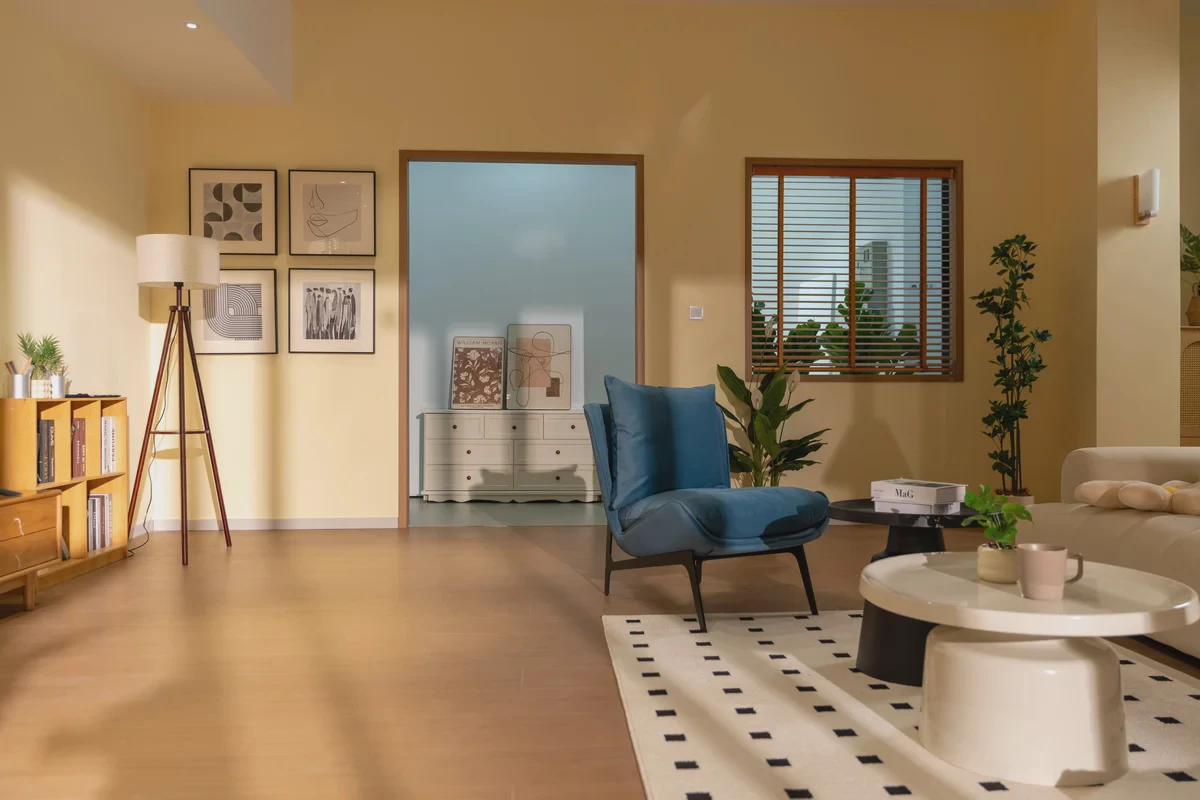
The photograph shows adjacent wood flooring and a rug, with a table, chair and doorway creating depth. For a home-cleaning product, those visible surfaces can start a discussion about where an action begins and how the operator moves. For a tabletop or audiovisual product, the relationship between furniture and the intended user may be more relevant.
Colour affects visibility too. A small white product on a white table may need a different position, background or lighting treatment to keep its outline clear. A dark product beside the blue chair should be assessed with the sample in place. A location photograph is useful for planning, but it cannot settle the final lighting decision.
If the product includes a screen, test viewing angles, reflections and display behaviour before committing to a shot. For an overseas team, a reference photograph with proposed positions marked can support an early conversation; the sample test still needs to confirm what works.
An open-plan kitchen: separate the setting from the demonstration
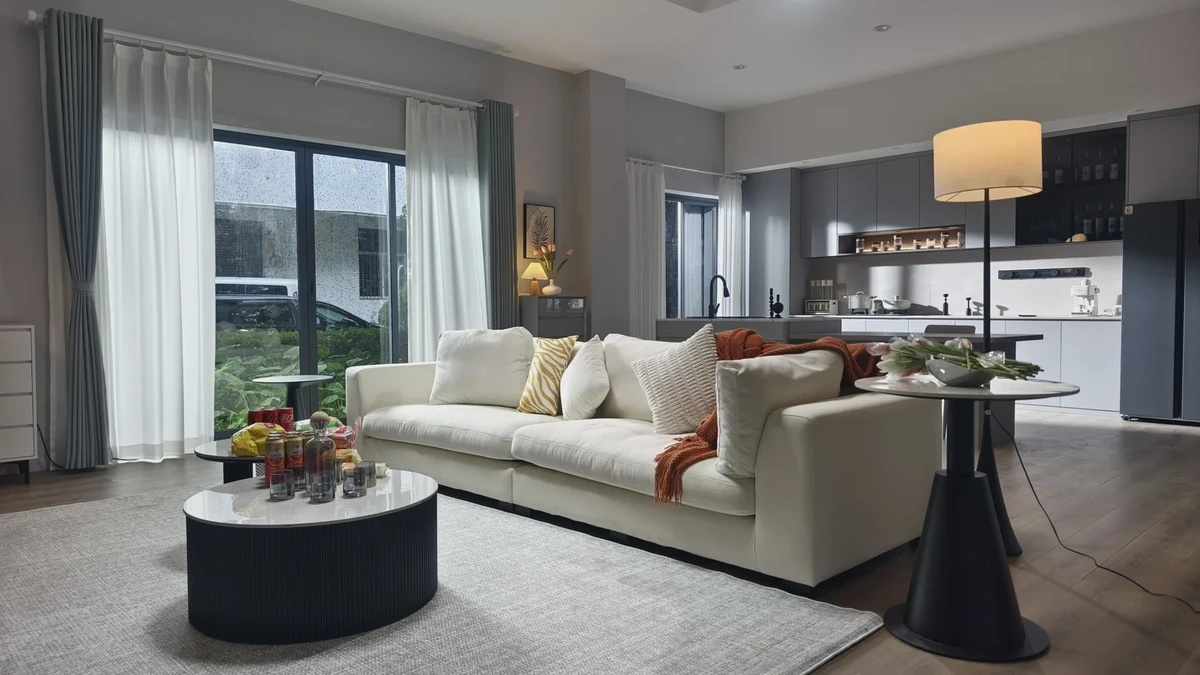
The second photograph connects the living area and kitchen in one view. It provides context, but the kitchen worktop occupies a relatively small part of the frame. An appliance film that needs to show loading, controls or cleaning should give those actions dedicated medium and close views.
For a countertop coffee machine, a proposed sequence could establish someone entering the kitchen, move closer for the actual operation and return to the moment of use. Whether filling, heating or cleaning belongs in the sequence depends on the specific product and its instructions. Power, water, surface suitability and working space must be confirmed on site; they cannot be established from this photograph alone.
List the product and accessories that need to remain visible, then remove unrelated props from the action area. The viewer should be able to follow a hand reaching for a control or handling a component without losing the product in the background.
Carry the scene plan through quoting and review
For each sequence, record the message, the product or human action, the required view and the practical preparation. These details help a production team identify what can share one setup and what requires a lighting change, another location, additional styling or specialist work.
Two films of the same duration can involve different amounts of work. A tabletop demonstration and a film involving talent, several rooms and substantial post-production should be compared by scope, not duration alone. Ask for the scene plan and deliverable list to be reflected in the proposal.
Review the work in stages. Confirm product information and the creative direction in the script; check essential actions and appearance during filming; assess whether the use sequence is understandable in the first edit; then review wording, sound and the final versions. Identify language and placement requirements before the shoot so important actions are framed appropriately. Extra formats may need dedicated edits rather than an automatic crop.
What to send when commissioning the film
A useful starting brief includes the product and sample version, the intended viewer, the main viewing location, the use sequence to explain, preferred settings, required languages and the launch date. Include current product photographs and distinguish confirmed features from proposed ones.
For a project produced in China and reviewed from overseas, also name the person who can answer product questions and consolidate feedback. This gives the team a practical route for resolving decisions without treating every message as a separate creative direction.
Explore ONCE's cross-border product video production services or the Amazon product video service for the relevant scope. To discuss a product promo film, send the product photographs, audience and intended use so the conversation can begin with a workable scene plan.