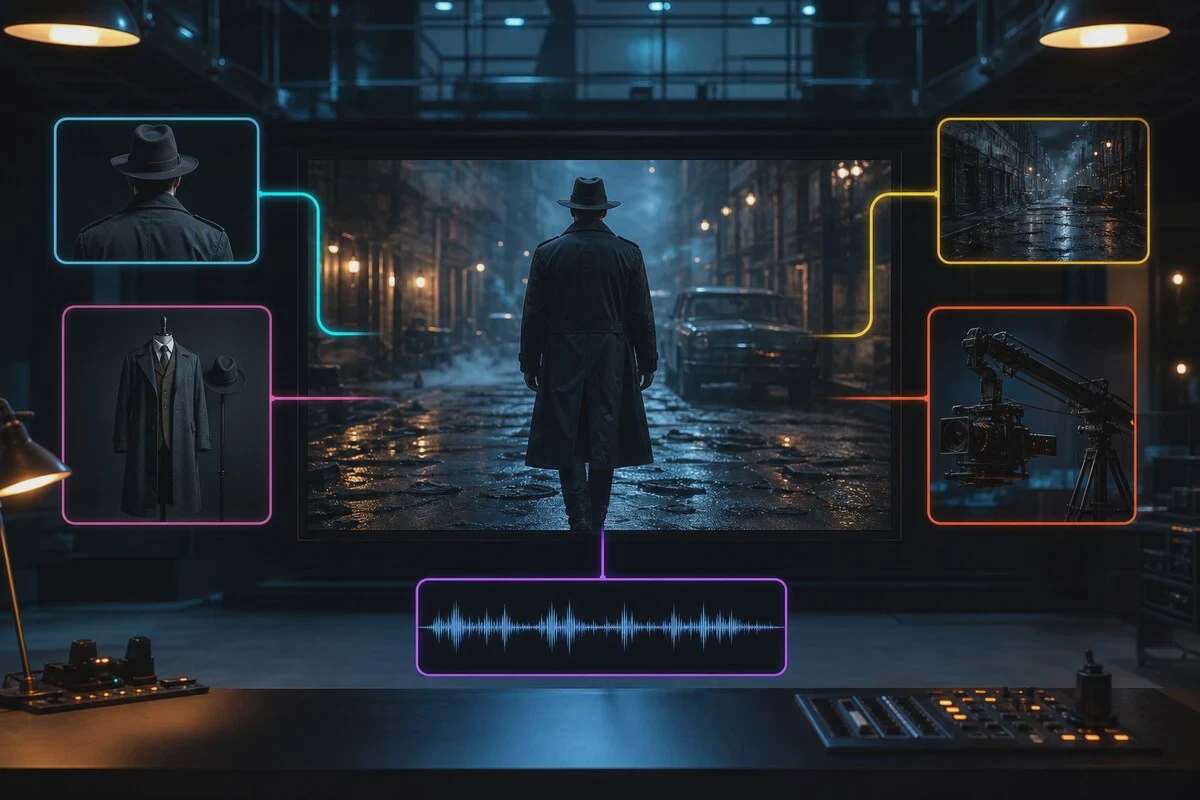
Gaussian Splatting solves a specific problem: rapidly converting real-space imagery into 3D representations viewable from new perspectives. It is well-suited for showrooms, factories, stores, and venue experiences but is not equivalent to a fully editable traditional 3D model. Before adopting it, brands must first determine how the audience should view the space.
How It Captures Space
The process described in the 3D Gaussian Splatting paper starts with sparse points from camera calibration, then represents the scene using Gaussians with position, orientation, scale, color, and opacity. Training continuously adjusts these representations, while rendering rapidly rasterizes them by visibility, enabling fast viewpoint changes.
This method preserves details from photos and videos, making capture more direct than modeling from scratch. Whether viewing a showroom booth from the entrance or walking around factory equipment, brands can use real-world capture data to establish a spatial reference before deciding which parts warrant remodeling.
Three Scenarios Suitable for Spatial Experiences
Showrooms and stores are ideal for Gaussian Splatting-based online browsing, as viewers focus on spatial relationships and vantage points. Factories and parks benefit from its ability to document complex environments, allowing clients to inspect routes before production. When combining products with spaces, it provides realistic background references for compositing product CGI or live-action footage.
Traditional models remain more practical if a project requires character collision, accurate shadows, exploded-view animations, material swaps, or multiple variants. Since Gaussian Splatting directly retains captured image features, modifying geometry, lighting direction, and object placement is limited.
Three constraints must be considered before project initiation.
First, capture quality determines the outcome. Reflective glass, transparent materials, fast-moving subjects, and repetitive textures can cause floating artifacts, holes, or broken edges in the reconstruction.
Second, training and playback costs differ. While papers focus on real-time rendering speed, actual projects still require checking VRAM usage, file size, load times, and performance on web or exhibition hardware.
Third, dynamic content requires separate solutions. Static scenes can achieve stable representations from photos or videos, but moving people, vehicles, and lighting changes require dynamic Gaussian models or additional compositing workflows rather than relying solely on static capture data.
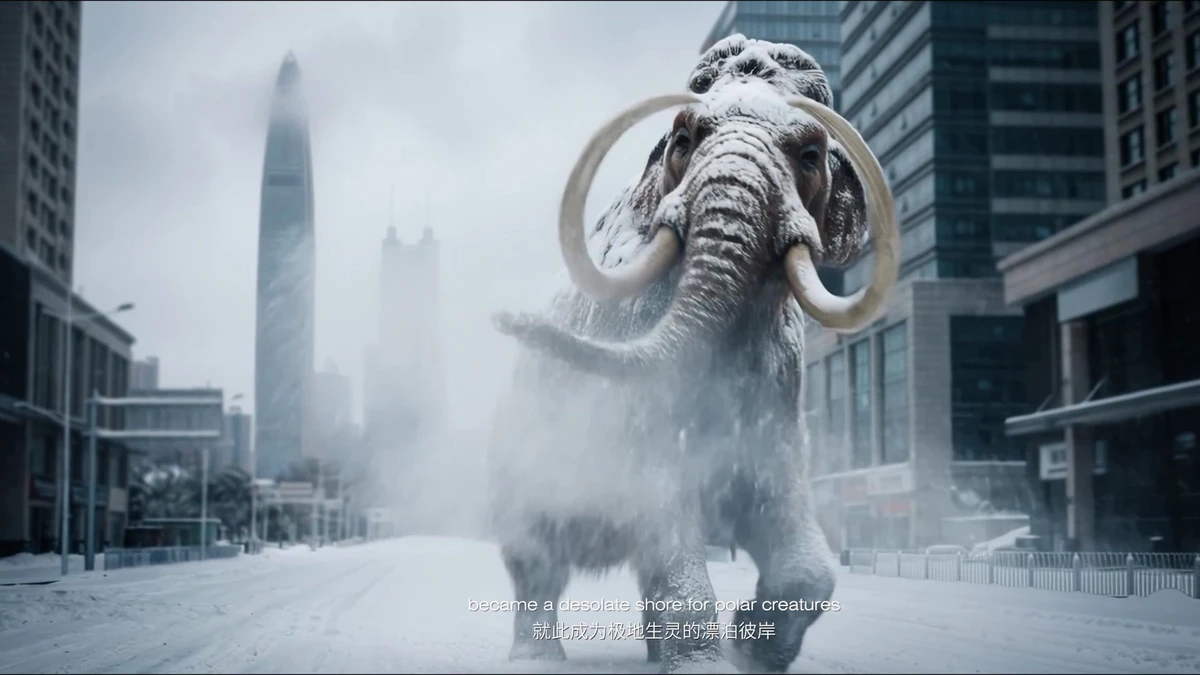
The image below is from ONCE's proprietary City Monster concept film, illustrating viewing requirements for large-scale spaces and realistic proportions. It is not a Gaussian Splatting-generated scene.
Decision Guide for Brands
- If viewers only need to browse real spaces, prioritize Gaussian Splatting tests.
- If assets require modularity, replaceability, and iterative updates, prioritize traditional 3D assets.
- For projects combining real-world backgrounds with product CGI, a hybrid approach can be adopted.
- If characters, vehicles, and complex lighting changes are required, produce a motion capture prototype first.
- For simultaneous deployment across web, exhibition halls, and mobile devices, test loading times and VRAM usage first.
Gaussian Splatting merits consideration as a spatial capture and viewing method; project value depends on the subject, interaction scope, and delivery platform. To integrate exhibition spaces, products, and brand content into a unified experience, start with the ONCE AIGC content portal to begin discussions.
Material Verification
- Review public resources on Seed 0922 NeRF and Gaussian Splatting
- Inria GraphDeco 3D Gaussian Splatting for Real-Time Radiance Field Rendering
- Papers 3D Gaussian Splatting for Real-Time Radiance Field Rendering