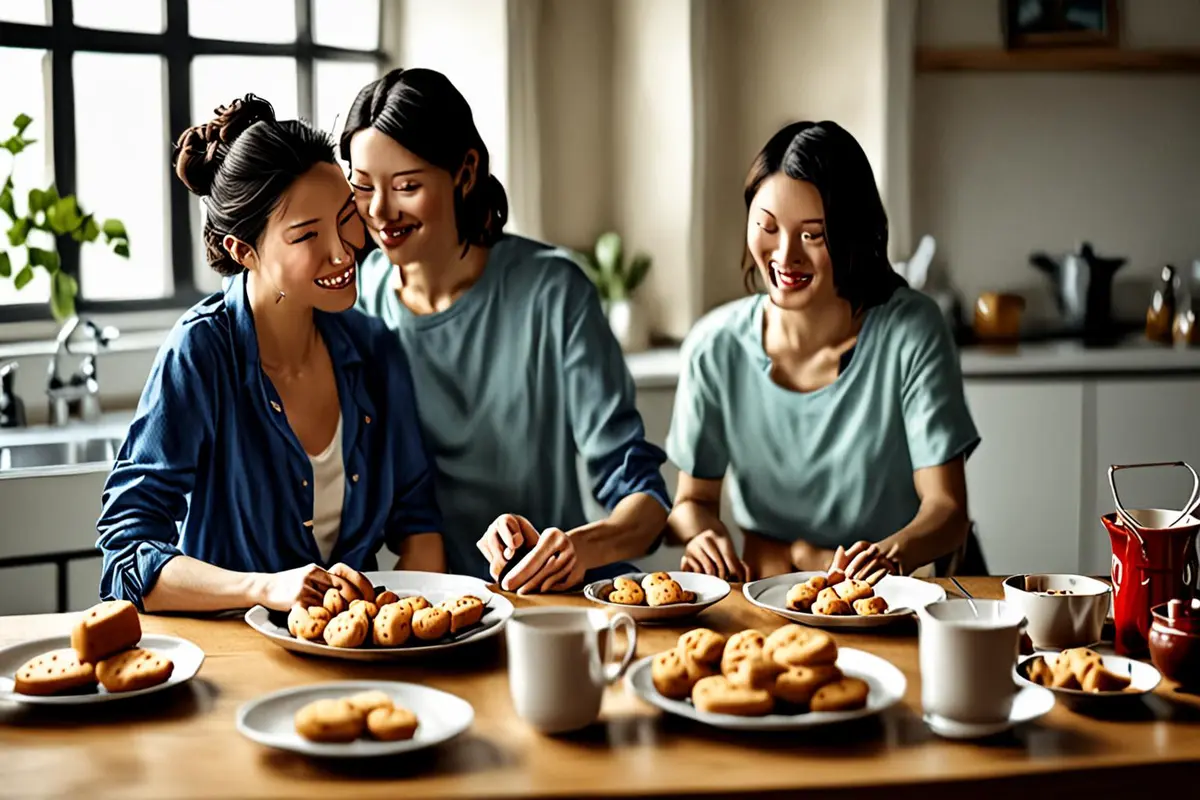
A snack packet lands in the middle of a table. One hand reaches for it, and another nudges the packet closer. Nobody says “we are sharing,” yet the gesture can make their familiarity clear. In food advertising, a shared scene depends on more than a group sitting together: it depends on how food travels from one person to another.
Give the sharing a specific reason
Imagine a fictional biscuit advertisement in a station waiting area on a rainy day. Two friends wait for a train. One opens a packet, notices the other's hands are wet, and offers a biscuit on the inside of the wrapper. The food belongs to the situation and turns two separate waits into a moment of care. This example illustrates a creative approach, not a client project.
The same product could carry another relationship. A colleague saving the last piece for someone working late may feel thoughtful; two friends reaching at once and pausing can create a light joke. Characters do not always need exaggerated smiles to show that food is welcome. Decide who initiates, how the other person responds, and why it happens now.
Show how the food reaches the other person
Before the offer, establish the packet and both people's positions. A medium shot can hold the people, table, and product together; a closer view can reveal opening, taking, and passing. When cutting to the receiver, preserve the direction of movement or use a shot containing both people, so the food does not appear to jump between hands.
The package participates in the action too. How it opens, which side people can reach into, and whether the food is visible will affect the shot. Use the brand-approved product and packaging. If the real package is awkward to open with one hand, design around the actual action instead of using a hidden edit to suggest convenience that is not there.
Sharing is more than passing
Someone might move a plate between two people, ask whether the other wants a piece, or leave an open packet in a shared space. Each gesture suggests a different degree of familiarity. Capture a complete shot of the interaction and then details of hands and expressions to give the editor choices; the relationship need not be compressed into a front-facing pack shot.
The food itself changes the action. Crumbly biscuits, a drink that must be poured, and a dish served with utensils invite different ways of sharing. Art direction and food styling should support the real product. Reset quantity, appearance, and packet position between takes, and follow the project's and location's food-handling requirements.
Balance texture with the relationship
A close view can reveal shape, surface, and eating; a view of the people explains who offered the food and why it was accepted. Too many isolated details can turn sharing into a food montage. Too wide a view can make the package and food hard to recognize. Choose shot sizes for what the scene needs rather than imposing a fixed number of seconds.
Biting, packaging, and contact with the table can add texture, but post-production should support the real action rather than imply an unverified taste, ingredient, or benefit. A brand film can allow a pause between people. A product page may need a separate, clearer view of the food and package.
Check whether the relationship reads
Show the rough cut to someone unfamiliar with the script. Ask who offered first, how the other person responded, and what role the food played. If they recall only “people eating,” check whether the handoff is missing or the reaction passes too quickly. And if the creative goal is a solitary moment with food, there is no need to force a group scene.
For another view of how reactions and eyelines build a relationship, see two-person scenes in brand ads. If you are planning a food advertisement or lifestyle film, contact ONCE to discuss the creative approach and production.