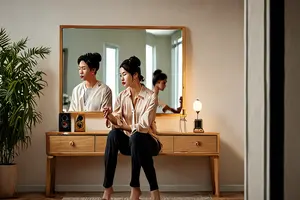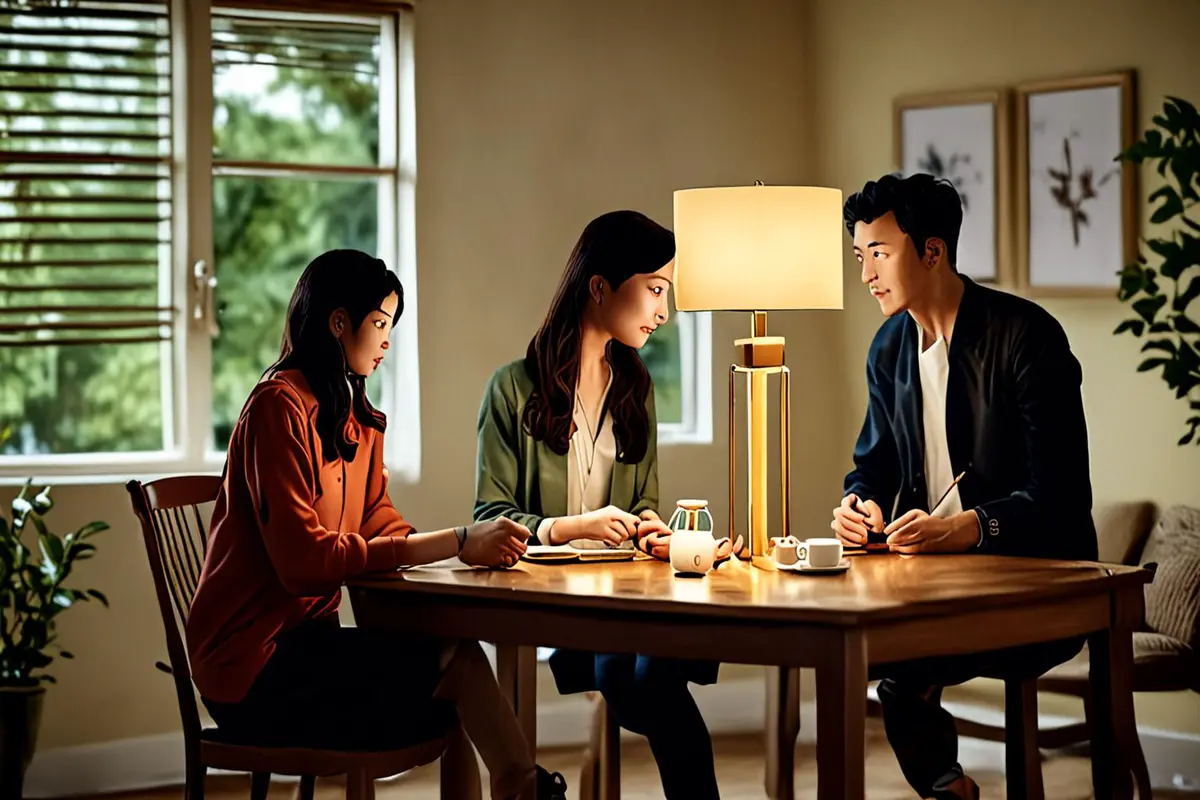
At a table, one person slides a portable lamp toward another. The second person looks at the lamp, meets their eyes, and only then reaches for it. Without a line of dialogue, the exchange might feel caring. Change the look or the pause and the same action could feel tentative. In a two-person brand scene, small choices like these shape whether the relationship feels believable.
Give each person a different intention
Imagine an advertisement for a camping lamp. One person is clearing a table; the other wants to invite them onto the balcony. The lamp becomes the means of an invitation rather than an object held up for display. The first person wants their companion to notice it; the second is initially absorbed in another task. When their eyes meet, the product enters a shared moment. This is a fictional creative example, not a client project.
Both people need not look at the product at the same time. One looking first at the lamp and the other at their companion gives the audience a different order of information. In rehearsal, establish who initiates, who notices, and who responds before exploring variations. Without a clear intention, asking actors simply to exchange a look can produce an attractive but empty image.
Give each look a starting point and a destination
A wider shot can establish the people, the table, and the lamp; a closer shot can then reveal a reaction. Even when the other person is outside the frame, the performer needs a definite point to look toward. After the camera moves, check eye height and the spatial relationship again. If both people look offscreen without a shot establishing their positions, the audience may assume they are looking at different things.
A close-up can reveal subtle feeling but lose the handoff. A two-shot preserves the relationship but may not make a button or the lamp's state clear. Let different shot sizes carry different information. Product operation should match the actual sample; a reaction shot should not imply an unverified performance claim.
Choose when the response arrives
Taking the lamp immediately can feel light and easy. Looking at the other person first can add a moment of confirmation; reaching and then pausing can suggest hesitation. Within the same playable objective, try different response timings instead of prescribing a generic surprised expression. Keep the product position, starting action, and outcome consistent enough that the takes can be edited together.
After the action, allow a little natural reaction time and capture a complete take with both performers. In the edit, compare the full relationship with the details. Cut too early and the movement of attention may be lost; always wait for every expression to finish and a short ad can lose pace. The right duration depends on the scene, not a universal number of seconds.
Give sound and picture room to work together
The lamp touching the table, a chair moving, or a quiet laugh can give a change of attention a rhythm. Dense music may make those small actions feel less consequential. Watch once without sound: if viewers can still tell who noticed first and who responded, the picture has established a basic relationship. Then restore sound and ask whether it supports that understanding rather than replacing missing action.
Vertical crops need a fresh check. If a horizontal two-shot becomes a frame containing only one person, the exchange may lose its other half. Plan a vertical two-shot or capture another angle that establishes the relationship, rather than relying on an enlarged expression after the shoot.
Ask a fresh viewer to describe the scene
Show the rough cut to someone unfamiliar with the idea. Ask what each person wants, when the other notices, and what role the lamp plays between them. If the answer is only “someone is holding a lamp,” check whether the edit lacks a spatial establishing shot, cuts away from the response too soon, or has not connected the product to their actions. This is a comprehension test, not a guarantee of campaign performance.
Clear product actions can also leave room for variation in performance. If you are developing a brand film built around a believable human relationship, contact ONCE to discuss the creative approach and production.