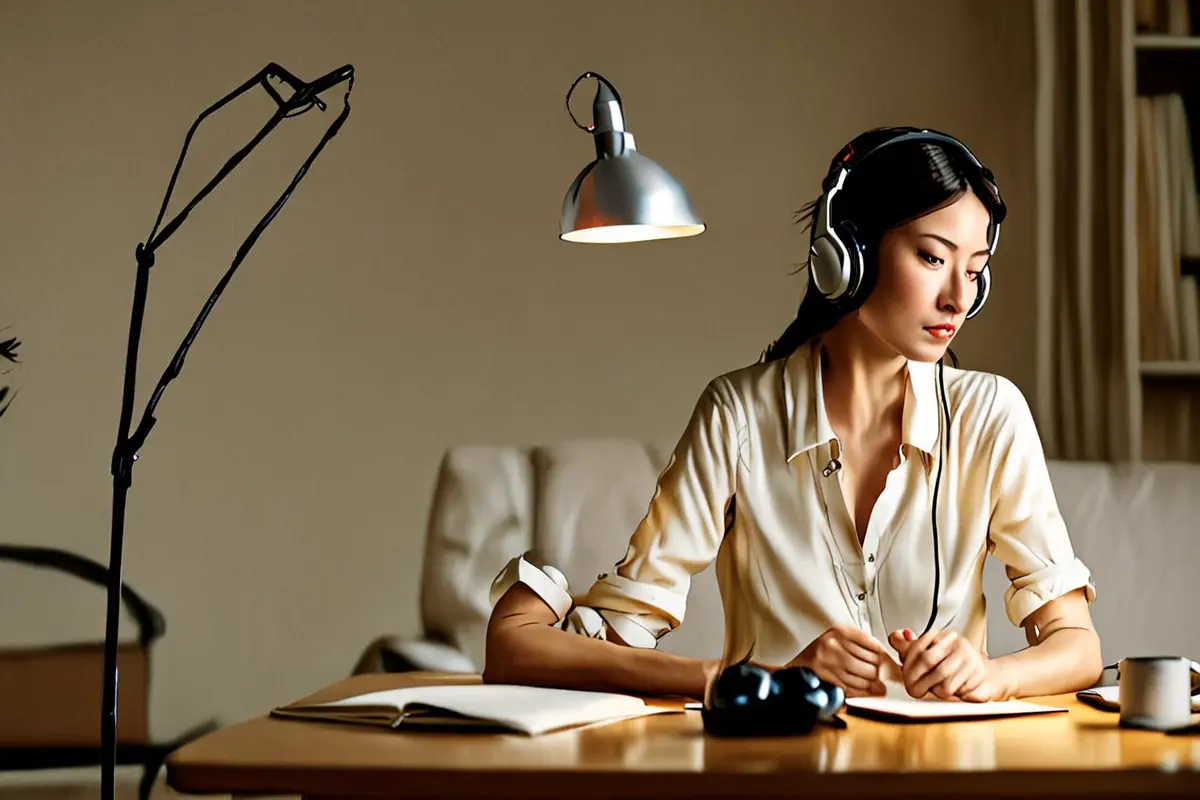
At dusk, someone comes home, puts down a bag, and switches on a desk lamp. Warm light reaches the table. They sit and place the headphones they have been carrying beside the lamp. The room has become brighter, but the action can also mark a shift from a busy day to personal time. In lifestyle advertising, a visible practical light is both part of the set and something a character can use to move a story forward.
Give the switch a reason
Imagine a fictional headphone advertisement. The person comes home wanting a quiet moment with music. Switching on the lamp, sitting down, and putting on the headphones form a readable sequence. The lamp does not explain headphone performance; it creates a perceptible change in the space, while handling and wearing the product bring it into that change. This example illustrates a creative approach, not a client project or a claim about a product.
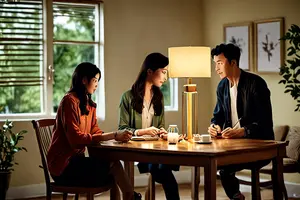
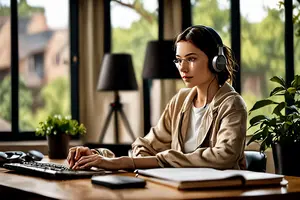
If the person has no reason to approach the lamp, its sudden illumination can feel staged. Ask whose lamp it is, when they would turn it on, and what they intend to do next. The same object can carry different moods: lighting a desk for late work, a table for visiting friends, or a small area for reading. Warm light is not the only answer for every home.
Show where the light seems to come from
When a shade or bulb is visible, viewers can connect it with a nearby pool of light. The crew can extend the scene's lighting from that apparent direction, using off-camera fixtures or bounce to make the person, product, and background readable. The practical provides an understandable source; additional light helps the camera see what the shot needs. Their direction and atmosphere should work together.
The visible lamp may not illuminate the whole room by itself. Filling every shadow to reveal an expression can weaken the change created by switching it on; preserving darkness at the expense of the product can make the scene harder to understand. Decide what matters in that shot and adjust position, lamp brightness, and fill while monitoring the image rather than relying on the naked eye alone.
Design the states before and after
Before the switch, the hand needs to find it and the room needs enough visual context. Afterward, the viewer's attention can travel across the table to the person or product. Rehearse the entire action: does a hand cover the switch, does the shade block the face, or does the product's reflection change abruptly? If the actual operation of a lamp is being demonstrated, use a sample and procedure approved by the brand.
When a bulb is much brighter than its surroundings, exposing for its detail may leave the person dark; exposing for the person may lose detail in the bulb. Either choice can work. Choose for the story and test with the actual camera settings and fixture. When dimming or power conditions vary, check for flicker under the intended shooting settings rather than treating one device or parameter as a universal fix.
Connect two views of the same lamp
A wider shot can establish where the lamp sits and why the person approaches it. A close view can show a hand on the switch and light reaching the product. When cutting between them, preserve recognizable lamp placement, movement direction, and before-and-after states. For another camera position, record the lamp position, brightness, and action starting point so the apparent source does not jump across the room.
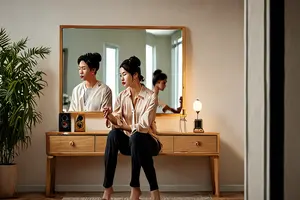
A vertical crop may retain only the shade and hand while losing a product on the other side of the horizontal frame. Shoot a dedicated vertical composition in which lamp, hand, and product each have a role, or separate switching on from wearing the headphones into two shots. For another approach to spatial relationships, see mirror composition with people and products.
Ask whether the lamp earns its place
Remove the action in a rough cut and watch again. Has the story lost a transition in time, a character choice, or a spatial relationship? If all that disappears is an unexplained brightness change, the lamp may be decorative. If the pause and following action no longer feel natural, it has helped tell the story. A short cut need not preserve every moment of switching on, but what remains should retain a readable everyday context.
A visible source can make a room feel inhabited and give a performer an action to carry. If you are planning a lifestyle advertisement or product film, contact ONCE to discuss the creative approach and production.