The detail that most often exposes a staged product film is not the actor's face. It is the hand. The actor lifts a cup, turns a dial, or closes a tool, and every required action appears to be present. Yet the shot still feels like an instruction manual: the hand waits for a cue, the fingers do not search for support, and the action ends before the product has responded.
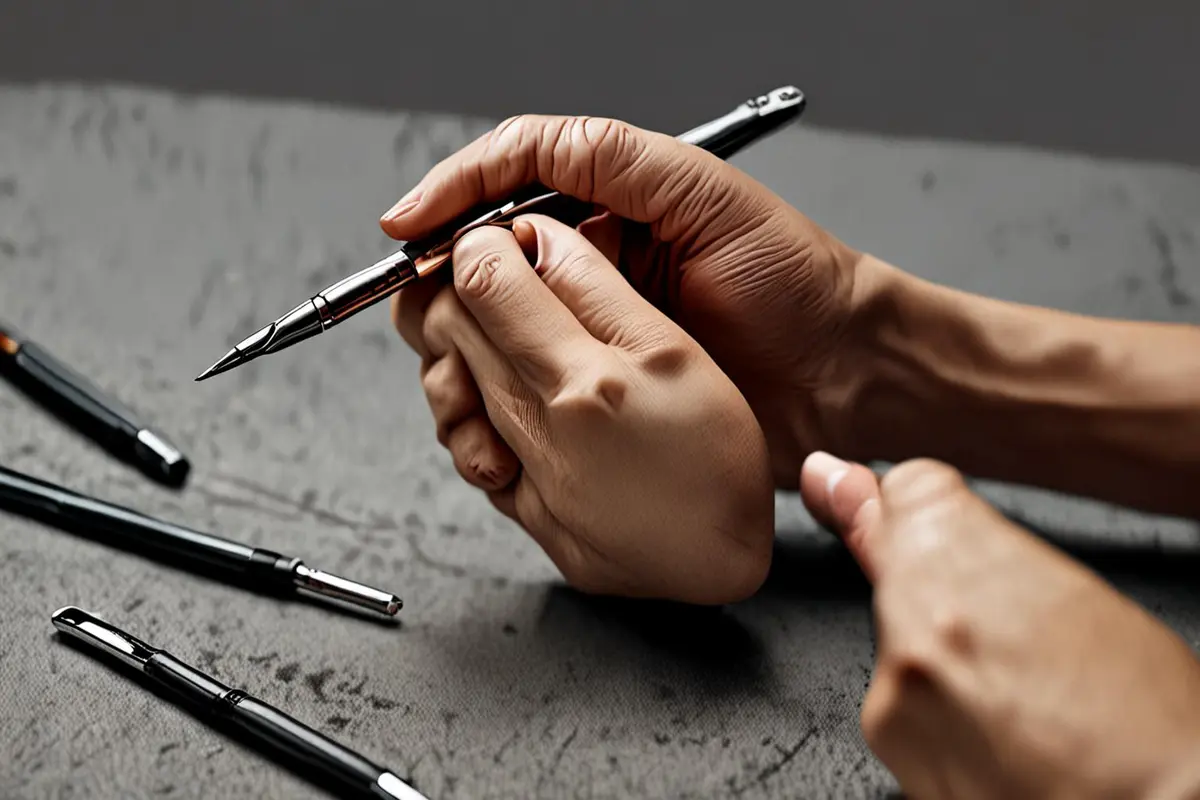
Hand performance in a product ad is not mainly about making the hand look elegant. It must convince the viewer that this person understands how the product works. Grip, speed, contact order, and release reveal weight, resistance, precision, and user experience within seconds. A shot that records only “hand touches product” misses the most persuasive part of the action.
The viewer starts reading the hand before contact
A reach-to-grasp study found that hand approach and finger placement are influenced by both object shape and the action that follows contact. The same bottle is not grasped in exactly the same way when the next goal is pouring rather than moving it. Another action-perception study found that observers matched power grips with larger targets and precision grips with smaller ones, even when the reach kinematics were identical.
This has a direct implication for product filmmaking. Before contact, grip aperture, wrist angle, and the coordination of gaze and hand already tell the audience what the actor intends to do. If one shot establishes a small button but the following hand enters as if moving the entire device, the action feels uncertain. If a supposedly heavy tool is approached with fingers already relaxed, its weight disappears.
Approach with the next action already in mind
Ask what happens after the lift before designing the entry. Pouring, rotating, cutting, wearing, and handing over require different support points and wrist paths. When contact grows naturally into the next goal, the hand belongs to a user rather than a performer waiting for the product to be positioned.
Approach, contact, and release form one sentence
Many product shots design only the functional middle: press, open, attach, or lock. Real actions have context. A hand calibrates its position, checks resistance after contact, and releases force when the task is complete. Removing every transition may make a shot faster, but it also removes physical continuity.
The approach makes intention readable
A precision button needs a small search area and a stable fingertip. A broad handle asks the palm to open early. A product with a blade, hot surface, or moving mechanism makes the hand avoid danger zones. If every hand simply slides into frame from the same direction, the product's structure is not shaping the action.
Contact should let the product answer
Button travel, magnetic alignment, hinge damping, material deformation, and tool engagement are the product's response to the hand. Do not cover that response or leave before it happens. A short hold can show that the action has taken effect. This connects with our article on waiting in product ads: a pause is useful when it preserves cause and effect.
The release determines whether the action feels complete
Pulling away the instant a mechanism locks can make the actor look eager to exit the shot. A visible reduction of fingertip pressure, a returning wrist, or a final confirmation creates completion. This matters especially in packaging sequences; our guide to product unboxing ads explores how contact order can express value.
Do not mime weight when the object can provide resistance
People can read object weight from somebody else's movement. A box-lifting study found that observers relied strongly on lift duration when judging weight. More recent handover research shows that receivers use a giver's kinematics to anticipate weight and adjust their own grip force. A TMS experiment also found that disrupting primary somatosensory cortex impaired weight judgements based on observed human lifting actions, supporting the idea that viewers extract bodily information from movement.
This is why “acting with effort” rarely compensates for a physically empty prop. A hollow prototype, a dial without damping, or empty packaging produces the wrong acceleration, braking, and muscle tension. A strained face cannot replace the missing participation of the object.
Correct the prop before correcting the actor
Within safe limits, add representative weight, damping, or friction so the performer receives real feedback. If the final product is unavailable, define its weight distribution. A centre of mass near the front of a handle, at the base, or off to one side changes the starting angle and stopping motion. Object motion itself should remain visible. Research on grip-force control suggests that seeing and attending to the moved object helps people estimate dynamic force, so a camera that follows only the hand may hide the most useful cue.
Skill comes from prediction, not constant speed
A skilled user appears fluent because the support point, resistance, and endpoint are anticipated before movement begins. They do not stop at every stage to search, and they do not perform every action at one uniform speed for the sake of visual cleanliness.
A beauty device slows as it approaches skin. A power tool needs stable support before activation. A kitchen dial may pause as it crosses a setting. A folding mechanism needs a decisive endpoint when it locks. These speed changes come from the product rather than a generic slow-motion style.
Allow discovery before tightening the movement
During early rehearsal, do not force the performer's fingers into one approved pose. Let them complete the task several times and watch where support points and errors emerge naturally. Once the product logic is clear, refine the path, finger position, and rhythm. The result is organised reality rather than a pose copied from a still reference.
Shot size controls how much physics the audience can read
An extreme close-up can reveal fingertip contact, surface texture, and small mechanical return, but it may hide how the wrist, forearm, and body carry weight. A medium shot can show the source of force while losing the precision of the response. These are different forms of action evidence, not merely different looks.
To communicate weight, retain the hand, product, and part of the forearm so the audience can see lift and braking. To communicate precision, move closer to the contact point while keeping product movement, return, or state change visible. A long lens can compress the distance until hand and product appear pasted together. A close wide lens can exaggerate entry speed and distort fingers. Focal length should serve action readability.
Do not cut out the frame where cause becomes effect
The viewer needs to see the critical relationship in “approach, contact, product response, release.” Cutting away before the press and returning after the response leaves narration or sound effects to explain the function. Our article on brand film sound design shows how contact sound, damping, and mechanical endpoints can reinforce physical action.
Different products give the hand different roles
The hand also represents a user identity. A hand operating laboratory equipment should suggest procedure and care. A hand using a domestic product should feel habitual. Luxury imagery may require restraint, while tool advertising must show safety, support, and force transfer.
Precision products reveal fingertips; heavy products reveal the power chain
Earbuds, jewellery, sensors, and small controllers benefit from fingertip contact, micro-adjustment, and controlled breathing. Power stations, tools, outdoor equipment, and large appliances need the forearm, shoulder, or second hand to support the action. Beautiful fingers alone can make a substantial product feel hollow.
Personal-care products must make pressure comfortable
A device that touches skin should make changing pressure visible without asking the performer to press too hard or exaggerate pleasure. Hand position must explain the safe area, contact surface, and pace of use. When the product promise is gentleness, the action cannot be designed only for speed.
Let the performer use the product before filming it
The strongest preparation for hand performance is not memorising choreography. It is understanding the product. Before cameras roll, let the performer complete real tasks: open, load, start, adjust, clean, and store. The director and cinematographer can observe which movements arise from the structure, then decide what should be refined, enlarged, or separated into shots.
The final movement does not need to be the most elaborate. It needs to make the product's response to the user readable. If you are planning a product commercial, crowdfunding video, or e-commerce product film, contact ONCE VISUAL to build credible operation shots from product testing, action rehearsal, shot size, and physical sound.
Research informing this article includes studies on grasp shape and action goals, grip-based action prediction, weight anticipation in handovers, weight perception from observed action, and visual motion in force estimation.