Your China-based production partner has delivered approved German product graphics. Your homepage switches correctly, but the product gallery still serves English artwork. Re-exporting the German files will not necessarily fix that mismatch. Before ordering a multilingual asset rollout, establish how each intended storefront location will select its file.
ONCE proposes a two-slot pilot: place one representative localized image in two intended locations, verify the visitor experience, then commission the wider batch. This is a production planning method, not a Shopify feature or a claim that we have tested your store.
“Image” is not a sufficiently precise delivery destination
As checked on November 3, 2026, Shopify’s Translate & Adapt requirements list product images as unsupported. Its manual translation guide describes choosing language-specific media for supported resources through the theme workflow. A theme section and a product gallery therefore need separate implementation checks.
The distinction also appears in Shopify’s December 8, 2022 media localization announcement. That historical announcement is not a new launch. The current help pages provide the present app-specific limitation; neither proves that every third-party solution or custom theme is incapable of localizing a gallery.
For a marketing team working with a Chinese supplier, this changes the brief. Specify the homepage section, product gallery or description placement, rather than simply requesting “three languages for Shopify.” An approved file and a working storefront substitution are different deliverables.
Run a two-slot pilot before commissioning the catalogue
Pick an image that represents the real work: an identifiable product with a short explanatory overlay. Prepare the source-language version and one reviewed target-language version. Place them in two locations actually included in the launch plan—for example, a homepage section and a product gallery.
| Pilot item | Record to retain |
|---|---|
| Placement | Page, component, source resource and implementation owner |
| Approved assets | Exact source and localized file versions, language and market combination |
| Visitor result | File shown after switching language, refreshing and returning |
| Untested scope | Other components, languages, markets and devices still needing checks |
Check switching from the default language, entering a target-language page directly and viewing the placement on a phone. Keep the page and asset versions with the result. A saved setting in the admin is insufficient evidence of what a visitor receives. Do not substitute an easier slot for the requested gallery and call the original scope complete.
If only the theme section passes, isolate the gallery work. Ask the implementation partner to demonstrate the proposed app or theme solution in the current configuration before extending the order. Installing a tool is an implementation step; it is not the acceptance result.
A travel-product example: what should the supplier actually make?
Consider a hypothetical overseas travel-accessories brand sourcing an organizer from Shenzhen. Its English and German offers contain the same product, colors and included items. This is an illustration, not an ONCE client result.
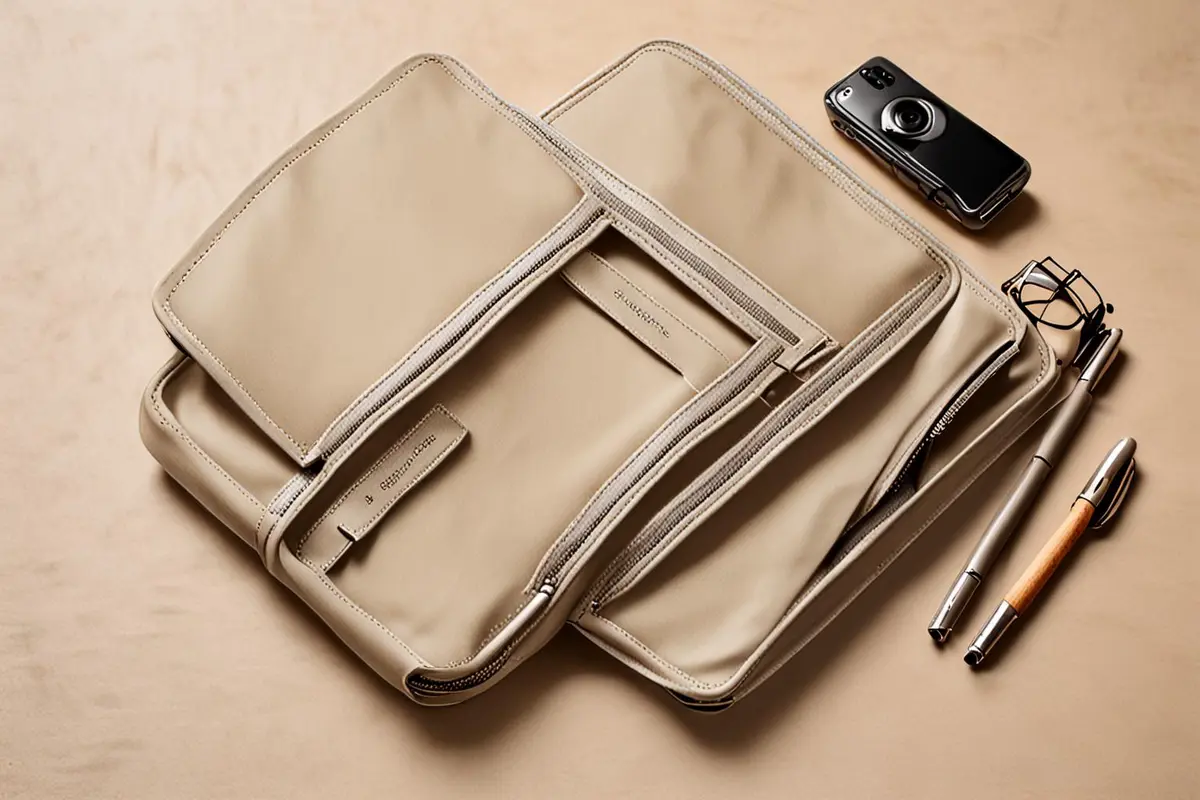
A clean photograph showing the open organizer and its internal compartments can serve both audiences. An annotated packing graphic needs reviewed German copy and a new layout. Longer text alone calls for layout work, not necessarily another shoot. A different physical package, included accessory or market-specific product configuration may require new photography.
If the gallery pilot fails, pause the remaining German layouts while the page owner evaluates an appropriate section, application or theme implementation. Moving the information is possible only if the brand accepts the new placement and the buying explanation remains complete. Do not quietly remove qualifications or accessory disclosures to simplify the build.
A shared clean image with localized page text is another creative option. Evaluate whether the visitor can still understand the product at that location. It is a choice to test, rather than a universal prescription to remove all text from images.
Split the order into three accountable pieces
Product facts and language approval
The brand confirms the model, included items, operating conditions and approved claims. A translator or target-language reviewer approves the wording. Neither the image maker nor an automated translation should infer a performance promise from a photograph.
Asset production
The production scope identifies reusable clean images, language-specific layouts, necessary reshoots and agreed editable files. Count the work being performed: additional languages do not automatically mean additional photography, and delivered file counts do not establish how many storefront placements are implemented.
Storefront implementation and acceptance
The implementation partner owns file mapping, component integration and visitor-path checks; the brand names the acceptance owner. When the correct file exists but the wrong one appears, investigate the configuration first. When the asset contains incorrect product information, return to factual approval and production. Quote these responsibilities separately rather than hiding them inside an undefined multilingual-image fee. This is a scoping approach, not a price benchmark or a promised saving.
Keep the rollout maintainable after launch
Retain the source image, localized versions, placement, implementation method, approver and last verified result in a linked asset register. When a theme changes or a new language is added, retest representative placements before assuming the previous behavior carries over.
Alt text remains a separate editorial task; it neither replaces visible explanatory copy nor turns English artwork into a German image. For related production planning, browse ONCE’s video production guidance. The wider principle is to define how an asset will be used before deciding how many versions to make.
For ongoing content management, the valuable record is which base images are reusable, which placements have passed and which changes require fresh work. Any claim of improved margins or reduced rework would need project evidence. Bring one product, two planned placements and your target-language list to ONCE to scope a pilot before commissioning the full rollout.
Sources were checked on November 3, 2026. The two Shopify Help Center pages do not display publication dates. The linked changelog is dated December 8, 2022. The pilot and hypothetical example are ONCE analysis; the original AI cover illustrates the topic rather than documenting a client implementation.