On the monitor, a hand tears the seal and the edit immediately cuts to the full product. The action is clean and the package looks beautiful, yet something feels missing. The problem is not image quality. The product arrives too easily: before the viewer can register resistance, layers or anticipation, the answer has already been given away.
Product unboxing ads are often filmed as complete records. The outer box, sleeve, manual, accessories and main unit all appear in order. Nothing is technically wrong, but little value accumulates. An effective unboxing film designs the experience of obtaining the product. Packaging becomes both a prop and a timing device, deciding when the audience sees something, what appears first and how much weight the first full reveal carries.
Unboxing is a promise being fulfilled, not an inventory
A package may contain many items, but they do not all deserve equal screen time. Viewers mainly follow three changes: closed to accessible, unknown to recognisable, and packed to usable. The story should be organised around these transitions instead of counting every layer in the box.
The first seam in the outer sleeve, the slight bend of a pull tab and the moment an insert releases all show how a product has been protected and prepared for use. If an overhead shot displays everything at once, every later action becomes explanation. If the film begins with shape and material clues, then lets the product gradually leave the package, viewers actively construct its weight, scale and purpose.
Write the order of information before writing the shot list. Each reveal should answer one question while leaving a reason to watch the next action. First establish what kind of object this may be, then let material become tangible, and only afterwards show how it enters use.
Resistance gives an action its value
Seals, magnetic lids, sliding paper sleeves, foam inserts and protective films all resist the hand differently. A sequence that only pursues speed can flatten those differences. One quick pull makes premium board and an ordinary carton feel identical. Before filming, open and close the sample repeatedly and identify where the action starts, where resistance appears and where it releases.
Save the irreversible action for camera
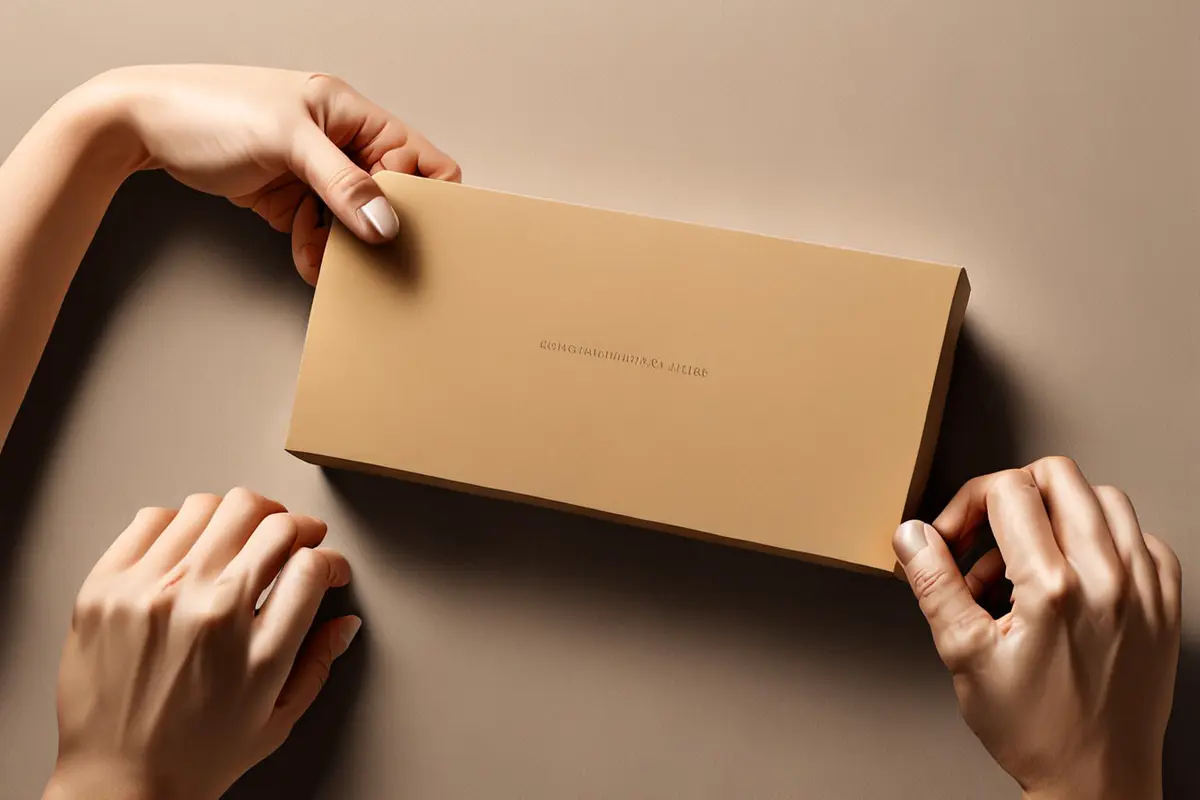
Tearing a seal, lifting a protective film or cutting a paper band can happen only once. These actions naturally signal that the real experience is beginning. Prepare separate resettable or replaceable package parts for close, front and side angles, then decide which camera receives the genuine first tear.
A hand model should rehearse the path, landing point and pace without losing all tactile surprise. The first encounter with real resistance can be reserved for the chosen take. The brief pause, renewed pressure and material rebound will then feel credible.
Weight appears when the product leaves its insert
While a product rests in packaging, the insert carries its scale and weight. Hands lifting it, wrists making a small correction and the insert springing back make that weight visible. Establish the real handling method before filming and avoid unnatural pinching simply to expose a logo. For a closer look at how gesture should serve product information, see our article on hand performance in product advertising.
Reveal order matters more than the number of shots
A valuable unboxing rarely gives every component equal attention. It establishes external order, introduces one obstruction, offers partial evidence and finally arrives at a usable state. The exact sequence can change, but every stage needs a job.
- External order: show how the package is lifted, placed and opened so the viewer gains a scale reference.
- One obstruction: use a sleeve, lid or tissue layer to delay the full product and give anticipation a target.
- Partial evidence: reveal a contour, material reflection or functional detail that helps the viewer identify the object.
- Usable state: let the product leave the package and land in its real operating orientation.
This is not a fixed four-step template. A portable product may derive value from being ready to carry immediately. A precision product may need layered protection and exact alignment. A refill may need to demonstrate easy opening, compact storage and reduced waste. Reveal order must serve the specific value proposition.
Sound turns visible material into a felt material
A paper sleeve sliding, a magnetic lid closing, a seal breaking, film peeling and a product meeting the tabletop add material and weight to the image. When an unboxing film carries only music, viewers see contact without feeling it. Record clean versions of the important actions and preserve the natural contrast between materials.
Sound should not contradict the physics on screen. Pairing thin board with a heavy metallic impact may briefly suggest luxury, but it quickly feels false. A stronger approach begins with accurate recordings and improves perception through layering, space and timing. A magnetic click can be more focused, paper friction can feel closer, and a tabletop landing should match the hardness of the surface.
Sound can also lead the image by a fraction. The beginning of a tear may arrive just before the cut to material separation, guiding attention without breaking cause and effect. When details become large in frame, keep product scale consistent; our guide to macro shots and product scale explores that problem further.
Some moments deserve time and others need compression
Slow down actions that happen for the first time and change the relationship: the first broken seal, the first glimpse of the product, the first lift from the insert and the first movement into an operating position. These moments carry value, and viewers need enough time to read the material response.
Compress repeated information. Removing three similar cables, leafing through every manual page or opening several protective bags drains anticipation. Matching cuts, jump cuts or spatial rearrangement within one shot can move through them quickly. Compression does not hide accessories. It protects attention for the moments that explain the product best.
The useful question is not how long the real process takes, but what new understanding the viewer gains. Shorten an action that repeats known information. Give time to one that proves material, weight, structure or use for the first time.
Hands, packaging and camera need one spatial logic
Many unboxing problems come from changing geography rather than weak lighting or equipment. A lid opens left in one shot, then the product exits from the right. Hands enter an overhead frame from below and suddenly appear from above in a close-up. Every shot may look attractive, but the sequence loses direction.
Before filming, mark the package axis, product orientation, dominant hand direction and landing point for removed pieces. This protects continuity and makes the performance easier. Camera angles may change, but the basic geography should remain stable. If the sequence crosses the axis, an intermediate shot should clearly show the package turning.
Packaging must also leave room for the action. A tight insert, an edge with no grip or a lid that springs back forces the hand into corrective gestures that obscure the product. Testing the real sample before the shoot is more effective than repeatedly asking the performer to move a hand aside.
One unboxing shoot needs different answers for three channels
Brand film: enter the brand world
A brand version can hold more negative space, material sound and partial mystery. It does not need to explain every accessory. It should connect packaging order with brand character, then focus on one or two recognisable actions without allowing the box to displace the product as the protagonist.
Commerce page: prove what happens after delivery
A commerce version values information speed. The opening seconds should establish package scale, main contents and the first usable state instead of lingering on the cover. Keep one tactile opening action, then move quickly to accessory relationships, setup or use. The pictures should still communicate on mute; sound adds value rather than carrying the only explanation.
UGC: preserve judgement and small surprises
UGC does not mean careless filming. Credibility comes from honest reactions, natural pauses and a discoverable order. A finger may search for the opening point, hands may adjust to unexpected weight, and a specific spoken observation may remain. The camera still has to show the essential action, and naturalism should never hide product information.
All three versions can share one production day, but different needs cannot be solved by vertical and horizontal crops alone. Plan the opening, first reveal and final state for each channel before deciding which shots can be shared and which actions need dedicated coverage.
Once packaging has done its job, return the lead to the product
A strong product unboxing ad does not leave viewers remembering only the box. Packaging establishes order, creates anticipation, demonstrates protection and delivers the product into a clear beginning of use. Once those tasks are complete, the film should move to the product itself: how it is held, how it works and how it enters a customer’s life.
If you are planning a launch unboxing film, product visual system or commerce video, share the packaging sample, product proposition and intended channels with ONCE VISUAL. We can develop the reveal order, action, sound and version structure so one production serves both brand expression and practical sales pages.