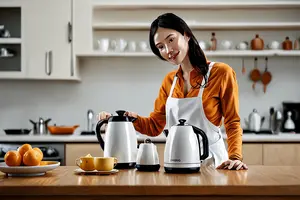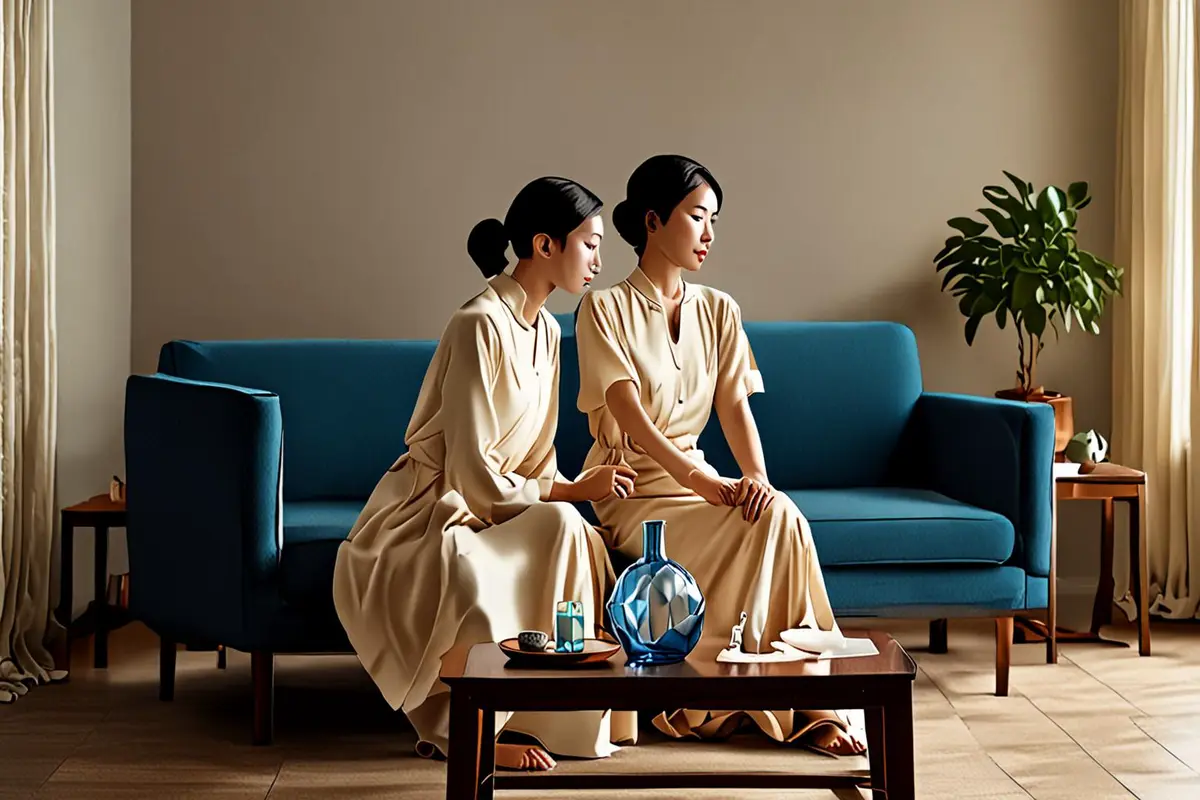
When a character is standing, the body still has many possible directions. Once the person sits, weight passes into the chair, and the knees, elbows, and eyeline are reorganized. Someone perched on the front edge of a sofa appears ready to leave. Someone deep in a chair seems to have returned to a private space. Someone sitting sideways while remaining oriented toward a product feels close to it without being fully at ease.
Brand film scripts often treat “sits down” as a simple blocking note and leave the performer to find a comfortable pose on set. Yet sitting is not static background. It changes identity, the distance between people, the apparent scale of a product, and the path of a hand reaching toward it. It can make viewers feel they are witnessing a life or looking at a carefully arranged furniture advertisement.
Sitting does not stop action. It redistributes weight
The moment a person takes a seat reveals intention. Someone in a hurry may only touch the edge, never fully releasing the center of gravity. A tired person may let the shoulders and back search for support first. Someone preparing for a serious conversation may sit forward with both feet grounded and the arms away from the backrest.
These differences do not require exaggerated acting. The position of the pelvis, whether the back meets the chair, the direction of the knees, and the pressure through the feet can already alter the character. If a director offers only words such as relaxed, professional, or intimate, a performer may compensate with a smile or slow motion. A more specific instruction, such as “you have sat down but have not decided whether to stay,” gives the body a concrete choice.
One chair can produce three different relationships
On the front edge, the product becomes a pending decision
A character on the front edge of a chair or sofa retains forward momentum. A laptop, coffee machine, speaker, or tool on the table feels like the next target of action. This works for concentration, anticipation, hesitation, and a temporary stop. If the performer remains tense throughout, however, the scene can feel like an audition or a product demonstration.
Deep in the backrest, the product enters private territory
When the back genuinely gives itself to the chair, the seat encloses the body. Headphones, reading lamps, smart-home devices, and personal care products can feel like parts of rest and long-term use. The cost is distance. Hands may be farther from the product, so production design should reposition it instead of asking the performer to reach awkwardly every time.
Sideways, the relationship arrives before the function
A person who does not fully face camera or product may reserve part of the body for another character, a window, or an off-screen sound. The product can sit between two people or belong to only one person's touch. This posture supports emotional passages, but it is less suitable for complex demonstrations because the body can hide the interaction and redirect the eyeline.
Furniture is not scenery. It participates in the performance
The same performer cannot produce the same body on a hard wooden chair, a deep sofa, and a high stool. Seat height changes the relationship between knees and hips. Backrest angle changes the neck and shoulders. Armrests limit where the hands can go. A deep sofa can swallow the character, a high table can push the product toward the chest, and slippery upholstery can change the landing point on every take.
Furniture should therefore be tested beyond a static art-direction image. Put the performer, wardrobe, and real product through the intended action: sit, lean back, turn, pick up, replace, and stand. If the performer constantly has to manage the chair, the acting becomes polite and careful. If the chair never appears to respond to weight, the character can seem to float inside the location.
Place the product where the seated body can truly reach it
Production design often places a tabletop product where the composition looks best rather than where a seated person can reach naturally. The performer leans too far, leaving the character state before the hand arrives. Or the arm crosses the product face and hides the important structure. A more reliable process lets the character settle first, then maps the arc the arm can travel without strain.
The product may sit at the end of that arc or become a support within the movement. It does not need to remain fully visible every second. What matters is that viewers understand why the hand moves and how the product responds. ONCE's article on long takes in product ads considers when a complete action proves use. Seated blocking makes that proof depend on a much smaller range of motion.
Two seated people are not two standing marks moved onto a sofa
Two people can sit close together and still appear distant. Knees pointing away and shoulders leaning toward opposite armrests create separate territories. One person forward and the other deep in the seat may imply initiative and retreat, questioning and waiting.
When a product sits between them, it can become a shared object, a medium of exchange, or a quiet barrier. If both reach for it, the order determines who has agency. If one only watches the other use it, the product witnesses the relationship. Blocking should begin with what each person wants to do, rather than arranging them like a symmetrical furniture catalogue.
Find the seated eyeline before deciding how powerful the product should look
Once a character sits, a former eye-level camera may suddenly look down. Keeping the camera at standing height makes the viewer feel present in front of the person. Lowering it near the seated eyeline creates equality and participation. Dropping below the tabletop can give the product greater mass while compressing the eyes and hand action.
ONCE's article on camera height in product ads explains how high, level, and low viewpoints change product identity. With a seated performer, the camera must also decide whether the audience is sitting opposite, standing nearby, or observing the interaction at table height. That social position should agree with the scene rather than being determined only by the hero angle.
Small movements keep the seated body alive
Real people rarely become motionless after sitting. A palm shifts between the knee and armrest, a foot changes pressure, and fabric moves with breathing and turning. The right small action can preserve life and reveal tension, familiarity, or waiting.
Small does not mean random. Touching a cup, adjusting a cuff, or crossing a leg can pull attention away from the product. Give the passage one primary change: the person holds the weight while listening, moves forward only after deciding, and settles back only after the product responds. When body movement and information change together, the posture stops being decorative naturalism.
Continuity must match weight, not only the hand
The most common seated continuity error is not hand position but body weight. A character is deep against the backrest in one shot and visibly forward in the close-up. Both feet are planted, then the legs are crossed. The product action may match, but the audience still feels that time has been removed.
Record the landing point, back contact, knee direction, and main arm support before deciding which changes can be omitted. When the person stands or turns, movement direction must also remain spatially legible. The method in screen direction in brand films can help track entrances, exits, and stops. Continuity does not require a performer to reset like a machine. It requires every change to have a cause.
Horizontal and vertical formats rewrite seated space
A horizontal frame can hold the full body, furniture, and product distance. A vertical frame compresses attention between the face, hands, and tabletop. Meaningful side space can disappear in the crop, and the distance between two people on a sofa can look much smaller than it was.
A vertical version should not simply enlarge the central face. The reach may need to be shorter, with the main action closer to the body's center. Two people may need tighter diagonal blocking. The emotion of a posture comes from the ratio between body and surrounding space, so each version should preserve that ratio rather than only preserving a face.
AIGC often separates the body from the chair
Generative imagery can explore furniture, wardrobe, and character combinations quickly, but contact points often expose the illusion. The pelvis carries no believable weight, leg length changes between shots, fingers merge with armrests, and cushion compression or fabric folds fail to continue with movement. A still frame looks plausible while playback makes the person appear to travel on top of the chair.
A hybrid workflow should lock seat height, pelvis position, foot placement, product coordinates, and camera height first. Keep live-action contact when the shot proves function or physical feel. Use AIGC for extending the room, changing the view, or creating symbolic environments where the load-bearing relationship remains intact. The closer the image is to daily life, the less vague the body physics can be.
In rehearsal, let the character sit for one minute
Before running the scene, remove the product and let the performer sit in character for a full minute. Watch where the weight goes, where the hands rest, and which adjustment feels truthful. Then place the product inside the natural reach and decide which part of that action the camera needs.
If everyone depends on repeated instructions to relax, the furniture, product position, or character motive may still be unresolved. A good seated posture is not a beautiful frozen pose. It is a place where the character can continue breathing, acting, and making choices.
Once the character settles, the product can enter life
Sitting compresses performer, furniture, and product into one limited space, making false relationships easier to see. When the weight has a reason, the reach is natural, and the distance between people is precise, the product moves from a display object into the relationship.
If you are developing a brand film with a home, office, conversational scene, or seated product interaction, send the character relationships, product dimensions, location plan, and format requirements to ONCE. We can begin with furniture tests, blocking, camera previsualization, and continuity so the character sits inside a believable relationship before the product is asked to perform.