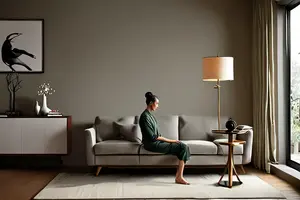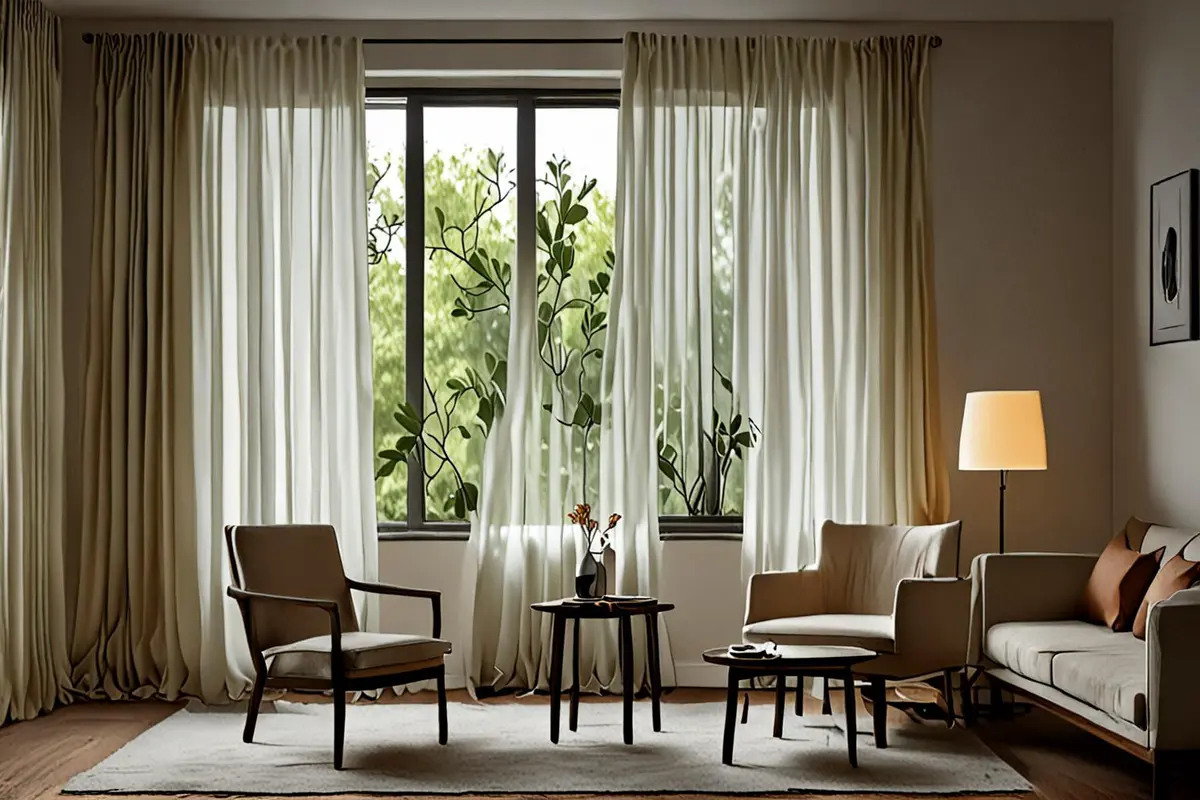
A character closes the door and leaves. The camera does not follow. Half a glass of water remains on the table, a chair settles back into place, and traffic continues outside the window. No one is in frame and no new line is spoken, but the audience is already deciding whether the character will return, whether the relationship has ended, and whether the room now feels colder or finally at ease.
An empty shot in a brand film is more than an image without a person. It should not exist only to cover an edit, add duration, or provide a transition. At its best, the space catches the action a person leaves behind, allowing the product, light, sound, and objects to finish an unspoken sentence.
An empty shot is a temporary absence, not an empty image
The difference between an empty shot and ordinary location coverage is its relationship to the action around it. A beautiful living room that no one has entered is mainly a location introduction. The same room after an argument can carry a different charge: a jacket on the sofa, a lamp still on, and a cup left where someone put it become the after-effect of a relationship.
The first question is therefore not whether the space looks beautiful. It is who has just done what there. Viewers do not need the entire process. One or two readable traces can make an absent character imaginable. Too many traces turn the room into an arranged story display. None at all can make it feel like a property showroom.
Opening emptiness, aftermath, and off-screen continuation do different jobs
An opening empty shot establishes the rules
Before the story begins, an empty shot introduces a world: the only work light on in a dawn kitchen, an untouched coffee machine in a night office, or footprints still drying by a door after rain. It does not need to explain the brand yet. It can place the intensity, order, and mood of the life a character is about to enter into the space itself.
The main risk is generic premium imagery. A slow push, backlight, haze, and carefully arranged objects could belong to almost any brand. A more specific rule often comes from one imperfection: a reused note, a corner kept for a pet, or a charging cable that was recently moved. The detail should come from plausible use rather than artificial distress.
An aftermath shot lets the result settle
If the edit cuts immediately after an action, viewers only know what happened. Holding the room a little longer gives them a chance to feel what it means. A product returns to a drawer and the desk becomes quiet. A family leaves the living room, the display goes dark, and a faint reflection remains on the wall. After exercise, shoes and water by the door preserve evidence that a body has just passed through.
This pause does not automatically slow the film. It releases the result from the character's facial expression and lets the environment carry emotion. ONCE's recent article on ending a brand film considered how product, character, and brand statement converge in the final shot. The empty shot asks one step further: can the brand attitude still hold after the character has gone?
Off-screen continuation makes the world larger than the frame
A person leaving the frame does not mean the action has stopped. Footsteps receding down a corridor, water running in another room, or a brief laugh beyond a door tells viewers that the story continues outside the image. This works well for companionship, waiting, distance, and daily routines because every relationship does not need to be performed directly in front of the camera.
Off-screen sound still needs direction and distance. If a person has clearly walked away but breathing and clothing remain close to the microphone, the absence collapses. ONCE's article on ambient sound in product ads explains source distance, room tone, and sound bridges in detail. In an empty shot, sound should not fill every gap. It should tell us where the absent person went.
When the product remains, it does not need to hold a hero pose
If the character leaves while the product stays centered, perfectly lit, and square to camera, an empty shot can become an extended hero shot. The product may remain, but it is often more believable as the outcome of the relationship we just saw: headphones set beside a book, a lamp still illuminating an unfinished page, a kitchen appliance returning to standby, or a suitcase waiting by the door.
This placement lets the product belong to life instead of taking over the stage after the actor exits. Viewers read the state left by the action, then recognize the product. For functional hardware, a status light, changed position, residual warmth, or a mechanism returning to rest can continue to explain what it is doing. The empty shot should not replace a necessary demonstration.
Sometimes the product disappears while its effect remains: the room becomes quiet, the desk is clear, the lighting changes, or someone begins moving in the distance. This can express value, but it should not carry a concrete performance claim by itself. Emotional influence can remain implied. Size, speed, battery life, and measurable outcomes still require clear, supportable information.
Traces should be few and accurate
Production design can easily overfill an empty shot: an open book, a steaming cup, a fallen coat, a tilted photograph, and a curtain caught by the wind, all announcing that a story just happened. When every object performs, observation turns into staging.
A stronger approach chooses one primary trace and one supporting change. The primary trace carries the person, such as a chair pulled away from the table. The supporting change carries time, such as steam fading from a cup. Together they suggest who left and how long ago. Other objects can remain ordinary.
The traces must also belong to the character. A highly organized person will not suddenly leave everything on the floor. Someone rushing out will not arrange the desk like a still-life photograph. A restrained, caring brand may use a small but perceptible change. A brand built around energy and release may allow a larger trace, but it should still come from a real action.
A locked camera and a moving camera give absence different weight
A locked shot makes the room appear to wait. When the character exits and the frame refuses to follow, viewers feel the position that has been vacated. This can express afterthought, loss, calm, or a repeated habit.
A slow movement feels as if the camera is still searching for the person. Moving closer to one abandoned object can narrow a space into a decision. Tracking past several empty positions can suggest relationships and time. The more visible the movement becomes, the more the empty shot risks turning into a location showcase. Its endpoint needs a narrative object rather than movement for its own sake.
The direction of an exit also changes the tone. ONCE's recent article on screen direction in brand films discusses how entrances and exits alter the relationship between character and product. When the frame remains behind, exit direction, vacant looking space, and product position together shape who the audience expects to return.
Light can keep time moving, but it cannot invent a new world
After a person leaves, moving window light, a switched-off lamp, a darkening display, or a fading reflection can let time continue. The smaller the change, the more it feels like daily life. A larger change moves the film toward symbolism or a new chapter.
An empty shot does not need an entirely new lighting scheme just to create movement. Direction, color temperature, and shadows should retain the spatial logic of adjacent shots. If the concept shifts from warm to cool, give that shift a source: sunset, a closing door, a lamp turning off, or a moving light that leaves with the character. Light is not an arbitrary emotional switch in the grade.
Duration depends on the judgment viewers must complete
If the shot lasts only long enough to register that no one is present, it behaves like punctuation. If it continues after viewers begin searching for new information and nothing arrives, it can feel self-admiring. Useful duration depends on the trace: are viewers meant to notice that the cup is still warm, the door remains open, the product is still operating, or simply that a moment of quiet has arrived?
In the edit, remove music and voiceover first and see whether the image has a clear entrance and exit. The moment the trace becomes legible is often when the next shot can begin. If a subtitle has to explain that someone just left, the action or spatial clue may still be too weak.
Horizontal films, vertical cuts, and loops need different kinds of emptiness
A horizontal master can invite viewers to inspect the edge of the room and the distance a person leaves behind. A vertical cut usually needs the trace concentrated near the center so a product state, an empty doorway, or an abandoned object reads quickly. Cropping a horizontal empty shot can remove the vacant space that actually tells the story, leaving only an isolated prop.
A six- or 15-second version does not always need to remove the empty shot. It may compress it into a result frame, begin the character's action in the previous shot, and let the sound finish over the empty room. It can also become a loop point, allowing the ending state to return naturally to the opening. It still needs to advance understanding rather than survive only because it was filmed for the master.
AIGC can create empty spaces and erase the life inside them
Generative imagery can extend a view outside a window, change a season, remove a performer, or create an empty location that would be difficult to film. It is useful for previsualizing light and composition and for exploring surreal after-images in a brand world.
The risk is excessive perfection. A cup changes position, a chair resets itself, the product scale drifts, or shadows and reflections disconnect from the previous shot. An empty shot depends on what just happened, so continuity matters more than the beauty of one frame. Production should lock the camera, lens, key prop coordinates, light direction, and product geometry before deciding which regions may be generated.
If the shot carries the actual state after product use, preserve the live-action trace where possible. If it carries a dream or symbol, AIGC can expand the space, but the film should make clear that it has entered another expressive layer.
A good empty shot lets the brand world survive the character
A brand film does not need a person speaking every second or a product centered in every frame. After a character leaves, the space can still hold their choices, habits, and relationships. The product can move from a display object to a part of the life that remains.
If you are developing a brand film in which character, product, and space need to tell one story, send the actions, main locations, product states, and version requirements to ONCE. We can decide in the script and storyboard which empty shots genuinely advance the feeling, then carry them through production design, cinematography, sound, and multiple aspect ratios.