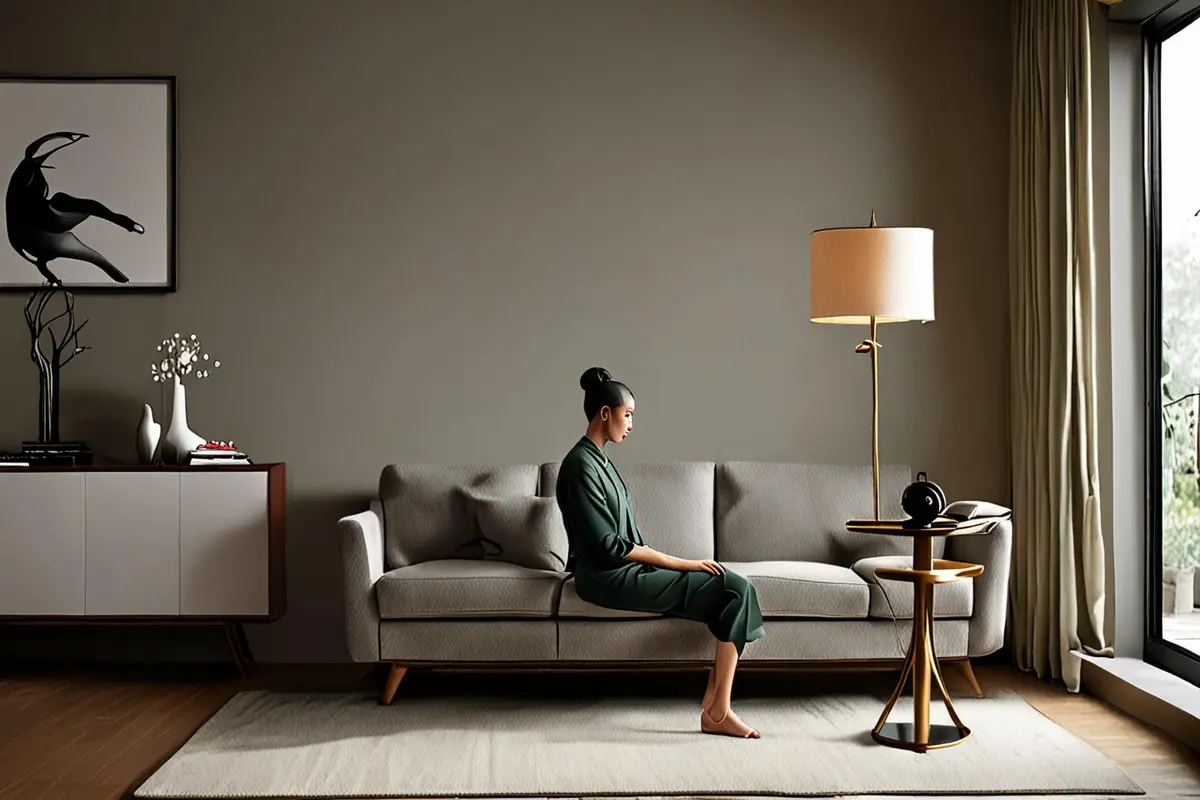
A performer enters a living room, stops on the left side of the frame, then reaches for a product on the right. If the next shot suddenly shows the performer continuing from right to left, viewers may not name the error, but they can spend a beat rebuilding the space. In a short brand film, that beat is enough to weaken the product action.
Screen direction is not a fixed dictionary in which left always means the past and right always means the future. It is first a spatial relationship: where a person comes from, where they are going, and whether the product acts as a destination, a tool or an obstacle. Good direction design protects attention for the story and product instead of asking viewers to repair geography.
Separate screen direction from character motivation
An arrow on a storyboard describes displacement. It does not explain why the movement happens. A person walking right may be in a hurry, responding to a sound or simply reaching for a device. The narrative meaning comes from the objective and from the way the product changes the path.
Rewrite “the performer enters frame” as a relationship: the performer comes through the door, crosses an empty table, changes direction after a prompt tone and stops beside the product. With the direction, trigger and stop defined together, the camera can decide whether to follow, wait or provide a stable reference.
An action axis lets people and products share one space
The axis is not limited to dialogue scenes. A performer, a product and the main action create a viewing relationship. When someone walks toward a coffee machine, camera positions on one side of that action line usually preserve travel direction across cuts. Moving the camera to the other side can reverse it. Reversal is not automatically wrong, but the film needs to show a turn, a detour or a new spatial reference.
This differs from our article on blocking ensemble brand films, which asks how several characters can share one brand idea. Here the central question is how every entrance, exit and turn preserves the product's role in the space.
A product at the end of a path creates expectation
When a performer keeps moving in one direction and the product sits ahead, the audience waits for the encounter. The product does not need to fill the opening frame. It can appear first as a silhouette, highlight or partial form, then gain a clear view when the performer stops. The expectation comes from the path rather than from an artificial concealment trick.
If the product solves a problem, let reality interrupt the performer first: their hands are full, the space is dark or an action cannot continue. Once the product appears, movement resumes. Its value is expressed through reorganised action. A product that sits behind the performer and is suddenly picked up without a prior relationship rarely feels as if it changed anything.
A product in the middle of a path becomes a turn
The product can also be a node that redirects the performer rather than the final destination. Someone crosses a room, notices a device, stops and doubles back. Give the change a visible or audible reason so that the turn reads as a choice instead of missed blocking.
Give the product readable time at the stop
When the performer stops, their body, hand and eyeline create a new set of directions. Stop too far forward and the body hides the product; stop too far back and contact becomes unclear. Rehearse the mark with shot size, focal length and product height. Our discussion of camera height and product identity adds another variable: a high angle may explain the path, while a low angle can turn either the person or product into an obstruction.
Continuity does not require every shot to move the same way
A film in which every action travels left to right may be clear, but it can also feel mechanical. Direction changes can carry the story. A performer moves against a crowd before finding the product and joining its flow. Two people enter from opposite sides and meet around a product. The camera follows a person, then lets them exit while the product remains.
The audience needs to witness the reset. A turn, a pass across camera, a move around furniture, an eyeline shift or a clear off-screen sound can re-establish direction. Cutting directly to an opposite close movement without a new reference can make a character appear to walk back where they came from.
An edit should preserve where an action is going
Matching action means matching weight and objective as well as hand position. If a performer steps out of frame, the next shot should help viewers find the landing point quickly. If a product is pushed right and appears sliding left in the next shot, the film needs a rebound, turn or camera repositioning that explains the change.
Our article on action rhythm in product advertising asks which processes can be compressed and which need real time. Screen direction adds a further question: do the compressed actions still move toward the same result? Fast editing may remove distance, but it cannot remove causality.
Decide whether the camera accompanies or establishes
When camera and performer move together, the body stays relatively stable while the background flows. A locked camera lets the performer cross the frame and makes distance and destination easier to read. Neither is inherently superior. If the product needs to become a destination, a fixed frame or constrained lateral move can preserve the person-to-product relationship. If companionship is the experience, a follow shot can place viewers inside the action.
Confusion grows when performer, camera and product all move in different directions without a stable reference. Remove one motion layer: stop the camera, keep the product still, or use a foreground structure as a coordinate. Clarity does not drain the image of energy.
Sound can establish direction before a person appears
A prompt tone, footsteps, a door or off-screen dialogue can prepare an entrance. The mix does not need an exaggerated left-right effect. Consistent level, room reflection and performer reaction are enough to create understandable off-screen space.
Sound can also motivate a turn. If a performer looks back after an audible trigger, the movement has a reason. Without one, the turn may look designed only to satisfy the composition. Sound design in a brand film therefore supports blocking as well as music and mood.
A horizontal path can disappear in a vertical crop
A wide frame can contain the starting point, the product destination and the distance between them. A vertical frame often preserves only two. Locking the crop to a face can remove the product; locking it to the product can make a performer arrive without a readable path.
Plan a shorter distance for vertical versions or place the decisive turn near the centre. The goal is not identical compositions. Each version should preserve where the action began, why it changed and where it ended. Aspect ratios can share an action logic while using different camera positions and marks.
AI and CG shots often break at directional continuity
A generated shot may contain attractive movement but change a character's facing direction, a product interface or the key-light side in the next segment. If a hybrid edit checks only facial and product appearance, directional breaks can make both feel unstable.
Keep a simple spatial plan: door, starting position, product mark, key light and camera side. Label the entry and exit direction of every segment and any visible turn. If a generated segment cannot hold continuity, cut on a frontal pause, an occlusion or a motivated turn so the change can be understood.
Review once without sound, then once by listening only
A silent pass exposes sudden side changes, products that lose their place during action and vertical crops that remove the destination. An audio-only pass reveals whether footsteps, prompts and reflections support the pictured space. Watch them together last and ask whether the direction design hands attention to the product.
Strong screen direction does not make viewers think about axes and arrows. It makes a character's choices easier to follow and lets the product become a destination, a turn or a companion at the right moment. If you are developing a brand film with performance blocking, send your floor plan, core action, product position and required aspect ratios to ONCE VISUAL. We can begin with storyboard and movement previsualisation before production.
Editorial note
This article presents an ONCE creative method based on directing, cinematography and editing practice. It does not treat left and right as universal cross-cultural psychological laws, invent client results or rely on platform performance data. All scenarios are hypothetical.