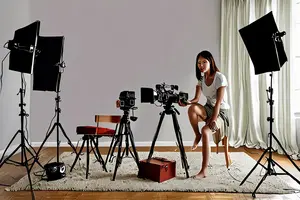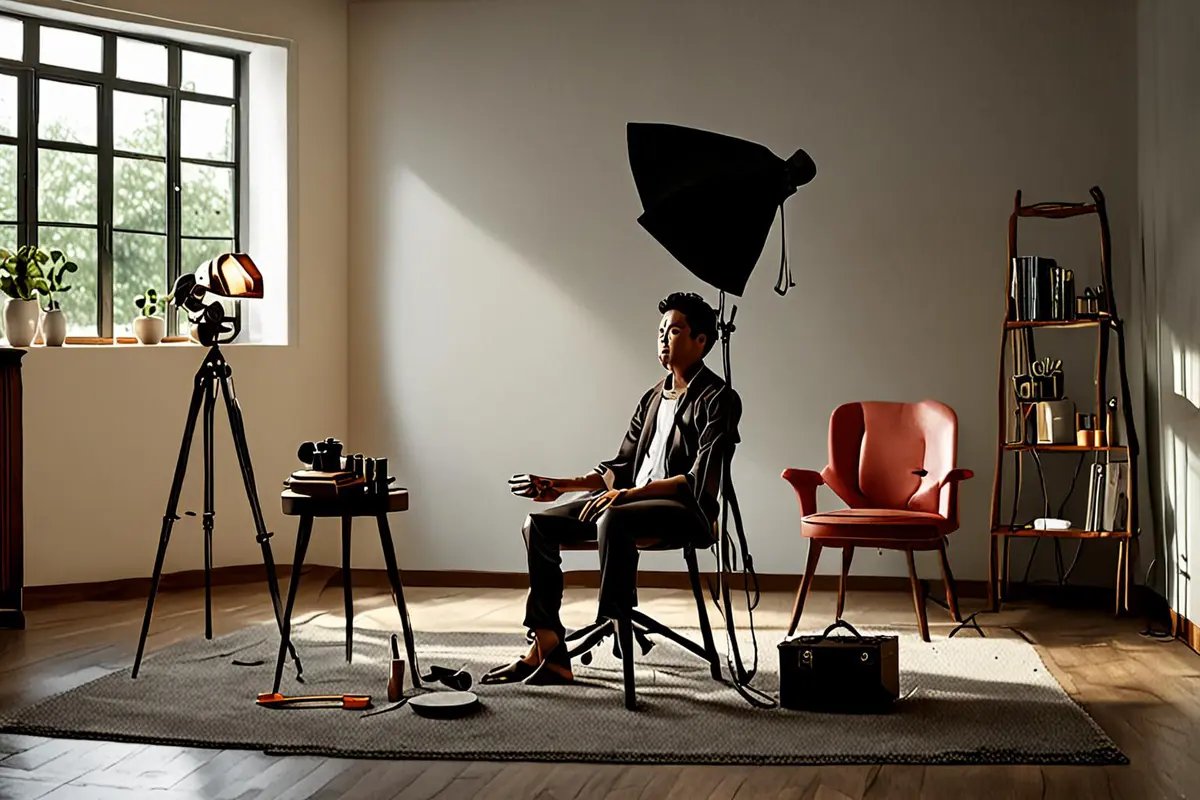
The same desk lamp switched on at dawn can help someone enter the day. Switched on late at night, it may suggest companionship, concentration or fatigue. The same jacket feels light in an early autumn breeze and protective in cold rain. The product has not changed, but its relationship with the person has.
Brand films often treat time as an art-direction choice. Morning light looks beautiful, blue hour feels cinematic and night can appear premium. Useful time design does more. It decides when in a day or year the product matters most, and why the character needs it at that exact moment.
Time answers the question: why now?
Product advertising easily explains what something is and what it does. Time adds a third answer: why the person uses it now. Morning can suggest preparation and beginning. Afternoon can hold persistence, ease or fatigue. Dusk carries transition. Late night amplifies privacy, recovery and actions performed without interruption.
These are not fixed formulas. Coffee at dawn may mean activation; coffee at midnight may signal pressure. Headphones in a crowded morning commute may mean separation from noise; on a quiet weekend afternoon they may represent time deliberately kept for oneself. Define the character’s state first, then choose the hour.
Write the character timeline before placing the sun
Directors and cinematographers often start by asking whether to shoot sunrise or night before the script explains what happens across the day. A stronger method begins with a character timeline. What state does the person enter with? What changes the rhythm? When does the product intervene? What happens to the remaining time after use?
If the product only appears at the prettiest hour, it can feel arranged inside scenery. If it changes the person’s experience of time, it participates in the story: preparation becomes calmer, waiting loses anxiety, a short pause becomes worthwhile or repetitive work gains a clear ending.
Time of day is more than color temperature
Dawn, noon, dusk and night differ in direction, shadow length, exterior brightness, practical-light behavior and which surfaces begin to reflect. Warming a daytime grade does not automatically create morning. Lowering exposure does not establish night.
Morning should show a world that has not fully started
The value of morning often comes from incompleteness. Only part of the room is awake, movement is slower, and the first product sound or light breaks the quiet. Lower angles and partial illumination can support that state. If every fixture is on and the actor moves with afternoon energy, morning survives only as a tint.
Noon offers clarity and can lose depth
Daylight can make function, material and operation direct, but high light and bright surroundings can flatten a product. Blocks, bounce and character movement can create short changes in shadow that restore shape during use. The goal is not dramatic darkness; it is a hierarchy inside a clear time.
Dusk is about transition, not orange
Dusk connects work with rest, public with private and the outside world with interior life. It can show a person leaving one role and entering another. A gradual exchange between window light and practical light carries more time than an orange wash from the first frame. If the product helps with storage, cooking, cleaning or entertainment, its action should participate in that transition.
Night amplifies sound, distance and responsibility
With less environmental information, product brightness, sound and impact on other people become more visible. Does a display glare? Does a mechanism wake someone? Is the character alone? Night is not automatically premium. If a person simply handles a product in a black room, time has not entered life.
Season changes the body and rhythm, not only the set
Leaves can identify autumn and artificial snow can identify winter, but neither explains why a product matters. Season first changes the body: clothing layers, skin, hand movement, breath, walking speed and the relationship between indoors and outdoors. It also changes day length, weather uncertainty and how people plan activity.
A home appliance may enter drying and storage behavior during a humid season, or change where people stay during heat. Start with real use rather than using weather to imply unverified performance. Any claim about temperature, humidity or outdoor suitability still needs accurate product specifications.
Character, space, wardrobe and sound must share the time
Cinematography cannot build time alone. A morning character in complete outdoor styling, a desk that looks newly dressed by the art department, or a night window that remains a flat bright wall will turn time into a filter. The set needs traces of use, wardrobe must respond to the body and performance must carry the right speed and attention.
Our guide to wardrobe color and product focus explains how a character remains readable within a space. Time adds continuity: a removed jacket, a rolled sleeve or fabric reflecting practical light can show progression without a caption reading “8 PM.”
Sound also changes across the day. The approach in our article on ambient sound in product ads applies here: morning distance, daytime density and late-night interior detail should come from a specific place and action. Sound does not need to announce every hour, but it must inhabit the same time as the picture.
A continuous day and a montage express different product values
If value comes from one process—preparation, waiting, work or recovery—let time change gradually in one space. Light, object positions and character state become evidence of duration. If value comes from repeated use, montage can build a rhythm in which the same action gains a new meaning at each time.
A montage needs more than wardrobe and color changes. Each return should advance the relationship. The first is a trial, the second becomes a habit and the third produces a result for the person or someone else. Otherwise “used from morning to night” can make the product occupy life rather than improve it.
Multi-day production reveals itself through small continuity errors
Ten seconds of dusk may require several shoot days. Exterior brightness, sun direction, practical-light state, marks of use on a table, wardrobe creases and a product display can drift. Continuity records should include lens direction, exposure, artificial-light ratio, prop coordinates and the stage of performance, not only one wide reference frame.
When natural light is brief, capture irreplaceable wide views and window relationships first, then complete close-ups under control. Do not continue after direction and reflection have broken and expect the grade to repair physical inconsistency. Post can unify part of the appearance; it cannot reverse every spatial fact.
Locations, studios and AIGC trade different kinds of control
A location provides a real solar path, weather and city rhythm, but the useful window is short. A studio can repeat direction, temperature and exterior brightness for product close-ups and versions, while production design, lighting and sound must rebuild life. AIGC or CG can extend skies, seasons and distant views, yet can also contradict shadow direction, window time, character light and product reflection.
Our article on localizing spaces in global brand films asks how a location supports a market’s everyday life. Time continues the question: when is the person here, and why now? Build a time reference for sun and practical-light direction, character state, product state, ambience and shot order before deciding what can be generated or composited.
Short versions must preserve the reason for time
A 60-second film can move from morning to night. If a 15-second cut keeps only three beautiful hours, the relationship between product and time may disappear. Preserve the smallest meaningful change: the person’s initial state, the moment the product intervenes and one visible difference afterward. Vertical cuts must also keep the window, lamp or shadow cues inside the frame.
The most spectacular sunset is not always the best thumbnail or short cut. Keep a frame that contains product, character state and a time cue together. Viewers should understand why this moment differs without needing a caption or seeing only a color grade.
Time logic should survive without a strong grade
Review an early cut in a neutral or low-saturation grade. Can direction, room brightness, behavior, wardrobe and sound still communicate time? Then swap two time periods. If the story barely changes, time is probably decoration. If character state and product meaning immediately break, time is working as narrative.
Time in a brand film is not a collection of attractive hours. It lets an audience understand why the product is needed now and how it changes what follows. Morning, night and season are materials. The change between person and product is the meaning.
If you are planning a brand film or product campaign, contact ONCE to connect character timelines, production design, cinematography, location sound and multi-format editing in one shootable time structure.