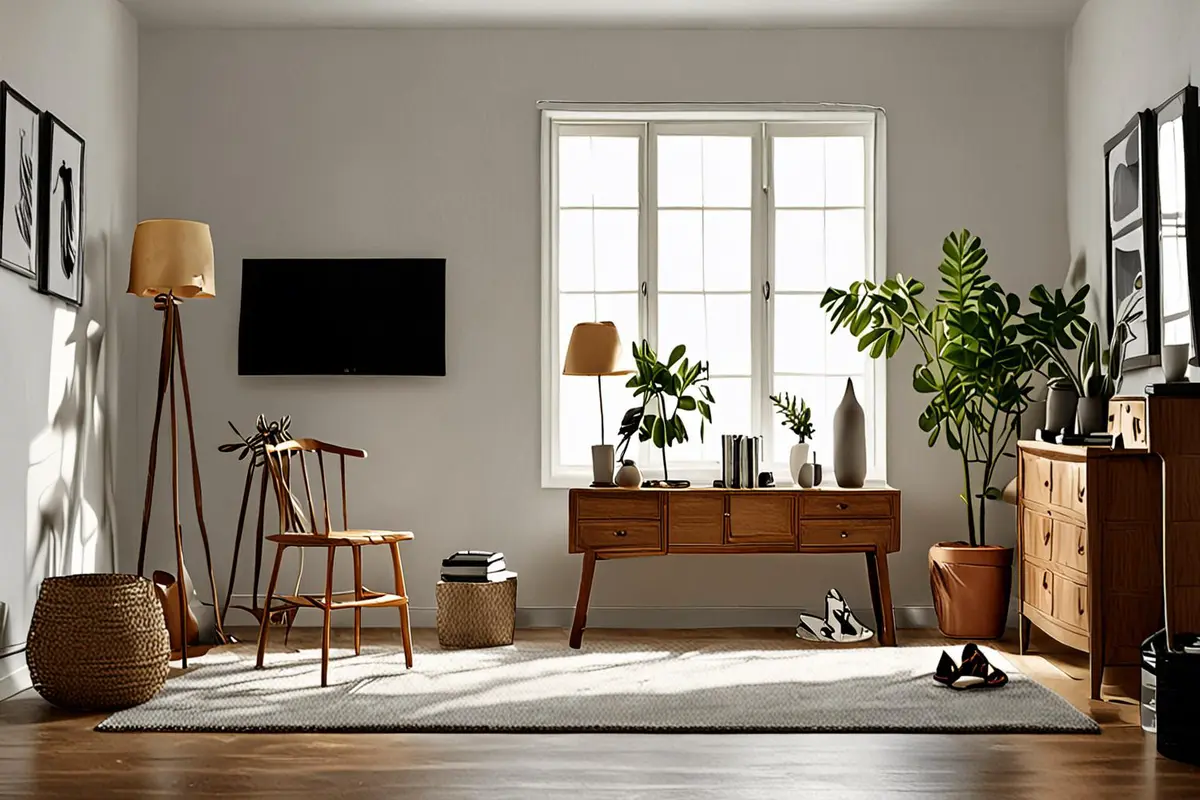
A brand film made for overseas markets can fall into two spatial extremes. One fills every frame with red, bamboo, calligraphy and skylines to prove that the brand comes from China. The other rents a neutral “international apartment” so polished and anonymous that no one appears to live there.
Localizing a space is more than swapping props, and it does not require hiding a brand’s origin. It asks a more useful set of questions. How is this product picked up, stored, shared and discussed in the market? How close do people stand? How do the room, light and sound shape one use occasion? What relationship should the brand’s origin have with the life now shown on screen?
Space is not a backdrop; it defines how the product is used
The same coffee machine creates different behavior in an open kitchen, a narrow office pantry or a street-facing cafe. Who uses it first? Where do the cups go? Can another person join? Does cleaning or storage feel plausible? When the location is wrong, actors must perform around broken logic and the product looks as though it was placed into the scene later.
Before choosing a beautiful room, write the use path. Where does the person enter? Where was the product before the scene began? What makes the person stop? Where do the used objects go? When does someone else notice the result? A space should support that path before it carries brand style.
Separate stable product facts from variable social grammar
Product size, real operation, required accessories and functional results should remain stable across markets. What can change is the way people approach the product, whether they use it in front of others, how they share the outcome and how the room supports those actions. Mixing these layers can turn a local habit into an implied product promise, or force an unnatural performance just to preserve the original composition.
Keep product facts stable
Opening direction, assembly, touch points and real action sounds need consistency. If a market version changes counters, fixtures or furniture scale, the product must still work as shown. A composition should never hide a necessary step or ask an actor to use the product incorrectly for local flavor.
Rewrite the social grammar when needed
A product may read as a private efficiency tool in one market and as part of a shared family ritual in another. The difference often comes from modest details: where seats face, how an object is handed over, whether a door remains open, who speaks first and whether people stay after use. Good localization makes those relationships feel lived rather than displayed.
Preserve brand origin as a point of view
A Chinese brand does not need to pretend it has no origin. The question is how that origin enters the film. Applying traditional patterns to a wall is the most literal option. A stronger approach preserves what the brand believes about materials, manufacturing, speed, order or the relationship between people and technology, then expresses that belief in a space the market can understand.
A brand built around precision might show it through storage, movement and material detail rather than a factory montage. A brand built around care might make the product the mediator of a shared action rather than declaring warmth in voice-over. Origin becomes the film’s way of looking, not a decorative label.
Research the small, frequent signals that make a room believable
Viewers rarely audit a set item by item, but they quickly sense when a room feels wrong. Furniture proportions, where coats and shoes go, whether a kitchen surface holds everyday objects, how an entrance works and when lamps come on all affect credibility. These errors may be too small to call dramatic license, yet large enough to keep the product outside ordinary life.
Research should go beyond collecting local interior references. Observe how people move. Record or interview target users about the sequence of use. Ask local producers, art directors or creators which elements read as a hotel, showroom or outdated fantasy. Confirm that each important prop belongs to the character instead of belonging to the creative team’s summary of a country.
Distance and spatial power can change the brand’s attitude
The same product explanation spoken across a wide boardroom table feels formal; spoken side by side at a workbench, it feels collaborative. In a home, who sits, who stands and who can reach the product may imply care, control or sharing. If the spatial relationship is accidental, a brand can appear patronizing or intrusive without intending to.
This connects with our guide to relationships in ensemble brand films, but the focus here is how a room distributes the right to act. A local version can preserve character functions while changing entrances, sightline blocks and reachable distance. Local casting alone does not complete that work.
Production design, wardrobe, lighting and sound must describe one place
A map or landmark should not carry the entire burden of location. Production design establishes objects and traces of use. Wardrobe shows whether people belong in the room. Lighting establishes time and climate. Sound connects the frame to the world beyond it. If every department chases local flavor separately, the film becomes crowded with clues. If all four support one use occasion, a few clues are enough.
Give props an owner, not only a region
Ask who owns an object, why it is here and whether it was just used. One worn personal item can establish a person more effectively than three new “local” decorations. Props near the product should also clarify scale, action or outcome rather than merely fill space.
Use color and material to protect product focus
The real colors of a local room may not copy cleanly into an ad. Our guide to wardrobe color and product focus starts with value, reflection and area before hue. Local credibility should not make the product difficult to see.
Sound creates off-screen geography and can also create stereotypes
Traffic, neighbors, ventilation, dishes, birds and room reverberation tell us what the space connects to. They should come from a specific place and time, not a sound-library search for a country name. Ambience must support behavior while leaving a clear place for product action.
Studio sets, local locations and hybrid production solve different problems
A studio offers product lighting, removable walls and efficient versioning, but it can polish life out of the room. Local locations provide authentic dimensions, window relationships and accumulated use, while adding constraints in access, weather, sound and product control. Hybrid production can combine controlled product close-ups with local environments, but focal length, light direction, reflections and contact must remain consistent.
The choice is not about which method looks more premium. If the idea depends on a neighborhood and people moving through it, a few set props cannot replace that information. If it depends on precise product action and several market versions, a controllable set may carry more value. AIGC or CG can extend a view, season or distant environment. It should not substitute for social behavior the team has not researched. Generated spaces can mimic style while remaining vague around text, fixtures, hand contact and scale.
Multi-market versions should share spatial logic, not every prop
A master film does not need a complete reshoot for every market, but localization should go beyond changing posters and tableware. Lock the spatial logic first: where the product sits in the character’s action, who triggers use and how someone else sees the result. Then define flexible modules such as entrances, furniture, props, wardrobe, dialogue, ambience and partial exterior views.
Our article on localizing humor in global product ads asks how comic cause and effect can survive a language change. Spatial versions need the same discipline. If a new room makes the original action implausible, identical camera positions are no longer the goal. Share the brand judgment and product facts, not every coordinate.
Without landmarks, viewers should still know why the character is here
For the final review, temporarily hide logos, subtitles and landmarks. Look only at the people, room and product. Can a viewer tell whether this is work, solitude, family sharing or social time? Why is the product in this position? Who has a reason to use it first? What changes in the room or relationship after use?
If the answer depends on one loud cultural prop, the location is still a label. Strong localization lets a target-market viewer believe that this person lives here while still feeling a clear brand origin and creative point of view.
If you are developing a brand film or product campaign for overseas markets, contact ONCE to connect user occasions, production design, product cinematography and multi-market versions in one shootable spatial plan.