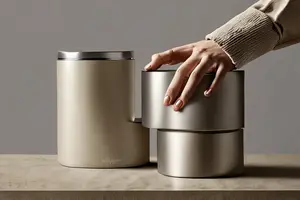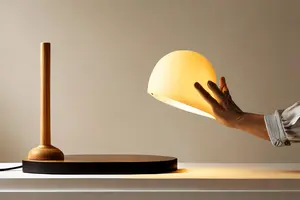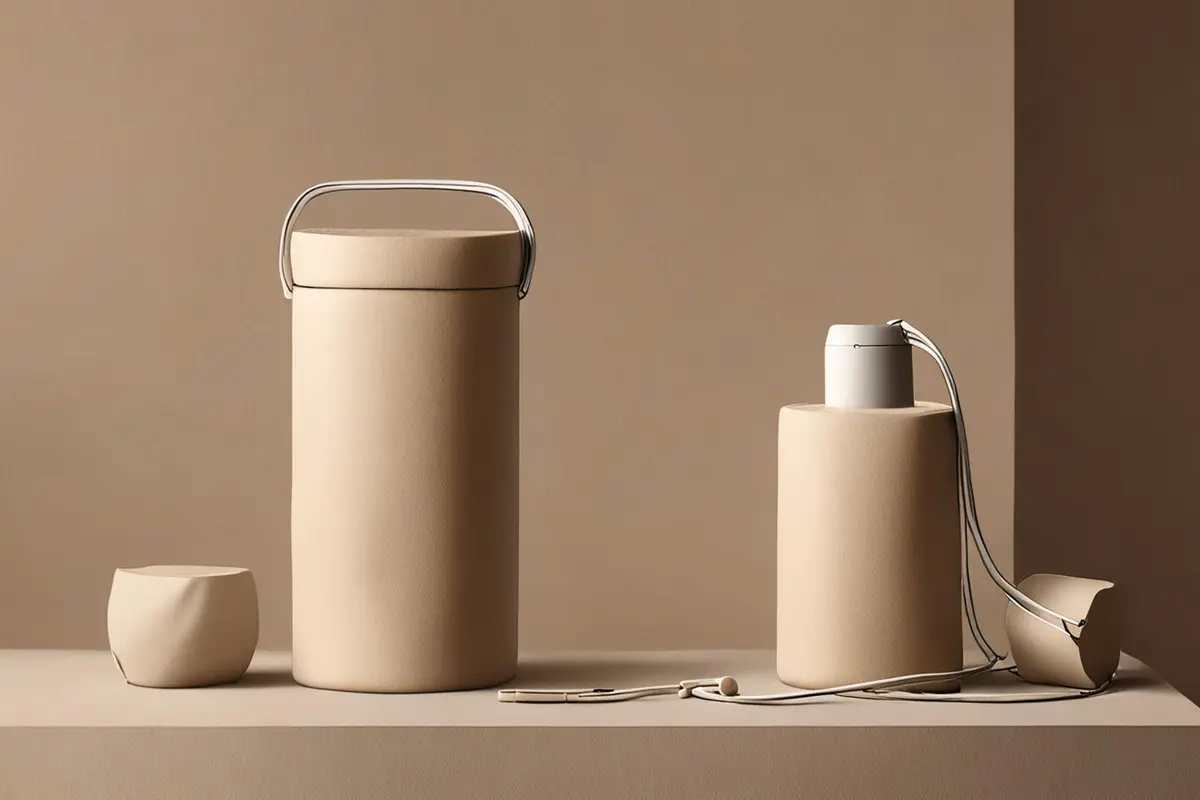
On a product set, the hardest objects to control are often the small ones surrounding the hero: a charging cable, two replacement heads, a case, a piece of raw material or a tool. Each can help viewers understand the product, but together they can erase the centre of the image. With too few accessories, the product floats in a showroom without a life. With too many, viewers finish counting the tabletop before they notice what is being sold. Production design is not the act of filling space. It is the decision about what sentence each supporting object should speak.
Separate included accessories, use partners and atmosphere props
Included accessories are items the customer actually receives, such as a cable, storage pouch or replacement head. Use partners are needed to complete the scene but may not be sold with the product: a phone, ingredient, towel, chair or table. Atmosphere props establish a person and a moment, such as an open book, a half-finished drink or keys near the door.
These three groups should not receive equal visual weight. Included accessories can form a clear family with the hero. Use partners should serve an action. Atmosphere props only need to leave a trace. If an unrelated cup is brighter, closer and more complete than the product, it is no longer atmosphere. It is competing for the role of merchandise.
Ask what kind of life the product belongs to
The same portable device enters a different life when placed beside a suitcase, on a kitchen counter or at a bedside. Props are not generic decoration for “premium feeling.” They choose a user, a time and a task for the product. If the brand wants mobile work, the surface might hold folded glasses, a cable not yet packed or a half-open bag, rather than a perfectly arranged permanent office.
A useful prop offers a verb, not only a noun
A comb is only a noun. A strand of hair that has not yet been smoothed brings an action into the frame. A cup is only a noun. Steam at its rim and the distance it has been pushed aside suggest a morning in progress. When selecting a prop, ask which action it creates: plug in, store, replace, clean, share or wait. An object with no action potential easily becomes decoration.
Life appears in the state after use
A pristine book, perfectly folded cloth and untouched tool turn a scene into display. A lived environment needs a controlled state of use: a cable falling with the action, replacement heads arranged in the order they are needed, or a pouch left open after the product was removed. That state should serve the product. It does not need artificial wear, and it should not rewrite the product through a borrowed story of age.
More accessories do not create a more complete image
An e-commerce detail page may need to show every item in the box at once. A brand film may not. Placing six attachments in the hero image can turn a product with a clear value into an inventory of parts. Start with one main relationship: product and core accessory, product and action, or product and result. Other accessories can enter later shots.
Count visual weight as well as object count. A large black case may compete more strongly than three pale attachments. A reflective cable can draw a long bright path across a dark surface. The closer, sharper, more complete and higher-contrast an accessory becomes, the more it reads as a second hero.
Build hierarchy with distance, direction and completeness
The simplest approach is to make supporting objects point back to the product. The curve of a cable, the handle of a tool, the opening of a package and a performer’s gaze can all return attention to the hero. When those lines expand towards the edge, attention follows them out of frame.
Completeness also creates status. The hero usually has the clearest outline, fullest material rendering and most stable light. A supporting object can be partially hidden, outside the focal plane or visible only where an action needs it. Our earlier discussion of foreground occlusion and viewing order applies here with a more specific purpose: the world can exist around the product while merchandise status belongs to one object.
Visible in the scene does not mean included in the box
Viewers naturally read objects as a bundle when they sit beside the product with equal lighting and the same orientation to camera. If a case, stand or third-party cable is not included, it should not be arranged symmetrically with the hero in a package-content shot. It can enter a lifestyle scene, but action, position or shot order should explain its role.
For example, show the product leaving its own package before moving into an environment with third-party accessories. This helps separate “what you receive” from “what you may use with it.” If one video serves both brand communication and e-commerce explanation, keep the package-content shot independent. Do not rely on tiny text to repair a visual implication.
Contact determines whether an accessory feels credible
A charging cable is not connected merely because it rests beside the product. The plug angle, bend radius and direction of tension need to look usable. A replacement head must agree with the interface size, locking point and movement. Ingredients, steam, powder and droplets also need to respect surface, gravity and temperature when they interact with the product.
Hands translate the relationship between accessory and hero
Where a hand picks up an attachment, how it avoids the product and where it rests after installation all explain the relationship. Gloves change the meaning as well; our analysis of gloves, precision and tactile value explains that trade-off. If the accessory promise is easy replacement, insertion or storage, the performance needs to reveal the structure instead of hiding the connection behind a fast hand movement.
Live action, CG and AIGC need the same physical relationships
Supporting objects are easy to add with CG or AIGC, but they also expose errors in scale and contact. A generated cable may have no clear connector. A container may cast light in a different direction from the hero. A storage case may appear closed even though the product could not fit inside it. A rich background becomes thin as soon as one accessory cannot actually be used.
In hybrid production, lock product dimensions, contact points and the main light source before generating or compositing the environment. Prefer live action or controlled CG when an accessory physically touches the hero. Objects in the distance that only establish atmosphere can be generated more freely. The same principle applies to our article on localising the home in global product videos: changing markets requires props that reflect real tasks, not a palette swap.
Different versions need different levels of support
A brand film can let props build a character’s world. A feature cut should retain only the accessory that directly supports the claim. A six-second asset may need nothing more than the hero and one action partner. When shortening a version, do not simply remove the last prop to appear. Ask whether the action still works, whether use remains clear and whether the package contents could now be misunderstood.
In vertical framing, supporting objects at the sides of a table are often cropped away, breaking a context originally built from left-to-right relationships. A significant accessory should stay close to the hero inside the same safe area. Atmosphere can accept cropping. The method in our article on edit points and minimum causal units can also identify which accessory must survive a short version.
In the final review, ask what every object says
Pause the frame and inspect each object. Does it explain package contents, an action or a person’s life? Is it present only because the surface felt empty? If an object has no clear task, lower its brightness, move it out of focus, keep only a fragment, or remove it. A good supporting object does not ask to be studied. It makes the hero easier to understand and desire.
If you are planning a product ad, divide the hero, included accessories, use partners and atmosphere props into four groups, then discuss the scene with ONCE through our video production solutions. This relationship map lets production design, cinematography, performance and post-production serve the same product instead of producing a beautiful tabletop that no longer knows what it is selling.