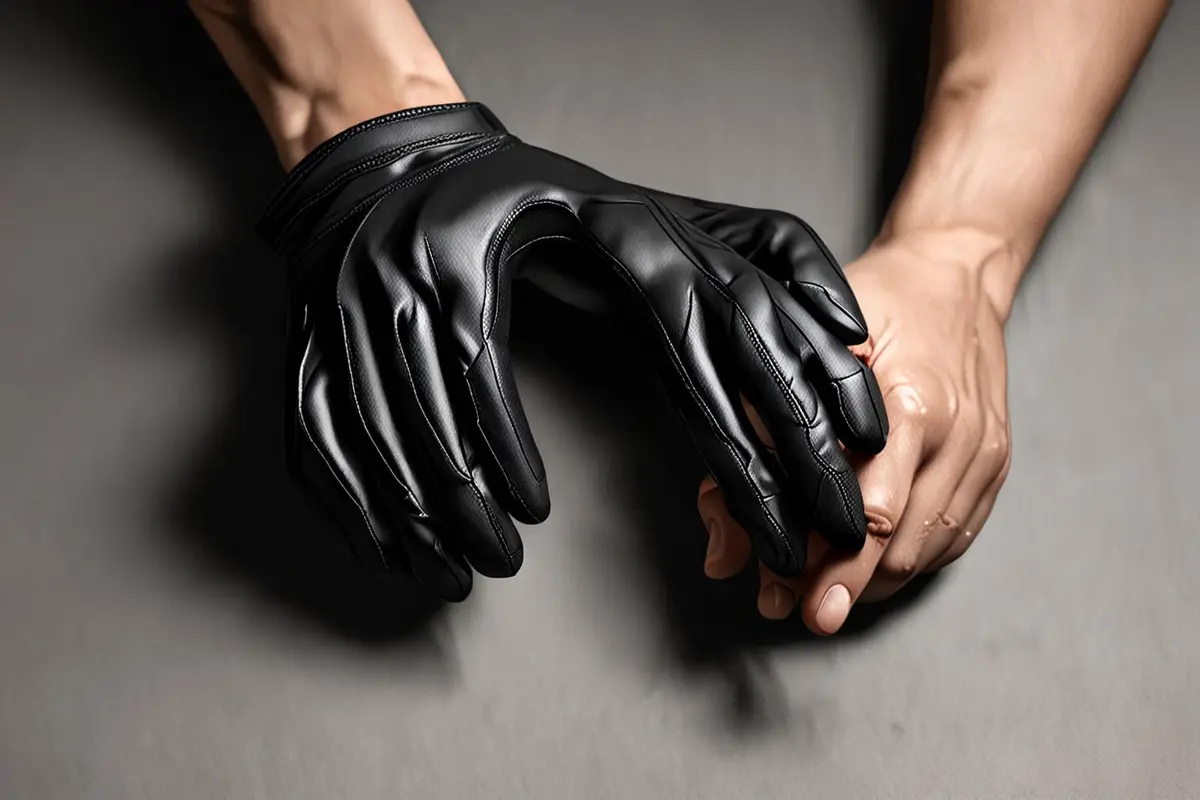
In a product ad, a pair of hands can define the scene before the product does. Pick up a pair of headphones with bare hands and the moment feels like everyday use. Present the same headphones in black gloves and the image shifts toward a laboratory, a collector's display, or precision equipment. Gloves do more than keep fingerprints away. They rewrite the relationship between the person and the product.
The choice should therefore happen before the shoot, not as a last-minute styling decision. It affects how viewers read the benefit. Are they watching a real person use the product, or a specialist inspect, protect, or present it? The right gloves can make an action feel controlled and exact. The wrong ones can place a barrier between the viewer and benefits such as comfort, skin feel, and ease of use.
Gloves Make an Immediate Visual Claim
Viewers do not wait for the voice-over before forming an interpretation. Gloves can suggest precision, fingerprint protection, hygiene, hazardous materials, or a professional role. Which meaning wins depends on whether material, color, movement, and environment point toward the same situation.
If a household product is handled with heavy protective gloves, viewers may first infer risk. If laboratory equipment is casually moved with bare hands, the scene may lose credibility. The useful question is not whether gloves look premium. It is whose hands they are meant to represent.
Different Gloves Put the Same Product in Different Stories
Thin Cotton Suggests Protection and Presentation
White or pale cotton gloves often evoke collecting, display, inspection, and fingerprint control. They suit reflective surfaces and products that deserve careful observation. Yet cotton softens the outline of the fingertips. Small buttons and narrow edges can become awkward to handle, creating a conflict when the product is supposed to feel light and easy.
Close-Fitting Nitrile or Latex Suggests Control
A close fit preserves the shape of the fingers and works well for assembly, testing, cleaning, and laboratory scenes. It makes applied pressure visible and can signal a controlled process. It can also create strong medical or chemical associations. Without a clear environment, the image may accidentally imply that the product requires isolation.
Fabric and Leather Suggest Work and Environment
Work, cycling, and leather gloves pull attention toward grip, durability, tools, and outdoor use. They communicate bodily effort more easily than fine touch. Once their thickness hides switch feedback, dial travel, or material deformation, viewers only see a hand doing something. They no longer understand how the product responds.
Bare Hands Usually Explain Tactile Benefits Better
The spread of skincare, the softness of fabric, the fit of headphones, the rebound of a key, and the warmth of a cup all depend on direct contact between skin and material. Bare fingers make small changes visible: a fingertip pressing down, a finger sliding across a surface, or a palm wrapping around a form. Gloves remove the most immediate reference.
Bare hands still require deliberate styling. Nail length, skin condition, jewelry, texture, and movement speed all become part of the close-up. Styling should support the character and the real use case instead of turning the hand into a frictionless display model. As with product weight created by credible contact, tactile value becomes convincing when the material produces a believable response.
When Gloves Are Necessary, Leave a Trace of Touch
Some products must remain free of fingerprints, while other stories genuinely take place in testing, assembly, or professional operation. In those cases, the material can speak for the fingertip: soft rubber compresses and returns, a dial slows at its detent, fabric stretches and recovers, or a magnetic part pauses as it seats.
Keep approach, contact, and result in the shot. A glove resting on a product looks like a still-life pose. A result without the preceding contact hides its cause. A stable close-up often reveals more than a fast push-in, following the same principle as locked-off product shots that make actions credible: when the camera stops manufacturing excitement, the product's response becomes easier to read.
Fit Directly Changes the Sense of Precision
Oversized gloves leave empty fingertips and fold before the hand can grip. Actions become slow and uncertain. Gloves that are too tight bunch at the joints and make movement look tense. Product close-ups magnify both problems. Keep adjacent sizes available and test real actions such as lifting, pressing, turning, inserting, and placing before judging the fit.
Color is more than an aesthetic choice. Dark gloves can reduce the prominence of the hand but swallow joint definition. Pale gloves look clean but may compete with a bright product. Transparent or glossy materials introduce reflections that alter lighting designed for the product. The reliable test happens under the final lighting and lens, not only on a styling board.
Hand Performance Must Serve the Product
Actors often become more theatrical after putting on gloves: fingers straighten, every step pauses, and even a simple object is held with ceremony. Without an operational reason, this can make an everyday product feel distant. Precision should come from accurate contact points, consistent force, and a clear result, not from a generic slow-motion posture.
Let the performer complete the real task once with bare hands and record the natural grip, balance, and rhythm. Then introduce the glove and retain the action the product requires, adjusting only for friction and thickness. If the action will recur across a content series, separate what belongs to the product from what belongs to this particular styling decision.
Sound Can Restore Contact, but It Cannot Invent Feedback
Gloves change friction. Bare skin moving across metal, soft rubber, and fabric produces different details. Cotton sounds drier, nitrile can create slight adhesion, and leather emphasizes bending and grip. Recording these differences gives the contact a specific physical quality.
Sound cannot turn an unclear movement into precision engineering. A button with little visible travel should not receive an exaggerated latch. A soft material that does not deform should not gain false solidity from a low-frequency impact. Sound confirms the contact already present in the image; it should not invent another product.
Switching Between Gloves and Bare Hands Needs a Reason
A brand film may include professional testing and consumer use. Both hand states can coexist when they follow role and setting: an inspector wears gloves on the line, while a customer uses bare hands at home. If the same person puts gloves on and takes them off in the same space without explanation, viewers may wonder whether the product requires special protection.
Continuity notes should include cuff position, wrinkles, contact direction, and any marks left on the surface, not only glove color. If the glove carries narrative meaning, wide shots, close-ups, and pickups must agree. A useful final test is to replace the glove with a bare hand. If the benefit becomes clearer, the glove may only be adding style. If the professional role, hygiene condition, or protection logic disappears, the glove is doing real content work.
Decide Who the Hand Represents Before Dressing It
Strong product advertising does not use gloves as a universal symbol of quality. Wardrobe, movement, contact point, and product response work together to define the person: a consumer feels, an engineer adjusts, an inspector checks, and a handler protects. Gloves can create distance or trust. The question is whether that distance serves the benefit.
If you are planning a product ad, brand film, or studio content series, ONCE brand and product film production can build material, real-use, hand-performance, glove, and sound tests into the storyboard and production plan, so the sense of precision comes from a clear relationship rather than a last-minute prop.