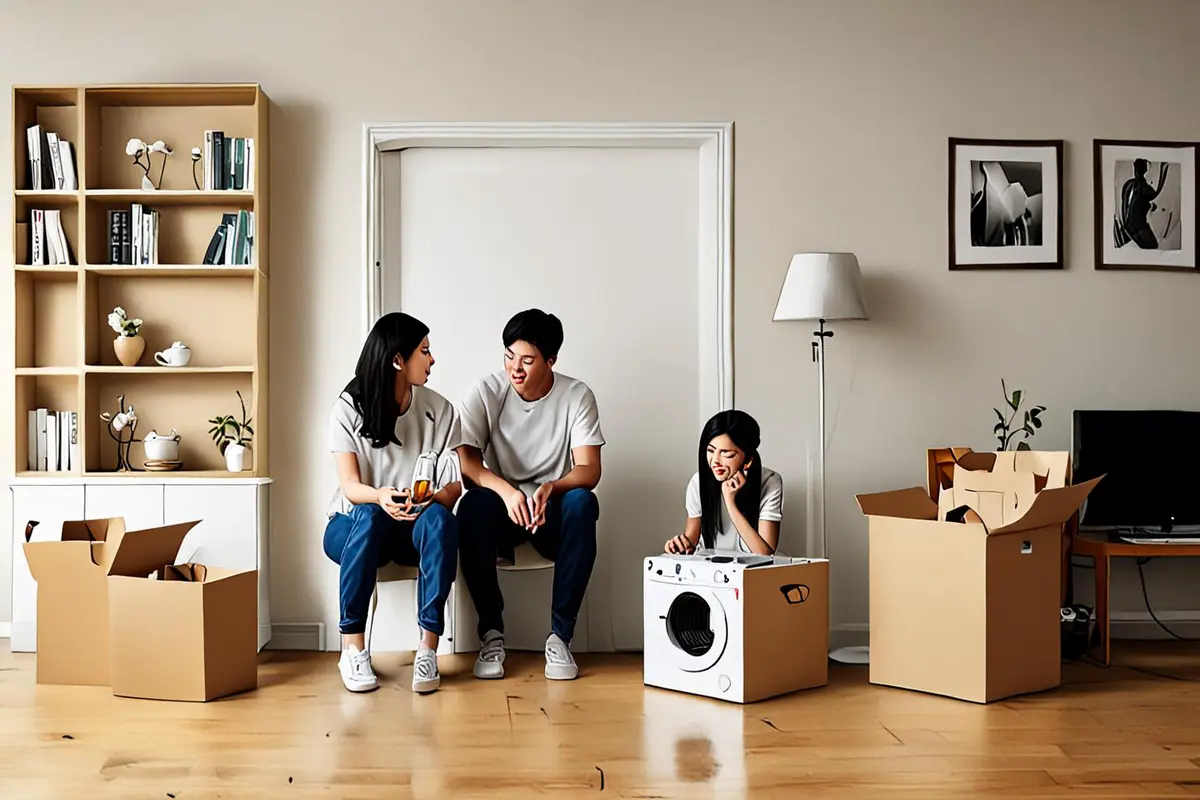
Global product videos often rely on what seems like a safe setting: a clean living room, soft morning light, and furniture with no obvious regional identity. The intention is to make the room universally usable. Yet the harder a set tries to feel neutral, the more it can resemble a showroom. Viewers can see the sofa, the window, and the product, but they cannot tell who actually lives there or why the product is being used at this moment.
This is more than a styling problem. A home is a behavioral system made of relationships, routines, object placement, and physical distance. A global product video should not merely change a few decorations in the same room. It should ask again: who lives here, what was already happening, and how does the product enter that life naturally?
A Home Is a Behavioral Premise, Not a Background
An empty sofa only tells us that someone could sit there. A half-open storage basket, an unfinished glass of water, and a bag waiting near the door begin to explain how life moves through the room. Viewers use these details to infer a rhythm: whether the person lives alone or with others, and whether the space is for rest, work, or several activities at once.
Set design should therefore begin with behavior, then choose furniture. What floor obstacles matter to a smart cleaning device? Why is a portable power station in the living room instead of a garage? Is an air-care product switched on during a quiet evening, after cooking, or after a pet has been active? Each answer changes the props, light, performance, and role of the product.
The Same Living Room Can Give a Product a Different Role
Where a product sits often defines it before the voice-over does. In the center of the room, it may become the hero. Near the entrance, it feels like a tool ready to leave. Within easy reach but outside the character's constant attention, it can feel like an object that is already part of a habit.
Accurate scale still matters, but scale answers only how large an object is. The deeper question is what role it plays in someone's life. A device can be perfectly proportioned and still feel like a sample carried onto set if the relationship, timing, and path through the room do not make sense.
Who Is Present Changes the Problem the Product Solves
One person completing a task quietly creates a different promise from two people passing the task between them. The first may suggest independence, ease, or privacy. The second may suggest sharing, care, or collaboration. The decision should come from real audience research and the communication task, not from assumptions about how people in a market supposedly live.
Where the Action Begins Determines Whether It Feels Lived In
Many commercials bring an actor in from off-screen, place them precisely on a mark, and let them demonstrate the product from beginning to end. The action is clear but has no cause. A more convincing scene lets product use grow out of an activity already under way: organizing, searching, caring for someone, resting, or preparing to leave. The product then changes the difficulty, speed, or feeling of that activity.
What Remains Off-Screen Also Defines the Home
A home does not need to be explained in one wide shot. A sound behind a door, the direction of a glance, or an object passed into frame can imply a larger life beyond the composition. Preserving some off-screen space helps the set feel like a residence rather than a front-facing stage built only for the camera.
Write the Living Task Before the Styling Words
Premium, warm, and contemporary are art-direction cues, but they are not filmable lives. A more useful brief turns the setting into a task already happening: the room needs to be reset in ten minutes after work; family members are doing different things in the same space; or someone is gathering a device, keys, and personal items before leaving in the morning.
Once the task is specific, the spatial requirements become concrete. The team knows where a person needs to move, when the product first appears, which surface supports the action, and which prop might block the essential gesture. The result may be less decorative, but it explains why the product belongs there.
Localize Behavioral Clues, Not Just Decorative Symbols
Multi-market versions can easily become a change of wall art, cup, and actor. Those changes may be useful, but they remain cosmetic if the life of the room stays identical. The production should examine entry, storage, seating, lighting, coexistence, and the movement of objects: where belongings go when someone comes home, whether the product permanently occupies a worktop, whether its use interrupts another person, and where it goes after the task is complete.
A global master and regional variables can organize the campaign, but production design must translate those variables into movement and space. Any claim about a market should begin as a hypothesis to test with local collaborators, audience research, or a small review group. Cultural impressions should never go directly from a mood board into the set.
Camera Position Also Expresses Family Relationships
If the camera stays too far away, people become explanatory pieces inside a room. If it remains close to the product, the home collapses into a soft background. Distance should change with the relationship: first help the viewer understand who shares the space, then move closer to the product action, and finally return to a scale where the consequence of use is visible.
Camera height matters as well. Near eye level, the viewer feels present. A lower position can make the product the center of the room. A top view can turn a complicated routine into a clear pattern. No angle is inherently more global. It only needs to match the identity of the observer in this particular life.
Local Casting Requires More Than a Different Face
Changing the actor does not localize a scene if the performance still resembles a product manager's standard demonstration. Direction should include the flow of attention: whether the user is familiar enough to operate without looking down, whether they wait for someone else's response, and whether they return to the original activity after the function is complete. Real life does not pause every time a selling point appears.
A director can film three relational versions of the same action: completed alone, observed by someone else, and shared between two people. The purpose is not to inflate the deliverable count. It is to discover which relationship best carries the product value. If the product promises less disruption, other people should be allowed to continue living. If it promises a shared experience, the camera needs to see the response, not only the operating hand.
Keep Product Facts Global and Rewrite the Path Through Life
Reusable material often includes product structure, real functions, brand visuals, material close-ups, and the key result of an action. What needs to be reconsidered is how people enter the space, the order of gestures, prop placement, relational response, and the sound environment. Sharing footage does not require sharing one identical life.
This is why development benefits from two separate lines: a product-fact line and a living-path line. The first prevents regional versions from rewriting the product. The second gives the same function a credible reason to appear in different domestic situations. The principle also connects with how physical cues establish credibility in product advertising, while the specific domestic behavior still needs fresh observation.
AI Can Extend Space but Should Not Guess How People Live
Generative tools can quickly compare wall treatments, depth, window environments, and furniture density before a shoot. They can also extend parts of a live-action set that do not affect the truth of the product. The dangerous shortcut is to treat “a home in a certain market” as a complete prompt and let familiar symbols fill the room automatically.
A generated scene should face the same questions as a physical set. Why is this object here? Can the person complete the action? Do the product, hand, worktop, and light stay physically continuous? If the scene cannot answer them, it is only a collage of style. The same discipline applies when using foreground elements: occlusion should organize attention, not hide a weak spatial idea.
Review One Thing: Did the Product Change This Life?
A credible home does not need to display every detail of daily life. It needs to make the starting action, the product's intervention, and the resulting change understandable. During review, mute the voice-over and remove the captions for a moment. Can the viewer still identify the person's task? Does the product genuinely change it? Does the room preserve the consequence?
If the answer is yes, the viewer is no longer looking at one living room intended for every market. They are watching a specific person living a specific life. Localization then becomes respect for how different users relate to space, other people, and products, rather than a swap of surface symbols.
For home appliances, smart devices, or lifestyle products preparing for an international launch, ONCE can develop the market, product facts, and living task together through its cross-border product video solution. A culturally adapted opening can also be planned before the shoot, as discussed in this guide to market-specific video openings.