A smart oven film is being adapted from China for the United States. The subtitle converts 180 degrees Celsius to 356 degrees Fahrenheit and the voice-over is rewritten in English. The localization appears finished. Yet the product display still shows 180°C, the actor turns a physical Celsius dial, and the rating label belongs to another hardware version. Each number might be correct in isolation. Together, they depict a product that does not exist.
Numbers in global product videos are more than copy. They appear on displays, dials, measuring tools, props, gestures, and result shots. Language can often be replaced in post. A product version cannot. The real localization task is to find every place where a number enters the image, then decide what can be converted, what must be reshot, and what cannot be shared across markets.
Once a number enters the frame, it becomes part of the product scene
Changing “30 cm” to inches is easy in a lower third. When an actor compares the product with a cabinet opening, size has already become a physical relationship. A temperature can be converted in graphics, while the heating animation, completion alert, and interface may belong to a specific firmware build. Voltage and frequency are not stylistic preferences at all. They may correspond to different plugs, adapters, rating labels, and product models.
This creates three separate tests for any localized number:
- Is the value correct? The conversion, rounding, and precision must match the product fact.
- Is the expression natural? The target region should recognize the unit and format for this particular use.
- Does the image belong to the same version? Captions, UI, physical product, and use scenario should point to one sellable product.
Copy, design, and localization teams can handle the first two layers. The third returns to samples, firmware, and source footage. A translation file cannot reveal the wrong plug or a screen that the target product cannot display.
Unit preference depends on region and use
“Metric market” and “imperial market” are broad labels. Unicode CLDR unit preference data maps regions together with usage. A locale may prefer different unit combinations for a person’s height, road distance, weather temperature, or product dimensions. Formal records and everyday speech may also differ.
For video teams, the implication is direct: there is no single “English numbers” version. The United States, United Kingdom, Canada, and Australia use English, but their habits for temperature, height, distance, and product specifications are not identical. Within one market, a technical specification, an advertising line, and a device interface may also use different precision.
Apple’s MeasurementFormatter documentation likewise treats locale, unit style, and unit options as formatting inputs. A number’s target form should come from market and usage. It should not be frozen as a string and passed to translators for word-by-word replacement.
Five carriers of numbers must speak one market language
Captions and voice-over
This is the easiest layer to replace and the easiest place to create false consistency. If the caption says “75°F,” the voice says “seventy-five degrees,” and the device still shows 24°C, the viewer receives two versions at once. When the original unit remains clearly visible, the copy should not pretend it has disappeared. Keep the display and explain the conversion, or capture the correct interface.
Device interfaces
Interface numbers often belong to real firmware, language packs, and sales regions. Before compositing a different unit onto a screen, confirm that the target product supports the setting, that values change according to the same logic, and that warnings and states remain intact. A cleaner composite can otherwise demonstrate a state that the product never offers.
Physical scales and rating labels
Measuring cups, dials, rulers, package specifications, and power labels are facts inside the frame. Captioning cannot neutralize them. A different scale density changes hand movement. A different plug or adapter changes how the product enters the scene. A readable rating label should match the model the film claims to show.
Human actions
People also express units through estimating, pouring, setting, and fitting. After “half an inch” becomes “about one centimeter,” the original gesture may no longer be accurate. After ounces become milliliters, the vessel and fill height may stop matching the number. Once action explains quantity, it is no longer completely neutral footage.
Result shots
Final readings, completion times, coverage areas, and before-and-after states are the most persuasive numbers and the least suitable for unsupported replacement. If a result depends on voltage, ambient temperature, vessel capacity, or software settings, converting the unit changes its expression, not its test conditions. Every market version should return to the same verified product fact.
Split the master into neutral, regional, and hardware layers
A multi-market shoot does not require a completely separate film for every region. It does require three kinds of source material.
The neutral master layer contains actions and causal relationships that remain stable: adding ingredients, closing a lid, starting a process, showing an internal mechanism, and removing the finished result. Avoid trapping essential numbers inside reflections, shallow focus, or fast motion that cannot be replaced cleanly.
The regional replacement layer contains controlled text and graphics: captions, voice-over, timers, temperature callouts, dimension diagrams, and package inserts. Leave safe space for them and retain clean plates and editable project files.
The real hardware layer contains displays, dials, plugs, labels, packages, and regional models. This layer requires approved samples. If the exterior is identical and the firmware can genuinely switch units, the team may concentrate on interface inserts. If the power system, control panel, or accessories change, treat the hardware as a visibly different product, not as another subtitle file.
The logic resembles our discussion of home scenes in global product ads. Localization comes from making the environment, action, and product version agree. Numbers simply expose disagreement faster.
Four types of numbers require different production choices
Temperature: conversion is only the beginning
NIST temperature guidance documents the exact relationship between Celsius and Fahrenheit scales. A film still may not need every decimal produced by a calculation. Cooking settings, perceived weather, test results, and safety thresholds require different precision. Voice-over may use a comprehensible rounded value, while the actual product interface must show a supported setting. If they differ, the film should make clear which is a summary and which is the selected value.
Length, weight, and volume: references must change with the label
A dimension graphic can move from centimeters to inches, but cabinets, hands, cups, and packaging continue to signal scale. When a shot combines a number with a familiar object, they should support each other. If the market version needs new framing, keep the real product action and replace the relevant prop and measurement layer instead of forcing every market into one universal composition.
Voltage and frequency: identify the product version first
IEC material, including IEC TR 60083, documents standardized domestic plug and socket systems used by member countries. Product videos do not replace engineering or market-access review, but these systems visibly affect plugs, adapters, installation, and rating labels. If a film does not need to explain electrical specifications, it can avoid a hero shot of the label. Once it shows connection, charging, or installation, it should use the real target-market hardware.
Time, date, and number formats: small details can break the scene
Twelve- or twenty-four-hour time, month-first or day-first dates, decimal separators, and digit grouping can appear in notifications, schedules, and usage logs. These details are usually replaceable, but they should be planned before the shoot. Otherwise, a localized caption sits beside an “18:30” appointment or date format that reveals the master market.
A hypothetical example: one cooking appliance, three markets
Imagine one cooking appliance film intended for China, the United States, and the United Kingdom. This example describes a production method, not a real ONCE client or product.
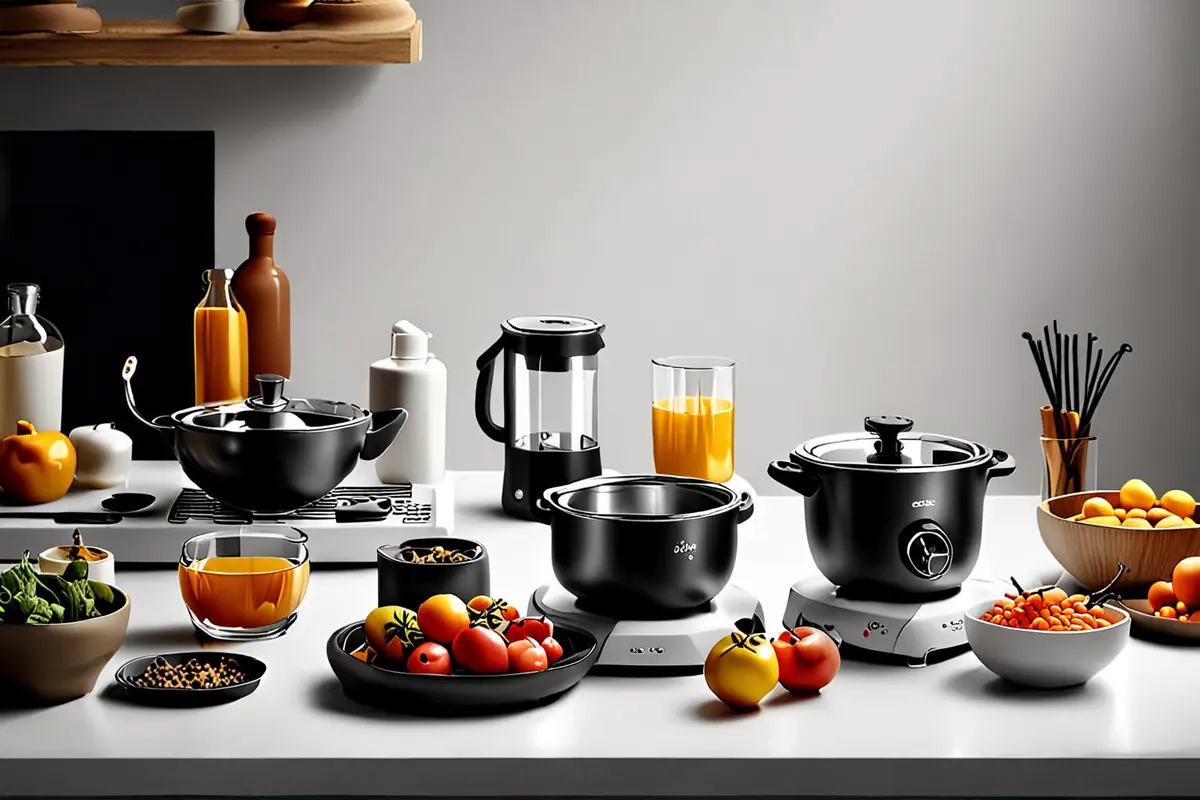
The three versions can share ingredient preparation, lid closure, startup, internal motion, and the finished serving. The China version captures a Celsius interface and local plug. The US version uses the target firmware’s Fahrenheit display, matching plug, and locally appropriate volume expression. The UK version still needs its own review of temperature, volume, plug, and spoken usage even though it is also in English.
If the control panel is physically identical and genuinely switches units, interface pickups may cover most of the difference. If dial markings, cup labels, packaging, or power accessories change, the replacement scope must widen. The goal is not to “shoot three films.” It is to identify which shots reveal a regional product version and organize the shoot around those shots.
The same method applies to thermostats, fitness devices, beauty technology, energy products, and AI hardware with status displays. Each product begins with a map of where numbers appear, not with a duplicated translation sheet.
Vertical cutdowns must keep the whole numerical relationship
Aspect-ratio changes add another risk. A unit callout beside the product in a landscape frame may leave the safe area in a vertical cut. Enlarging the device can make a previously minor regional difference the visual center. Shortening the voice-over can remove the clause that explains a condition.
Keep critical units close to the object they explain, then review the number, product, and result as one reading path in landscape, vertical, and short versions. If a number only becomes accurate through end-card fine print, it usually should not carry the central promise of a shorter ad.
ONCE’s global launch content production plans language, regional hardware, and channel formats inside one source-footage system. The aim is to preserve one product fact across markets rather than multiply versions without control.
Localization is complete when the frame contains one real product
Unit localization does not end when Celsius becomes Fahrenheit or centimeters become inches. A stronger final question is whether the captions, voice, interface, physical scales, action, and result all describe the same product that customers can actually obtain in the target market.
Confirming usage, region, and hardware differences before filming preserves more shareable footage and reduces the need for post-production to conceal version errors. If you are planning multi-market launch films, product-page videos, and cutdowns, send ONCE your target markets, product versions, interface languages, and available samples. Our product video team can map every numerical carrier before defining the master, replacement layers, and pickup shots.
Sources and scope
This article was checked against Unicode CLDR documentation on regional and usage-based unit preferences, Apple Foundation MeasurementFormatter documentation, NIST SI temperature and conversion guidance, and the scope description for IEC TR 60083 on standardized domestic plug and socket systems. It offers creative and production guidance, not product certification, regulatory, or market-access advice. Hardware and values should be confirmed by the brand’s engineering, compliance, and target-market teams.