An overseas team briefs a China-based production partner to make a campaign feel more human: hand-drawn lines, paper texture and visible imperfection. That describes an aesthetic. It has not established why the idea belongs to the brand.
This evergreen analysis uses currently accessible official material about Starbucks’ 2025 “Drawn Together” campaign. It does not present that work as a new 2026 release or treat individual craft-led campaigns as proof of an industry-wide shift.
The line already meant something before the ad
Starbucks’ 11 December 2025 behind-the-scenes account connects the film with baristas writing names and doodles on cups. It names artist Geoff McFetridge and describes cup characters finding their way back together across a coffeehouse. This analysis uses that official explanation and synopsis, not a claimed shot-by-shot viewing.
ONCE’s interpretation is that the drawn surface, everyday gesture and story reinforce each other. A mark on a cup already relates one person’s work to another person’s experience. Animation extends that relationship rather than applying a generic handmade finish.
Starbucks’ 27 April 2026 account of coffee and culture likewise emphasizes rituals, personalization and shared experiences. Such company material explains intent; it does not independently establish recall or sales outcomes.
ONCE’s everyday-trace method
Find a real gesture. Observe how people open, carry, adjust or store the product, or how staff hand it to a customer. Select a repeatable action connected to the actual experience. It need not be unique worldwide, but its relationship to this brand should be concrete.
Find its surface. A fold, a control’s movement, a fabric outline or an object returned to its place can give the line a reason to exist. Animation floating above any interchangeable product is less likely to build a specific association.
Set one action rule. The drawing might appear only when something is touched, unfolded or handed over, leaving a recognizable shape when the action ends. This is a narrative decision for director and designer, not an instruction to copy an artist’s distinctive style.
Explain the relationship. Who moves closer, what becomes noticeable, or which moment becomes memorable? “It looks premium” is insufficient. Return to the gesture before adding more illustration.
A portable lamp may need one relationship, not a whole fantasy
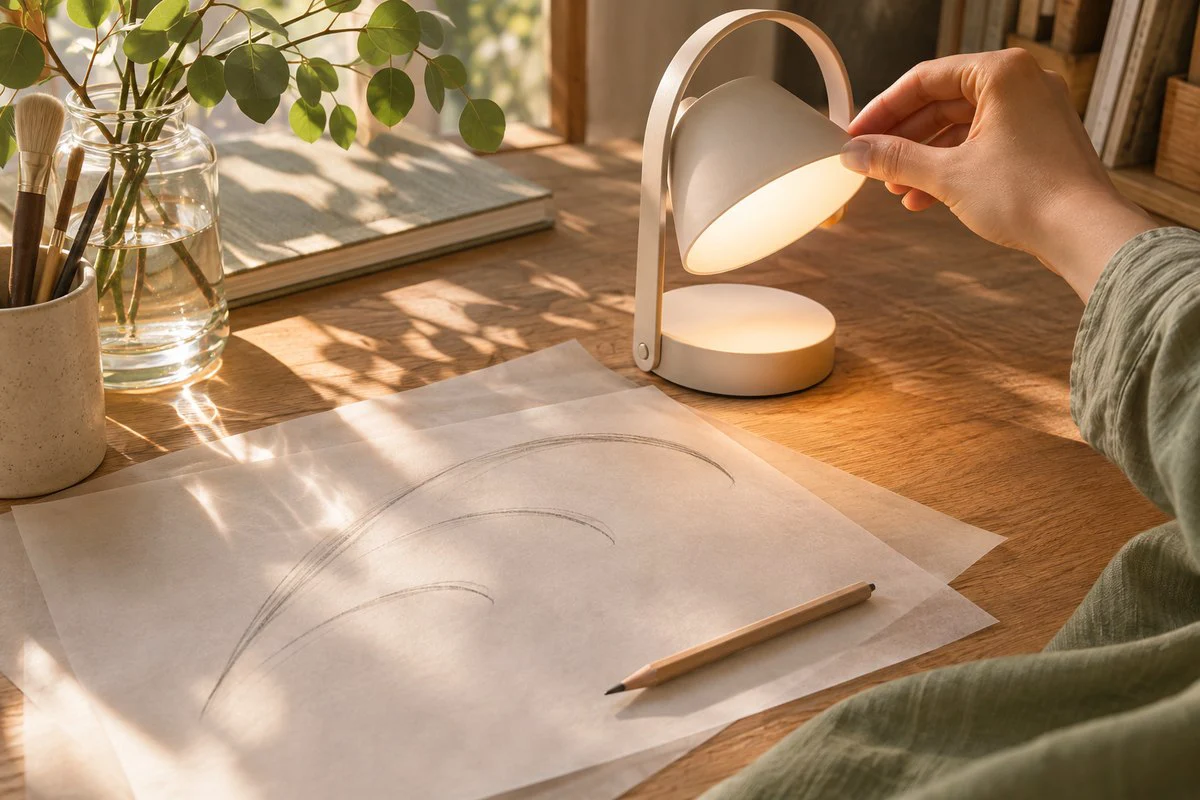
Imagine a hypothetical homeware brand whose lamp moves from a solitary reading desk to a shared dinner table. Real footage establishes carrying, placement and scale. If the actual sample has an adjustable structure, a simple drawn arc could respond to that movement and connect the people’s positions in the story. If not, choose a real action the product supports.
The line expresses the relationship; it does not establish a performance specification. Keep necessary installation, interface or operating steps clear. A drawn world cannot substitute for evidence of product structure or safety conditions.
Sound can follow the same gesture: lifting, placing and switching, with pauses around the people. Leaving room for a small physical sound may connect the image to daily use more effectively than adding continuous musical emphasis. This is a creative option, not a measured effect claim.
Review a gesture sample before expanding the campaign
Build a short preview pairing the real action with its animated response. Ask intended-market viewers unfamiliar with the brief what happened, why the drawing appeared and how it related to the product. Retain their words; do not turn a small viewing exercise into a brand-lift study.
If viewers remember the character but cannot identify the product’s role, reconsider emphasis. If the line feels arbitrary, revise its rule. Once the relationship works, discuss adaptations for short cuts or end frames. Further planning perspectives are available in ONCE’s video marketing research.
For ONCE’s longer-term content direction, retain the gesture source, drawing rules and product relationship across formats. Their future value depends on usable development arrangements and actual results, not merely on storing artwork.
Bring one real gesture, one meaningful surface and one change in a relationship to the next brief. Those give the production team something specific to develop before choosing a handmade aesthetic.
Sources checked on 7 November 2026. The method and lamp story are ONCE’s analysis and a hypothetical example. The cover is an original AI-generated conceptual image, not Starbucks artwork or a record of an actual project.