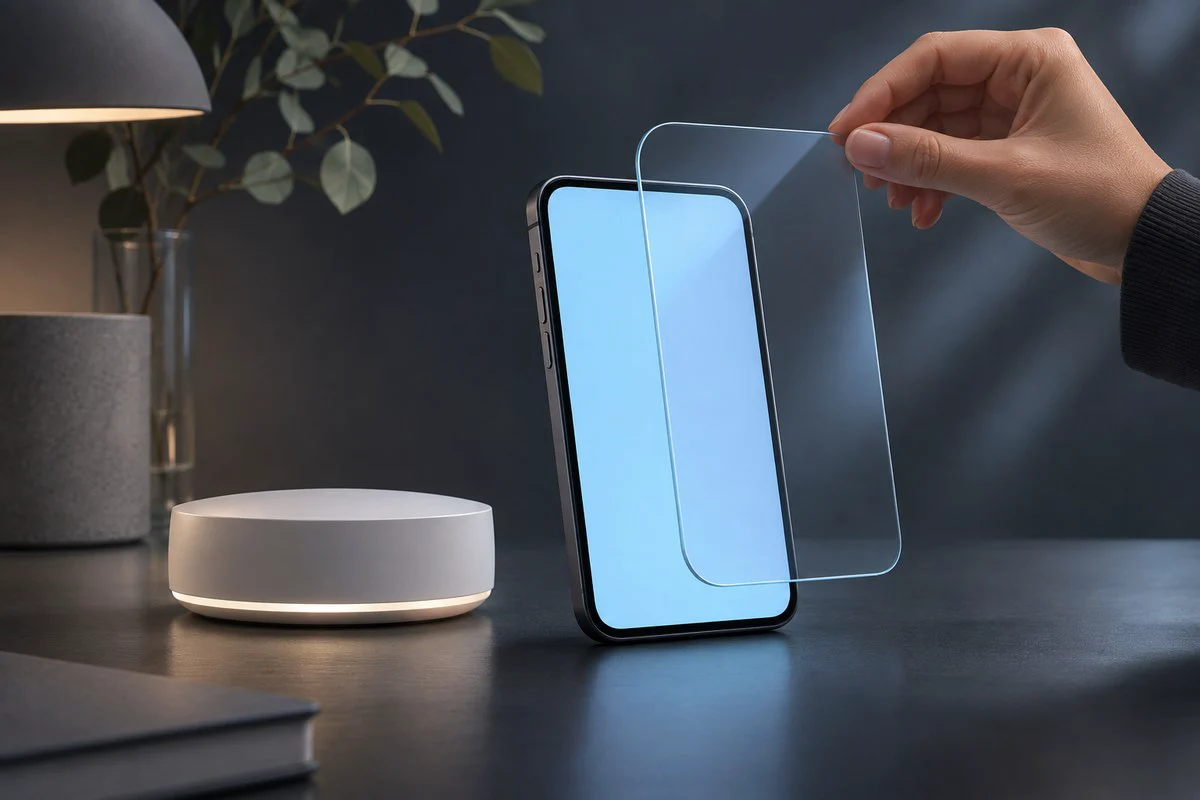
Your production partner in China sends a polished local version of a connected-product ad. The phone screen reads naturally in the target language. Before approving it, ask a different question: can customers buying that SKU, in that market, actually reach the screen and obtain the result shown?
A language pass cannot answer a product-release question. For overseas teams working with Chinese hardware and software suppliers, this distinction should shape the production brief before screen replacement begins.
The new capability makes a familiar assumption more expensive
Runway’s 30 September 2026 announcement of Runway Ads describes localization covering on-screen text and product screenshots, beyond voiceover. That is a vendor description, not an ONCE account test or proof that all advertisers can safely automate approval.
ONCE’s inference is that easier visual adaptation increases the importance of knowing which product state the image represents. A plausible translated control does not establish regional availability, firmware compatibility or subscription access. This is a distinction between two responsibilities, not a claim that a particular tool fabricated a feature.
For store-bound assets, Google Play’s current Metadata guidance requires accurate functionality and screenshots and videos reflecting the actual experience. That scope is the store listing; it is not a universal specification for every social placement. Apple’s localization guidance describes checking localized layouts and obtaining screenshots from successful tests. Both support starting with the running target build rather than an imagined screen.
Brief the screen as a product state
ONCE proposes a screen-state card for each sequence that communicates a feature. Have the product owner confirm it before the language and production teams adapt the shot.
| Record | Specify | Decision it supports |
|---|---|---|
| Product combination | Sales SKU, app build, firmware and required accessories | Whether an existing capture remains usable |
| Access conditions | Market, account tier, subscription, network and permissions | Whether the sequence needs a condition or a different action |
| Visible behavior | Actual controls, sequence and result, tied to an approved capture | Visual adaptation versus recapture |
| Approved use | Markets, placements, exports, confirming owner and date | Which deliverables can be released |
Missing information means pending confirmation, not automatically unsupported. If a feature is unavailable, remove it from the current release or replace it with a confirmed use case. Do not ask designers to construct an ideal interface and assume the product team will endorse it at delivery.
Three different changes need three different work orders
The behavior is identical; the presentation changes
After the product owner confirms the same controls and path, adapt the approved language and layout. Check clipping, line breaks, finger placement and screen readability. Compare the final composite with the real interface so the artwork does not introduce a response the product lacks.
The feature exists, but the route differs
In a hypothetical smart-home campaign, one market might require selecting a household member before remote access, while the source capture goes straight to control. Obtain the target build’s full action sequence. Recapture and reconsider timing, hand movement and adjoining cuts. Replacing labels cannot turn a two-step interaction into a truthful one-step demonstration.
The product team supplies a reproducible environment; production handles capture and editorial continuity. This work should not disappear into a translation fee simply because the final visible change contains few words.
The feature is not released or its conditions remain unknown
Do not turn a planned feature into a present-tense demonstration. A separately approved preview campaign may communicate future availability with clear timing and conditions. Without that assignment, hold the relevant sequence. Fine print should not be used to contradict what the main image appears to promise.
Make the screen replaceable before the camera rolls
For a multi-market shoot, consider stable phone angles, a trackable screen plane and enough reading time. Agree whether the deliverables include screen-composite layers, original captures and their market mapping. Live action establishes the hands, device and space; approved captures supply the screen behavior. This is a production option, not a universal cost-saving claim.
Estimate scope from distinct product states, affected shots and the action each shot needs. Add product confirmation, language review and release checking as explicit work. Ten languages sharing one behavior are a different assignment from ten languages containing several different regional flows. There is no invented industry rate or saving percentage behind this method.
For broader planning, explore ONCE’s video marketing research. The specific asset to retain here is the approved connection between a capture, its conditions and its markets. That lets a later app update identify affected shots instead of reopening every language file. Any reduction in rework or improvement in margin still needs actual project records.
Start with one consequential screen. Ask the regional product owner to demonstrate the target build from the first control to the final result. Then commission adaptation, recapture or a hold. A localized image should follow a confirmed product state.
Sources checked on 7 November 2026. The Google and Apple guidance pages did not display clear publication dates in the material reviewed. The method and scenario are ONCE’s analysis, not a customer test. The cover is an original AI-generated conceptual image, not a client production record.