Your outdoor brand ships a sample from its Chinese production partner and later receives a link to a creator’s gear guide. That is a useful discovery asset. Before calling it a field-test endorsement on your product page, establish what the creator actually used, under which conditions and what the recommendation means.
Popfly’s company release, distributed on 5 November 2026, announces Popfly Shop as a public destination for outdoor gear guides. Its Shop page presents creator-led browsing and product comparison. This is a distribution development worth investigating, not evidence of sales performance for your brand.
Discovery and verification are different services
Popfly’s Shop Terms of Use, dated 3 November and displayed as version 2026-11-03.2, say creators’ recommendations are their own and that Popfly does not test recommended products or verify creators’ statements. Purchases go to third-party retailers; many links involve affiliate commissions.
That does not establish that a creator lacks real experience, or make an affiliate recommendation inherently unreliable. It identifies what the platform itself is not verifying. ONCE’s procurement analysis is to distinguish three deliverables before agreeing on a single “creator collaboration” fee.
Specify the deliverable you need
Discovery: Identify the exact product, collection theme, recommendation rationale and destination link, plus whether the content remains after a promotion. A listing does not automatically include a newly filmed review. Payment should not be treated as a guarantee of a favorable opinion.
Experience content: Before sending a sample, agree the product version, intended task, recording conditions and observable actions. Let the creator report suitability and limitations from actual use. Brand copy or generated imagery should not supply an experience that never occurred.
Reuse: If the brand wants footage for its own product pages, dealers or advertising, confirm the available assets, permitted edits, purposes and term separately. A public guide is not evidence that the brand has obtained every reuse permission. Check the actual project arrangements.
A lantern brief should explain why it earns a place
Consider a hypothetical camping-light brand serving weekend car campers. Rather than prescribing praise, ask a relevant creator to explain their lighting kit for one overnight trip: why this lamp belongs, where it is placed, which mode is used and when they would choose something else.
Show observable actions: packing it into the creator’s own storage, taking it out, placing it and changing modes. Establish its relationship to the table or tent entrance, with the actual model and conditions recorded. Do not stage use contrary to the product instructions.
This can support a bounded account of that experience. It cannot, on its own, establish battery life at every temperature or a protection certification. The brand needs a separate basis for specifications; the creator forms the personal judgment. Good production makes the experience intelligible without inventing a test.
Review whether viewers can explain the task and limitation behind the recommendation. If they remember only a discount code, the guide may still serve discovery, but it has not necessarily explained the product. Add a missing demonstration when justified. If the equipment does not fit the creator’s actual activity, change the collaboration rather than editing away the mismatch.
Expand from one product and one task
Track guide maintenance, sample use and production, and reuse as distinct work. Record sample shipping, content fees, commissions and paid promotion separately. Observe understanding of the use case alongside the downstream results you can verify; leave attribution gaps explicit.
For overseas teams working with Chinese suppliers, this makes the sample and footage brief more concrete before shipping. Related planning discussions are available in ONCE’s video marketing research.
For ONCE’s longer-term content services, the reusable record links outdoor tasks, appropriate products, creator experience and approved assets. Whether it improves margins, repeat work or distribution must be established through actual projects.
Sources checked on 7 November 2026. The release establishes the company’s announcement, not independent performance. The lantern scenario and three-deliverable method are ONCE’s analysis, not a client case, price benchmark or platform eligibility promise.
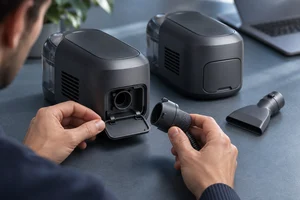
The cover is an original AI-generated conceptual image, not a record of Popfly, a creator or an actual product test.