Your product page attracts more visits, yet a smaller share starts the video. Before asking a China-based production team to replace the opening, establish whether the new visitors are people evaluating the product or agents attempting a different task.
Microsoft’s 4 November 2026 Clarity announcement introduces Agent Activity and simulation assessments of completion, time and interactions. Simulations start with commerce and travel; listed supported operators include Google, OpenAI and Anthropic. This expands an observation capability. It does not establish the amount of agent demand for your brand or universal detection. ONCE has not inspected a client account.
Separate the actor from the referral source
ONCE recommends retaining four groups: evidenced human visits, supported agent task records, team-initiated simulations and unclassified visits. Keep crawler requests distinct too. Microsoft’s Bot Activity FAQ says access does not guarantee use in an answer, training or citation.
A person clicking from an AI recommendation and an agent acting for someone are different actors. A referral label alone does not establish which one performed the task. Preserve uncertainty rather than forcing every record into a convenient category.
This does not assume agents cannot play or interpret video. It avoids assuming identical capabilities across operators, or treating an absent play event as evidence that consumers dislike the creative.
ONCE’s task-attribution card
For one SKU and market, record the actor, success condition, last successful step, first failure and supporting evidence. This is ONCE’s diagnostic method, not a Clarity metric.
| Observed result | Investigate first | Potential spending decision |
|---|---|---|
| Agent finds the product but selects the wrong variant | Option names, SKU mapping and displayed state | Repair selection or product information, then retest |
| Correct selection, but delivery information or the next action fails | Accessible conditions and operable controls | Locate the information or interaction fault |
| Human selects correctly but cannot understand assembly | Evidence connecting viewing with the actual misunderstanding | Film the missing action if text and stills are insufficient |
| Only the aggregate play proportion declines | Traffic composition, player measurement and definitions | Validate measurement before commissioning more footage |
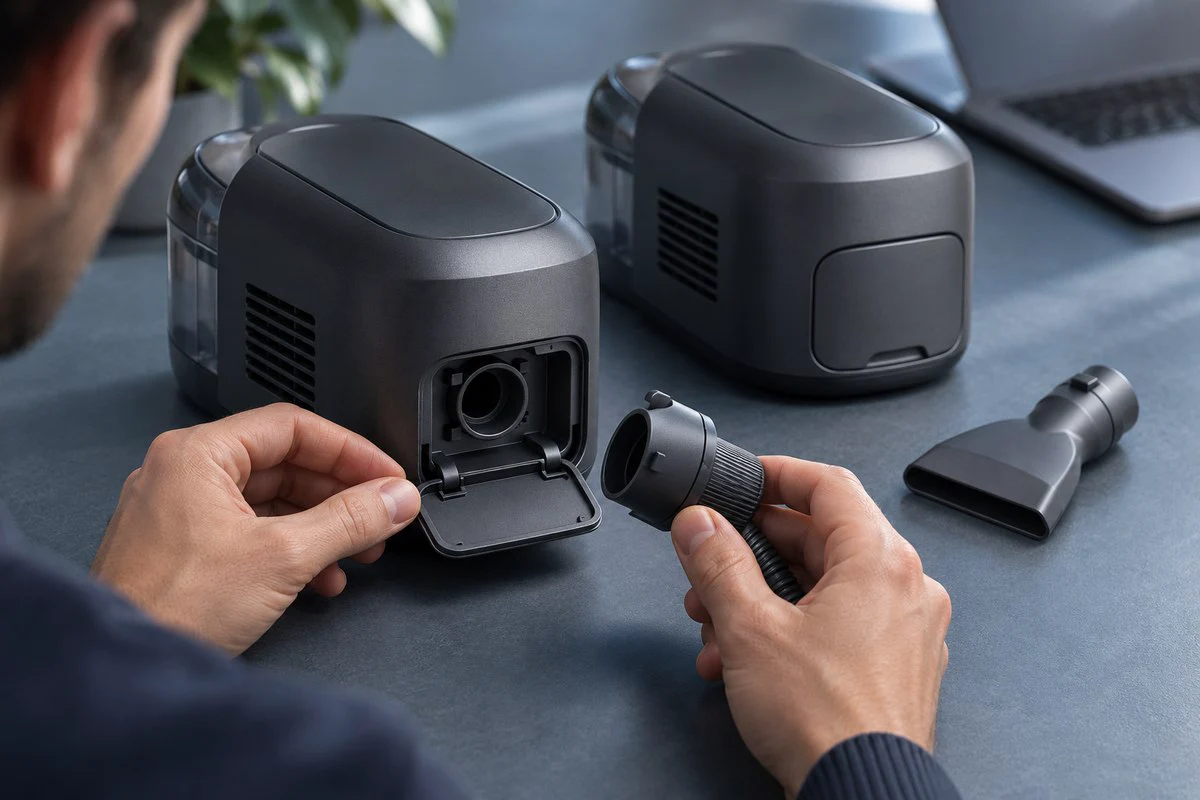
These are investigation routes, not automatic diagnoses. In a hypothetical appliance listing, both colors might be labeled “standard.” A new unboxing film may not resolve that ambiguity. A customer who has the correct accessory but cannot understand a latch movement presents a different case for a close demonstration.
A simulation pass is not a customer order
Define the task, starting point, market conditions, date and operator or tool version. Change one factor where practical. Use approved test data and environments, with a stopping point before real payment or order creation. If the tool cannot test the intended task, leave that gap explicit.
Simulation can expose obstacles; it cannot establish purchase demand, count as sales or prove a conversion improvement. Observe real customer outcomes separately and check whether price, product or promotions also changed.
For video reporting, compare applicable player behavior within the human sample you can substantiate, while reporting agent tasks and unknown traffic separately. Do not call incomplete classification “human-only,” or divide incompatible session counts from different systems. Related questions about page behavior and creative belong in ONCE’s video marketing research.
Make the next production decision traceable
Bring one attribution card and a reviewable failure record to the product, website and production teams. Commission an additional shot only when missing visual explanation is the supported problem, specifying the action and model it must show.
For ONCE’s managed-content direction, the useful record connects actor, task, failure, repair and subsequent outcome. Whether this reduces rework or improves margins needs actual labor and delivery evidence.
Sources checked on 7 November 2026. The announcement supports the stated agent and simulation scope; availability of unrelated features in the same post is not assumed. The card and appliance example are ONCE’s analysis and a hypothetical scenario, not a completed test.