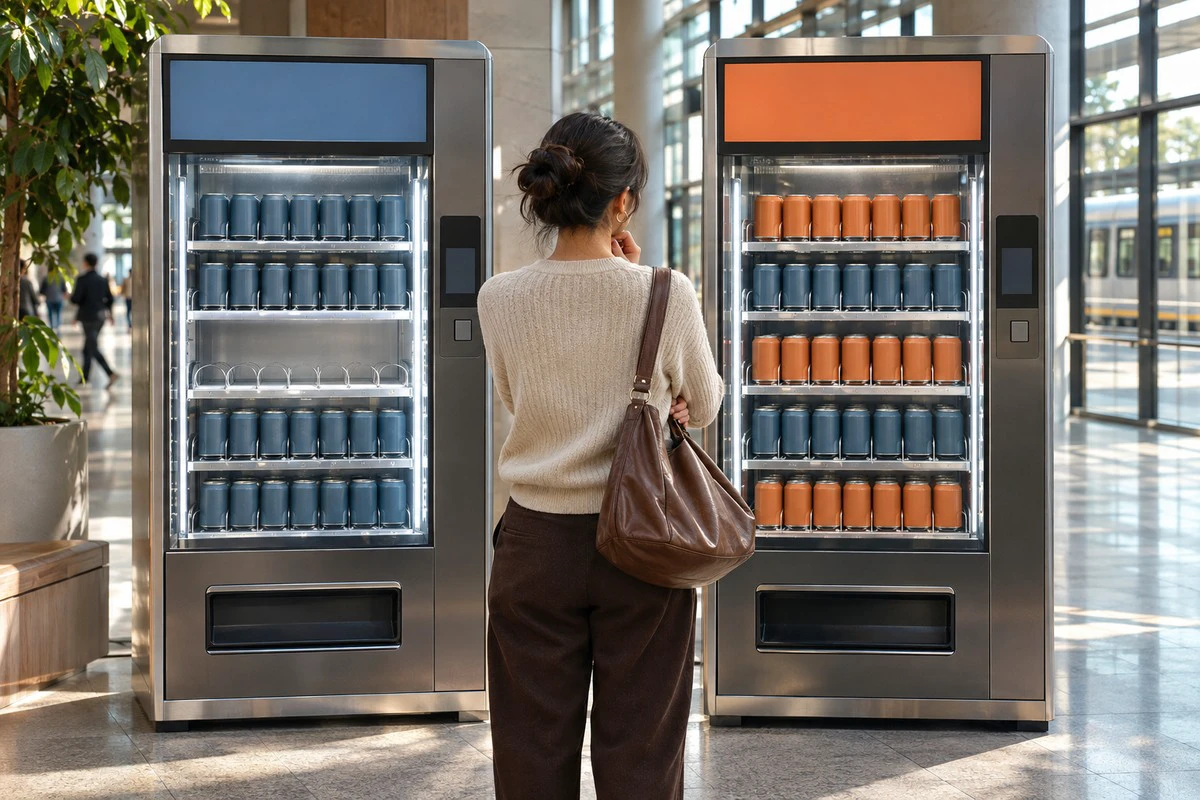
Picture a travel accessories brand stocking a compact charging kit in airport vending machines. The video promises a quick fix before boarding, but the bin in front of the traveller is empty. The creative still does its job: it makes someone want the kit. The purchase breaks because the media and the machine tell different stories.
Buy an operating rule alongside the screen time
On November 5, 2026, Invenda described its Atlas vending screen advertising platform. Its product page lists inventory as one possible targeting input, alongside location and time of day, and lists video, banners and interactive units. This is a vendor description. It does not establish that stock control is active on a particular machine or that purchases made there are incremental.
Brief three playback states, not a collection of versions
- Available: Use the item-specific spot only for a verified machine and SKU with a current sellable status. Agree on a low-stock threshold with the operator if the replenishment cycle warrants it.
- Unavailable: Remove the buy-here message. Use an alternative only when the brand has approved it and the machine confirms that it can sell that alternative. Otherwise run an approved awareness asset or pause.
- Unknown: Define a timeout for missing or stale data. Withdraw the purchase message when that timeout expires and restore it only after a fresh, identifiable stock update.
For the hypothetical charger, a producer in China can shoot one clean base sequence and reserve separate connector close-ups for the two sellable kits. An awareness cut can show the use occasion without promising that a specific kit is in this machine. If only one kit is verified for the pilot, commission its spot and a fallback first. An unapproved substitute should never inherit the original footage or claim simply because the schedule needs another file.
Observe the screen when the bin changes state
Ask the operator to run an authorised test on one unit: make the item unavailable, interrupt the status feed, then restore a sellable item. Record the time of each stock event, what appeared on screen and when it changed. Assign someone who can pause the campaign if the stale purchase spot persists. Ask your commercial production partner to quote the main film, specific product inserts and fallback as identifiable deliverables that the operator can map to those states.
A transaction on the device can help reconcile whether the campaign ran while the product was available. It does not on its own show how many sales the ad created. If lift matters, agree on a credible comparison and keep stock, pricing and site conditions visible in the analysis. The buying decision for the pilot is straightforward: require a verified purchase path before funding a purchase-led spot; if the operator can only confirm playback, evaluate the placement as awareness inventory.