Some brand films begin with a small, familiar action. A product slides into frame from the same direction, a performer taps the table before speaking, or a package appears after a repeated visual wipe. Viewers may not be able to describe the device, yet they recognize the brand before the action is complete. By the fifth episode, however, the same opener can feel less like recognition and more like a template.
What deserves to repeat is not a finished shot. It is a relationship that can be performed again: who moves first, how the product enters, and when the viewer receives new information. If the relationship stays stable while the outcome changes, repetition can build brand memory. If the setting, rhythm and result all stay fixed, the opener becomes packaging that delays the story.
Repeat an action grammar, not a finished file
Attaching the same three-second animation to every film creates consistency, but it does not bring the brand into the story. An action grammar works more like a sentence structure with replaceable words: a person meets a small obstacle, the product enters from a familiar direction, and the action changes the space or the character's state. Each episode can replace the obstacle, product condition and result while still belonging to the same family.
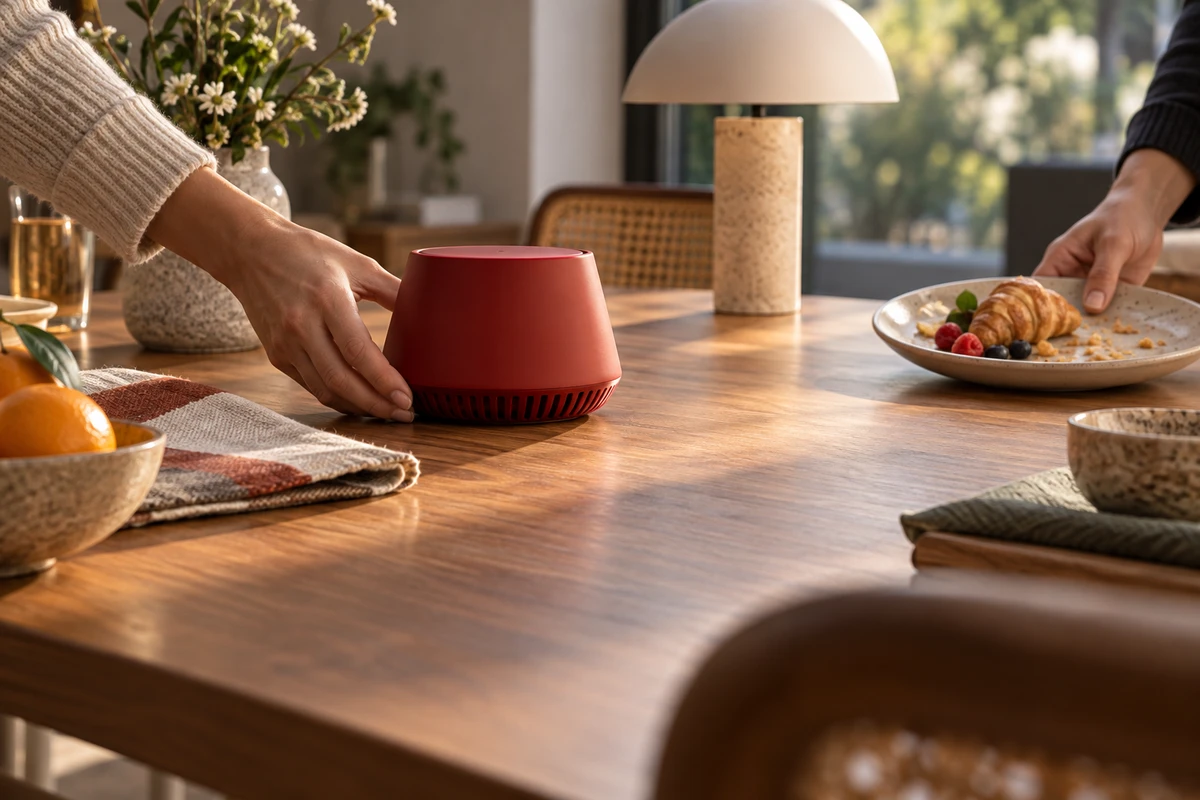
A home brand, for example, might begin every film by clearing a small area. In one episode, a breakfast plate moves aside for a speaker. In another, loose cables are gathered before a lamp turns on. In a third, a child's drawing shifts to the wall as a folding table opens. The recurring action is making room. The new content comes from who does it, why they need the space and how the product changes what happens next.
A useful recurring opener needs one constant and two variables
The constant: the relationship between brand and product
The stable element does not have to be a logo. It might be a gesture, an entrance direction, a sound cue, the distance between camera and performer, or the point at which the product always becomes active. It needs to be specific enough for a production team to reproduce, yet short enough that it does not decide every episode in advance.
The variables: context and outcome
The first variable is context. Before a meeting, before leaving home, after exercise and during a quiet night, the same action carries a different speed, weight and emotion. The second variable is its result. The same act of opening can change the light, admit a sound, free some space or provoke another person's response. A changing result keeps the opener from becoming decoration.
Cinematography can provide a third variable. A close shot can emphasize touch; a medium shot can establish a relationship; a vertical version can let the hand, product and expression pass attention up the frame. Recognition comes from the action relationship, so the camera does not have to occupy exactly the same position every time.
Write the episode's task before bringing the familiar action back
A recurring opener often fails because the writer inserts the brand gesture first and only then asks what the episode is about. Reverse that order. Define the character's task: are they rushing, looking for space, preparing to share something, or trying not to disturb another person? Then ask whether the familiar action changes that task. If it does not move the story, it no longer belongs in this episode.
This is different from testing several opening hooks for one campaign. Hook testing compares which entrance works for a particular audience and objective. A recurring opener asks how one entrance relationship can stay alive across a longer body of content. One method searches for difference; the other manages repetition.
Shoot an action family, not one standard take
On set, divide the opener into four units: the state before the action, the trigger, the moment the product participates and the result after the action. Capture two rhythms and two shot sizes for each unit. Editors can then rebuild the sequence for different durations without returning to the same completed intro every time.
Direct the performer with a verb rather than a fixed hand position: set it down reluctantly, push it away urgently, unfold it with confidence, or pass it secretly. A changing motive preserves the outline of the action while creating a new performance. Sound can work the same way. Keep a family of trigger sounds or a familiar beat position, but let the material, room response and surrounding ambience change with the scene.
Let viewers recognize the pattern, then give them a departure
A series opener needs a recognition point and a departure point. The first tells viewers that a familiar action has begun. The second tells them why this episode is worth continuing. If the distance between those points becomes too long, familiarity turns into waiting.
In the edit, keep the action's setup and pulse, then bring the variation forward before the movement finishes. The product may fail to appear in its usual place; another character may catch it first; a sound may arrive while the visual result is delayed; or a familiar wipe may reveal a completely different space. The departure is not a cheap twist. Its job is to establish the episode's new task early.
Google Ads' current ABCD guidance recommends introducing the brand or product early and maintaining its presence. TikTok for Business also identifies color, tone, sound palette, editing rhythm and personality as cues that can build a consistent identity. These platform principles support integrating brand cues into the content; they do not prove that every brand should repeat one fixed opener. The device still has to help viewers understand what is new in the current film.
Know when to vary the device and when to retire it
If the action still serves a new product task but feels overly familiar, create a variation. Change the performer, camera distance, location, prop or result while preserving one core relationship. Retire the device when a new product works differently and the old action would misrepresent it, when a major brand event needs to break the everyday tone, or when the opener consumes the most valuable information time in a short cut.
Try one simple test: remove the brand mark and look only at the action, rhythm and product relationship. Can the team explain why this behavior belongs to the brand? If the answer is merely, "We have always filmed it this way," the device is habit rather than identity. If the answer describes the product's role, the character's attitude or the way the brand treats space, the repetition has room to develop.
A recurring opener gives a content series a shared way to begin
A motion identity system can define how logos, graphics, color and movement work together. A recurring live-action opener sits closer to the story. It organizes character, product and context into a small event that can return. Both can express the same brand personality without collapsing into one animation template.
For the next series, write one sentence that defines the action grammar. Then write a separate context, outcome and departure point for every episode. If only the product model changes, the concept has not developed far enough. If the action relationship remains recognizable while the character's task keeps changing, the series can gain both memory and freshness.
If you are planning a set of brand films or social episodes, share your existing brand assets, the product's role, the character tasks and the required formats with ONCE. Our brand video and content asset production process can connect concept development, storyboards, production coverage and horizontal or vertical edits around the behaviors that deserve to become lasting brand cues.