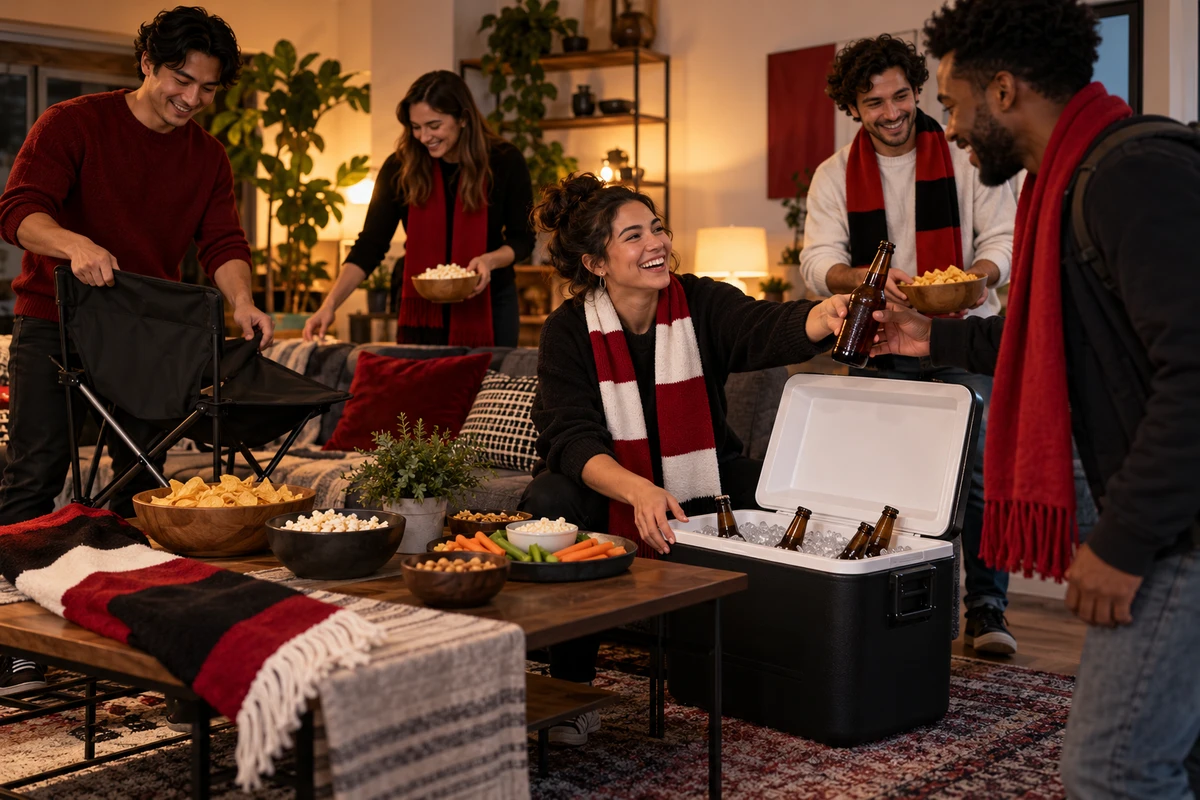
In a review room, the quickest question is often whether a sports film feels exciting enough. Stadiums, scoreboards, celebrations and trophies deliver instant energy. Yet the image that stays in everyday life may be much smaller: someone setting up a tailgate hours before kickoff, clearing space in the living room, or keeping the group chat alive long after the final whistle. The match belongs to the people on the field. Fandom is built by the time and actions of everyone around it.
On October 2, 2026, The Coca-Cola Company published details of the new season of “Fan Work Is Thirsty Work.” The official release centers on ordinary fan commitments: tailgates, stadium and home viewing, watch parties and online conversation. It also describes a campaign spanning television, social, digital, retail, packaging and live experiences. This article uses only that public material as its case-study scope. It does not treat an activation plan as proof of business results or infer an undisclosed production process.
Match highlights are powerful, but their emotion is borrowed
Goals, comebacks and trophies already contain drama. When a product appears only between highlight shots, viewers may remember the athlete and result without understanding why the brand belongs there. Highlights also depend on rights, fixtures and outcomes. A single film rarely carries the same meaning across different clubs, cities and seasons.
Fan life offers another narrative unit: preparation, waiting, repetition and sharing. These moments are less spectacular, but they bring sport back to kitchens, car parks, living rooms, commutes and phone screens. A brand does not need to claim it created the passion. It needs to notice how that passion already works.
Turn fan work into filmable action
“Passion takes effort” remains generic until a storyboard identifies the action and its visible cost.
Give time a beginning and an end
Leaving before dawn for an away game, arranging a viewing space, or checking the projector and speakers all take time. An alarm lighting up, a folding chair opening, ice filling a cooler and the last friend arriving can make commitment legible. If the film shows only the finished party, viewers never see who built it.
Put physical effort in the details
A tired voice, paint-stained hands, carrying food through a crowd, or standing through the final minutes can feel closer to fandom than another generic slow-motion flag. Performance should not stay at maximum volume. Holding a breath during a review, leaning forward before a chance, or still passing a drink after conceding lets the characters be people before they become fan types.
Let relationships give the action meaning
The memorable work of fandom usually happens between people: who sends the invitation, who is always late, who remembers every allegiance, and who stays to clean up after an argument. A group cheering in unison is only atmosphere. Give people different tasks and the ensemble begins to tell a story.
Let the product enter the ritual instead of interrupting it
Drinks, food delivery, televisions, headphones, cars and wearables can all belong in sports culture, but the product role should come from a real action. A cold bottle passed to a late arrival performs welcome. A television set up before friends arrive performs gathering. A car collecting the group performs arrival. The product gains meaning because it completes a verb in a relationship.
This differs from inserting a product close-up every few seconds. One approach interrupts the people; the other turns the product into a change in the action. When a hero shot is needed, it can grow out of use: condensation, an opened pack, or a bottle saved for someone still on the way. The polished image still serves the story instead of feeling like a product page dropped into it.
For a closer look at where products can enter physical movement, see ONCE’s article on action rhythm in sports commercials. For a campaign that needs one proposition across a hero film and platform versions, explore TVC and commercial production.
How one idea becomes a hero film, social content and an experience
The official release describes “Fan Work Is Thirsty Work” as more than a television spot. It connects social-first content, creator partnerships, team packaging, retail activity and a 74-stop tour. The useful lesson is not the number of executions. It is that every touchpoint can answer the same question: what did a fan do today to make the game part of their life?
A hero film can build a complete preparation, commitment and release arc across three or four groups. A vertical short can follow one action, such as the away-game journey, setting up a watch party or carrying a conversation after the match. A live experience can ask people to perform a repeatable ritual rather than pose in front of a branded wall. The character logic and product role remain shared, while duration, participation and information density change.
That creates a clearer production logic. The hero film needs relationships and turns. Social pieces need actions that can begin and end on their own. An event needs a ritual people can perform. A shoot may share locations and cast, but one landscape montage cannot solve every task.
Where this approach does not fit
When a new product needs proof from elite athletes, everyday supporters cannot replace valid performance testing. When sponsorship rights require clear tournament assets, teams, venues and licensed marks cannot disappear into a lifestyle film. Fan work is best suited to companionship, belonging, habit and community. It gives a brand a reason to enter sports culture; it does not eliminate the need for match highlights.
The idea should also avoid reducing fandom to one loud stereotype. Watching alone, listening while caring for children, following across time zones and participating through a group chat are all forms of commitment. Showing different ways of following the game is often more truthful than adding more celebration shots.
Remember how people love the game
Sports advertising can borrow the heat of competition and still leave the audience as background. When the camera turns toward preparation, waiting, repetition and relationships, the brand gains a place in life beyond the fixture. The story does not need to explain passion for fans. It needs to observe what they already do for it, and where the product is genuinely useful.
If you are planning a sponsorship film, fan-led social series or live campaign, share the proposition, product role and planned touchpoints with ONCE. We can shape the work of fandom into a filmable, expandable creative structure.
Source and observation scope
Case facts come from The Coca-Cola Company’s October 2, 2026 release, “From Tailgates to Group Chats, Coca-Cola Is Celebrating Football Fans Everywhere This Season.” This article uses the published proposition, touchpoints and activation plan. The analysis of actions, product roles and version planning is ONCE’s editorial interpretation, not a disclosed creative method or effectiveness claim from the brand.