Three days into a campaign, a guitar pedal performance video may still be getting views while clicks start to fall. The team’s first reaction is often to cut it faster. Pause before doing that. The problem on TikTok Shop is often that one video tries to build desire, demonstrate a change in tone and prompt a purchase, without fully explaining any of them. A more reliable approach is to assign distinct tasks to shots from the performance session, then make each creative serve one stage of the conversion journey.
Decide Whether This Ad Should Inspire Playing or a Purchase
Music gear has an emotional appeal, but emotion cannot carry every selling point. For a cold audience, the hook can show or let viewers hear what changes before and after the footswitch is pressed. At the consideration stage, close-ups should explain the knobs, connections and actual foot operation. A conversion version should connect the product, its use and the shopping link in a clear sequence. Different story angles can share the same performance footage, but they need different openings.
That is why the brief should say “help bedroom guitar players understand how to achieve a particular tone,” rather than “make a cool rock video.” The real hook is the change the viewer immediately understands they can achieve, not an exaggerated camera shot.
Build the Performance Around Three Observable Steps
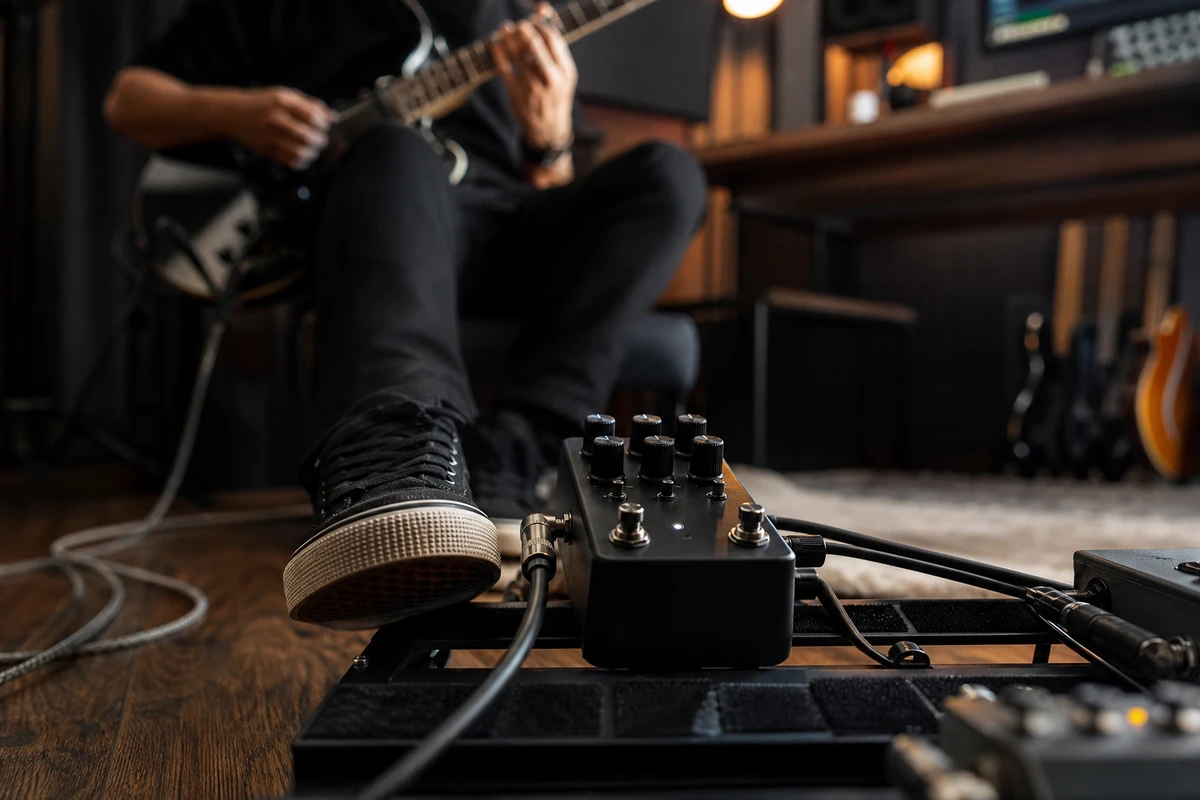
Our usual script moves from a problem to a foot action, then to the audible and visible result. Start with a clean, restrained guitar practice shot to establish a baseline. In the second beat, make the pedal switch and knob movement the visual focus. In the third, bring the performer’s movement, the room’s atmosphere and a product close-up together to show the result. Even with sound off, viewers can recognize a change through the footswitch press, status light and hand reaction. With sound on, the change in tone adds a second layer of emotion.
TikTok for Business recommends structuring ads with a hook, body and close, and communicating value early in its Creative Codes guidance. TikTok’s advice on creative structure helps explain why a long solo rarely completes the selling journey on its own: it provides atmosphere without necessarily directing viewers toward a purchase.
Capture a Reusable Footage Pool Before Fixing the Runtime
The shoot day should cover more than a single 30-second edit. Capture at least an extreme close-up of the footswitch, knob adjustments, input and output cable connections, a product hero frame, a waist-up performance shot, the room’s atmosphere, the product being held and put away, and a spoken line that works on its own. Leave safe compositions for landscape and portrait versions of each action, especially so the shoe, pedal and guitar neck are not crowded at the bottom of the frame. Tag each shot by its purpose: hook, proof, emotion, CTA or potential key visual (KV).
This footage pool lets editors build cutdowns around a before-and-after tone comparison, three seconds of footswitch evidence, a creator speaking to camera, a gifting scenario and answers to buyer questions for retargeting. Five different runtimes of the main film do not make a meaningful version matrix. If none of the hook, evidence or CTA changes, the media team still has essentially the same creative.
Plan the Product Anchor into the Visual Sequence
Creative should remain relevant to the TikTok Shop product being promoted. The linked Video Shopping Ads guidance recommends multiple creatives per ad group and refreshing them when fatigue appears, but now identifies GMV Max as the supported TikTok Shop campaign type; treat the older ad-group instructions as legacy guidance. For production, the product anchor link remains a composition consideration: keep the product visible at the opening, establish its identity in the middle and connect the final action to buying. Do not wait until the last two seconds to paste in a static product image.
A music product can appear naturally in the action. Show the pedal being pressed, follow the foot and then push the camera toward the guitarist. Keep UI elements, captions and buttons away from the details viewers need to see. The cover frame should also promise a real pedal that can be operated by foot, rather than offer a generic recording-studio mood image.
Use Keywords and Comments to Plan the Next Creative
TikTok Shop’s keyword expansion guidance stresses relevance to the product and search intent, with performance checks at ad-group and keyword level where that feature is available. The page describes the older shopping-ad formats, so confirm availability in the current campaign workflow. For production, turn recurring comments such as “what style is it good for?”, “can a beginner use it?” and “will it be awkward in a live performance?” into subjects for the next creative round.
Comments are feedback on what buyers need to understand, rather than a supply of lines to drop into subtitles. Group questions by tone, operation, gear combinations, price and trust. That helps determine whether the next video should show a comparison, a first-use demonstration or an actual performance. Versions built around those needs have a better chance of remaining useful as creative fatigue develops.
Review How Music Supports Each Stage of Conversion
A strong performance sequence can establish a brand’s character, but each campaign stage needs a different density of information: emotional benefits for discovery, product evidence for conversion and specific answers for retargeting. Track retention through the first three seconds, product-page clicks, add-to-cart actions, recurring comment keywords and creative frequency together. A high completion rate does not make a video the strongest sales creative. Judge it against the conversion journey, as well as how good it looks in the edit.
To plan assets for TikTok Shop, an online store and overseas social channels together, start with ONCE’s cross-border content solutions. We focus on whether each video has a clear shot task, reusable footage from its setting and a testable hypothesis for the next round, as well as how many videos are delivered.