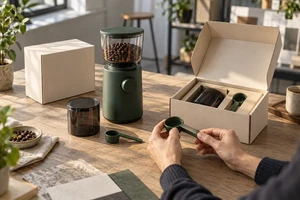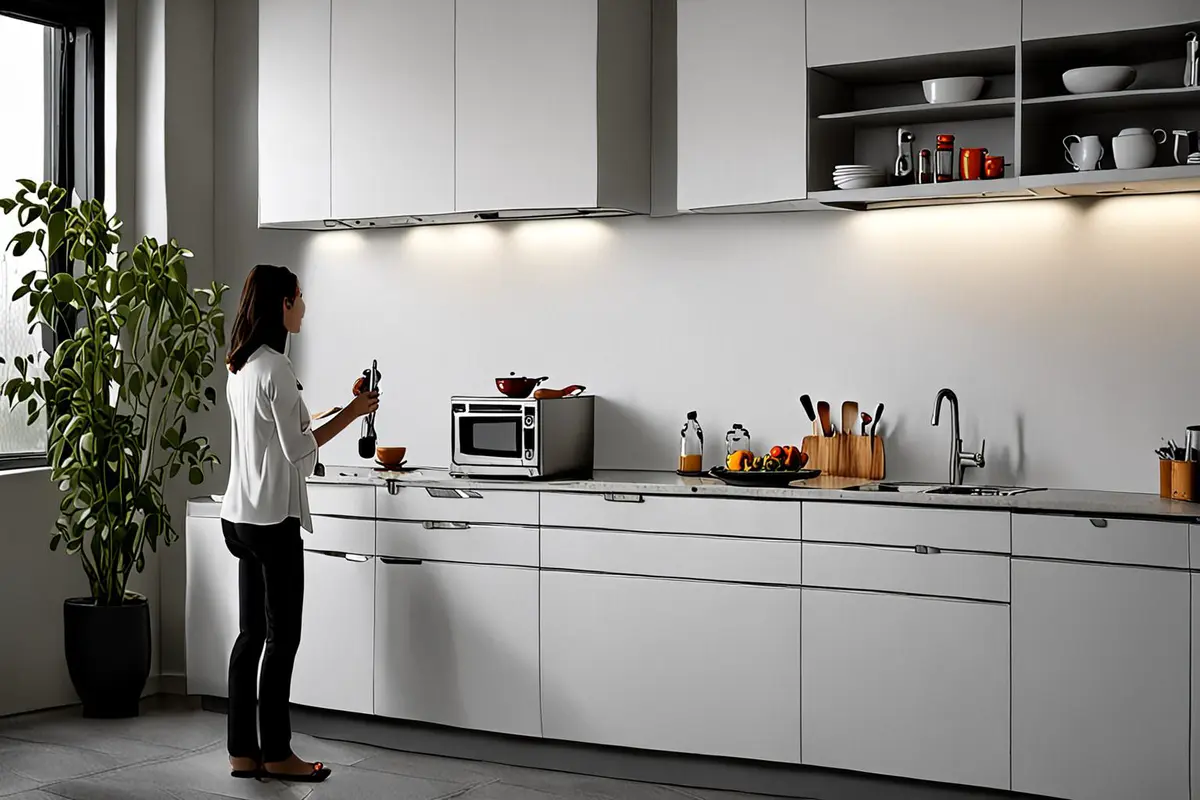
Putting a small appliance in a beautiful kitchen does not mean it belongs in local life. In one otherwise polished scene, a performer crosses the room to retrieve the product, threads a short power cord past the sink, and then returns damp parts to a high cabinet. The cast, captions, tableware, and color palette may all have been localized. The product still feels like a prop borrowed for the shoot.
For global brand ads, the home setting that matters most is not a collection of regional design cues. It is the space that lets someone use the product. Where the item sits, where it comes from, how it receives power, where it is cleaned, and where it goes afterward will communicate whether it is convenient, cumbersome, permanent, or occasional before the copy makes a claim.
A home is a set of actions, not a style label
“Western kitchen,” “Japanese small apartment,” and “Middle Eastern family home” are too broad to guide production. They turn research into décor, color, and recognizable props without answering how the product works inside the home.
IKEA's February 2026 Cooking and Eating Report surveyed more than 31,000 people across 31 markets. Its public summary says only 44 percent eat dinner at a kitchen table, while 18 percent eat on the sofa. Lack of storage and insufficient work surfaces were each cited as kitchen frustrations by 25 percent of respondents. The findings do not define one correct home for any country. They do show that eating and cooking routines are mobile, fragmented, and shaped by space.
The creative brief should therefore begin with the target user's movement, not with a mood board of popular interiors. For a countertop appliance, determine whether it normally remains visible, comes out of a cabinet every day, or travels from kitchen to dining table, living room, or outdoors. For a cleaning device, understand the real distance between the mess, clean water, dirty water, accessories, and charging position. The room is not a backdrop behind the benefit. It is one of the conditions that makes the benefit believable.
Five actions turn a set into a credible home
Placement: an empty surface is not necessarily a working position
Centering a product on an immaculate counter only proves that the art department cleared the frame. A working position has relationships around it. A coffee machine needs a cup and a route for refilling water. An air fryer needs room to open and vent. A desktop purifier has to relate to where a person actually spends time.
The commercial does not need to document every technical condition, but the set should not contradict the main value. A compact product that occupies an entire island will not feel space-saving. A supposedly effortless device placed beyond furniture and across the room loses evidence of convenience.
Retrieval: where the hand comes from matters more than the cabinet style
The first movement reveals whether the product belongs to an everyday routine or an occasional task. If a performer must move three objects before lifting it from a cupboard, the scene no longer says “ready when needed.” If lifting requires two hands, portability cannot be restored by a caption alone.
Before designing coverage, let the performer handle the real product at its real weight: retrieve it, place it, and start it. Then decide which part needs a wide or medium shot to preserve the spatial relationship and which part deserves a close-up. Do not place the product in the prettiest cabinet first and ask performance to justify the location later.
Power: a cord is not a flaw to erase
The product variant, plug, cable, and adapter shown on screen should correspond to the model actually sold in the target market. The outlet does not have to become a hero shot, but the cord should not vanish, and the scene should not imply wireless operation the product does not offer.
Power location also changes composition. An outlet on a wall, island, floor, or behind furniture alters the performer's body direction and the face of the product presented to camera. If the final film needs a clean frame, show one truthful connection and manage the cord with plausible blocking afterward. Do not begin by pretending the product needs no power.
Cleaning: the product story continues after the result
Many appliance ads end exactly when the main function is complete, omitting the step most likely to change a viewer's sense of convenience. Where do removable parts go? Where is residual liquid emptied? Does the performer's hand cross a food-preparation area? Not all of this belongs in the final cut, but the team needs to walk through it before storyboarding.
If easy cleaning is a benefit, retain a visible result: waste leaves the product, a component comes free, or the working surface returns to use. If cleaning is not the primary promise, the blocking still should not invent an ease the design does not provide. The shorter the cleaning beat, the clearer its starting point and result need to be.
Return: permanent placement and storage tell different product stories
A machine left on the counter after use suggests frequency, readiness, and a claim to space. A product wiped and returned to a cabinet suggests portability, shared surface area, or occasional use. The return shot is optional, but the production team should know the product's plausible destination in the target home.
This becomes especially important in vertical versions. A wide frame can preserve the performer, counter, and cabinetry together. A vertical crop may retain only the hand and product, removing where the item came from and where it will go. Localizing the setting means preserving the spatial cause and effect that matters, not merely changing the props inside the crop.
Localize functional relationships, then stylize freely
The target-market version does not need to become a documentary. Color, surface, lighting, wardrobe, and props can be deliberately branded. The set can be aspirational. The relevant question is not whether every local household looks this way. It is whether the stylization changes how the product actually works.
Functional relationships deserve verification: the sales model, physical scale, grip and opening direction, included accessories, power and water requirements, operating clearance, and cleaning and storage path. Visual tone has more freedom: quiet or energetic, morning or evening, lived-in or graphic.
ONCE's article on household product-ad role design asks who operates, benefits from, judges, and cleans up after a product. Our guide to product-ad art direction examines how surfaces and props shape product identity. Spatial localization adds a separate test: even when the roles and visual language work, the home still fails if the action cannot happen naturally there.
Real homes, built sets, CG, and AIGC solve different problems
A real home already contains spatial relationships. Doors, cabinets, outlets, windows, and sinks constrain movement, making it harder for performers to drift into showroom choreography. The trade-off is reduced control over camera positions, lighting, and multiple market versions. A representative target-market home may also be difficult to find in the city where production takes place.
A built set is useful when the team needs to reproduce the relationships that matter. It does not need to copy an entire home. Start with the geometry the product touches: counter depth, cabinet opening, turning space, water route, and cleaning path. Modular walls and cabinetry can support horizontal and vertical versions, but every physical move requires a fresh blocking rehearsal.
CG and AIGC can accelerate market exploration, material changes, background extensions, and environmental variants. Google's current lifestyle-image guidance defines the format as product content shown in a natural or staged real-world setting, and recommends showing a product in use or in an authentic context. Google Product Studio and Adobe Firefly also provide tools that place an uploaded product into generated or composited scenes. Adobe's Object Composites workflow lets users position and resize an uploaded object before generating the environment around it.
These capabilities make changing a room easier; they do not make the room culturally or physically correct. Google describes Product Studio as experimental and notes current limits around hands, people, and some product categories. A useful generation brief still needs product dimensions, contact-surface height, cable exit, door and drawer direction, performer entry, and the destination of the final movement. For shots involving hands, liquids, cleaning, load-bearing contact, or exposed product mechanics, live action or controlled 3D often offers a more reliable base. Generated environments may change style, but they should not invent a new way to use the product.
Review without captions: can the performer complete the route?
The most useful localization question is not “Does this look like the country?” It is “What happens next?” Turn off captions and voice-over, then review the sequence from the first frame. Why is the product placed here? Can the performer reach the accessories naturally? Where do power and water come from? Where do dirty parts and finished output go? Does the product remain on the counter or leave it?
Then ask someone familiar with everyday life in the target market to retell the action rather than rate the aesthetics. If they need the ad copy to understand the placement, or repeatedly ask why the performer crosses the room in a certain way, the problem is likely spatial logic, not translation.
A strong global ad does not have to turn every home into a sociology study, and it should not reduce local life to a set of symbols. It only needs to give the product a credible origin, action, result, and destination inside that space. Viewers may never name the outlet, cabinet door, or counter distance. They will feel the difference when the movement says, without explanation, that this product can belong here.
If you are developing overseas campaigns for home, kitchen, or smart-hardware products, bring ONCE the target markets, actual sales variants, use recordings, and existing location references. We can evaluate the action, space, and version design together, identifying what can be shared and what should be rebuilt. Explore our cross-border product video production solution.
Sources and scope
This article draws on IKEA's February 18, 2026 Cooking and Eating Report summary, current Google Merchant Center guidance for lifestyle images and Product Studio, and Adobe Firefly's Object Composites documentation updated in September 2025. The five-action spatial review is ONCE's creative analysis, not a statistical description of any market's households.