Condensation is one of the easiest shortcuts to “premium texture” in product advertising. It can make a drink look cold, make skincare packaging feel fresh, or suggest that an appliance has just entered a real use environment. Droplets are not neutral decoration, however. On different products they may communicate chilled, hydrating, weather-resistant, waterproof, or safe to rinse. The production question is therefore larger than whether the droplets look attractive. It is what the final image makes the product appear to promise.
Condensation is more than sprayed water
Real condensation forms when a surface is cooled to around the dew point of the surrounding air and water vapor turns into liquid on that surface. The US National Weather Service describes dew point in the same physical terms: condensation appears when saturation conditions are reached. In a studio, droplet density, size, and movement therefore change with product temperature, humidity, and time.
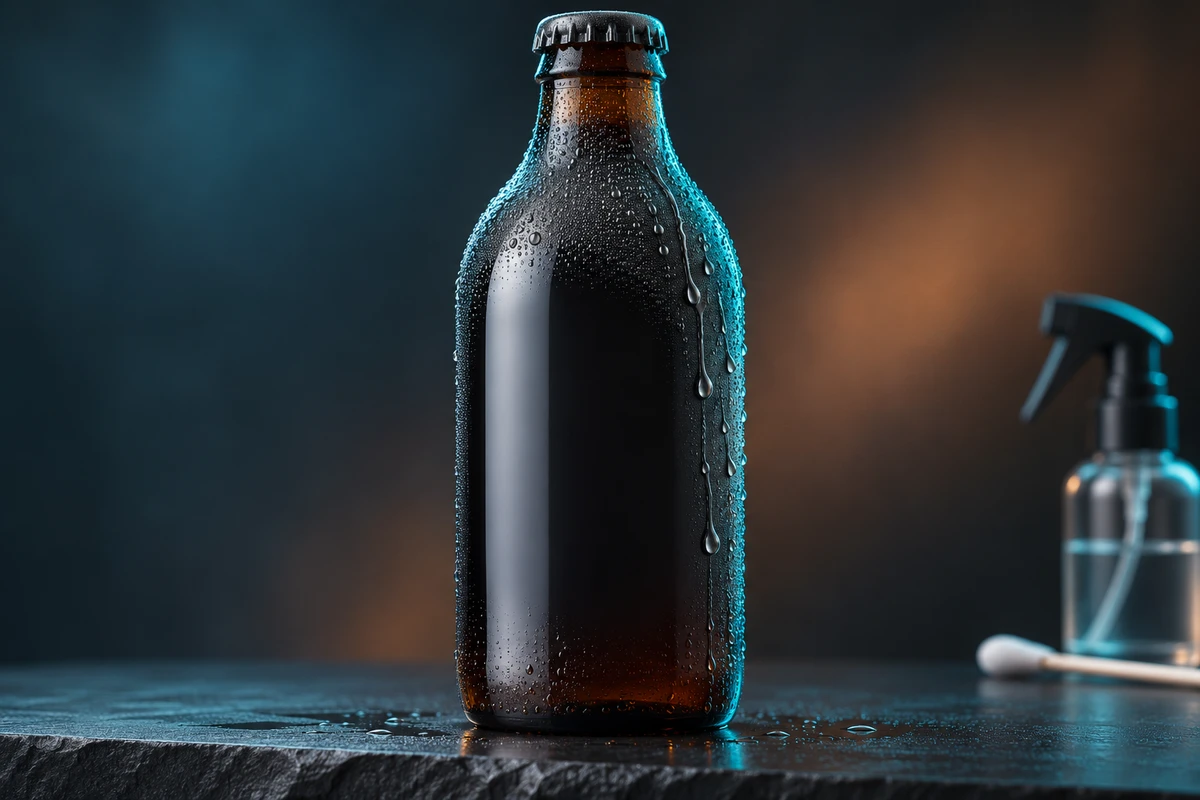
A cold sample brought into a warm stage may first develop a fine mist. Small droplets then merge into larger ones and begin to travel with gravity. That progression feels alive, but it is difficult to repeat across multiple takes, focal lengths, and hours of production. The creative decision is whether to preserve that real evolution or build a repeatable condensation look.
Define the value the droplets must communicate
The same layer of water means different things in different categories. On a beverage bottle, it usually suggests coldness and recent removal from a cooler. Fine droplets on skincare packaging can support a fresh or dewy sensory mood. Rain on outdoor equipment points toward environmental exposure. Water flowing directly over an electronic device can easily become a demonstration of water resistance.
Before the shoot, define the task without camera language: “Make this drink feel cold” is more useful than “put droplets on the bottle.” The first statement leaves room for cold air, glass fogging, opening sound, color contrast, and condensation. The second encourages the crew to wet every surface, even when water has no relationship to the real value.
Droplet shape changes the product character
Fine mist feels like a recent temperature change
Small, even droplets can make a surface feel cold, light, and clean. They suit clear packaging, refreshing beverages, and minimal beauty products. Side or back-edge light helps define their contours. Broad frontal light may flatten them into a gray film instead of visible condensation.
Large droplets create action and compete for attention
Larger drops merge and travel, which can support weight, thirst, and strong temperature contrast. They also move across labels, controls, and seams, creating highlights that are difficult to control. In a macro shot, a single drop may become brighter than the brand mark. Large droplets work better as selected action points than as the default state of every hero angle.
Irregular wet marks suggest use
A handprint, a wet ring on a table, or water gathering at the base can establish a lived-in moment. The same marks can make premium packaging look dirty or disordered. They belong naturally in use shots but may not belong in the clean front view needed for an e-commerce page. One production does not need one humidity level across every image; hero shots and use shots can have separate surface states.
Real condensation and styled droplets have different costs
Real condensation follows material, temperature, and gravity, so its variation looks convincing. Its weakness is continuity. Wiping, chilling, and warming take time, and droplets cannot be restored to exactly the same positions. Labels may lift, paper packaging may deform, and matte coatings may develop marks that cannot be removed during the shoot.
Styled droplets created with atomizers, pipettes, or longer-lasting water-based mixtures give the crew more control over size and distribution. They can hold a hero look for longer. The risk is excessive regularity: identical droplets with no merging pattern can resemble resin or a digital overlay. A more natural treatment often combines a fine base layer with a few larger moving drops while keeping logos and essential controls dry.
Light the droplets without losing the material
Droplets become visible through highlight edges, but product materials are also read through reflection. Gloss metal, glass, and black plastic already create hard reflections. Adding water can fill the frame with small bright points. The cinematographer should preserve the main product silhouette and brand plane before trying to make every drop sparkle.
A large soft source can define the bottle or device, while a narrower side-back light catches droplet edges. A polarizer can help manage some non-metallic reflections, but it may also weaken droplet highlights or alter the look of a display, so it must be tested from the final camera position. Once the lighting is set, continuity notes should include product temperature, spray count, waiting time, and the side that carries moving drops.
Continuity is harder than one beautiful frame
Condensation may need to continue through a front view, opening action, hand-held shot, pour, and product landing. If the hero close-up is heavily wet but the hand-held shot is dry, the surface state jumps. If the performer touches the hero sample, fingerprints and wiped channels may ruin later product shots.
A practical production separates sample roles. A hero sample protects labels, edges, and finish. An action sample handles opening, pouring, and touch. A test sample is used to explore temperature, spray, and cleaning methods. Before each setup, a reference photo records which side is wetter and which drop is expected to move. This is not paperwork for its own sake; it reduces retouching, reshoots, and mismatched cuts.
Droplets cannot make the water-resistance claim for you
For advertising directed at the United States, the FTC considers both express and implied claims created by words, images, sound, and context. Objective product claims need a reasonable basis before the ad is disseminated. An electronic product shown under sustained spray, rinsing, or immersion may communicate a particular water-resistance capability even if the copy only says “built for everyday life.”
Atmosphere and performance demonstration should therefore be separated in the storyboard. If droplets only provide environmental feeling, they can remain on the table, glassware, background glass, or a controlled area away from ports and controls. Avoid an extended rinse action. If the campaign must demonstrate waterproofing, weather resistance, or washability, the brand should provide the applicable test conditions, approved wording, and evidence. The visual intensity should not exceed what that evidence supports. Rules vary by market; production clarifies what the image communicates, while the brand's legal and compliance process confirms the final claim.
Build a complete feeling of cold
Convincing coldness rarely comes from bottle droplets alone. Ambient air, a pause before touch, the sound of opening or pouring, fog on the glass, and the relationship between warm and cool light all contribute to the sensation. Condensation is one layer. When it stops carrying the entire idea, the product no longer needs to be soaked for the scene to feel cold.
For a campaign that needs landscape, vertical, and e-commerce assets, capture dry hero shots, lightly condensed shots, and true use shots as separate families. Later versions can select an appropriate level for each market and channel instead of forcing one excessively wet image to do every job.
Ask what the image promises before adding water
The value of condensation is not that it automatically makes a frame look expensive. It makes temperature, touch, and a moment of use visible. Each added layer of water should trigger four questions: Is the label still readable? Does the material still look true? Can the action be repeated? Could viewers interpret atmosphere as a performance claim?
If you are planning beverage, beauty, appliance, or consumer-electronics content, ONCE can connect product video production, multi-format content planning, and production consultation. Send the product sample, substantiated performance information, and intended use context; we will first decide whether the droplets need to express temperature, touch, or function before testing light and movement.
Sources: US National Weather Service, Dew Point/Ambient Temperature Sensor; US Federal Trade Commission, Advertising FAQ's: A Guide for Small Business and its advertising substantiation policy. The US rules are discussed only for campaigns directed at that market.