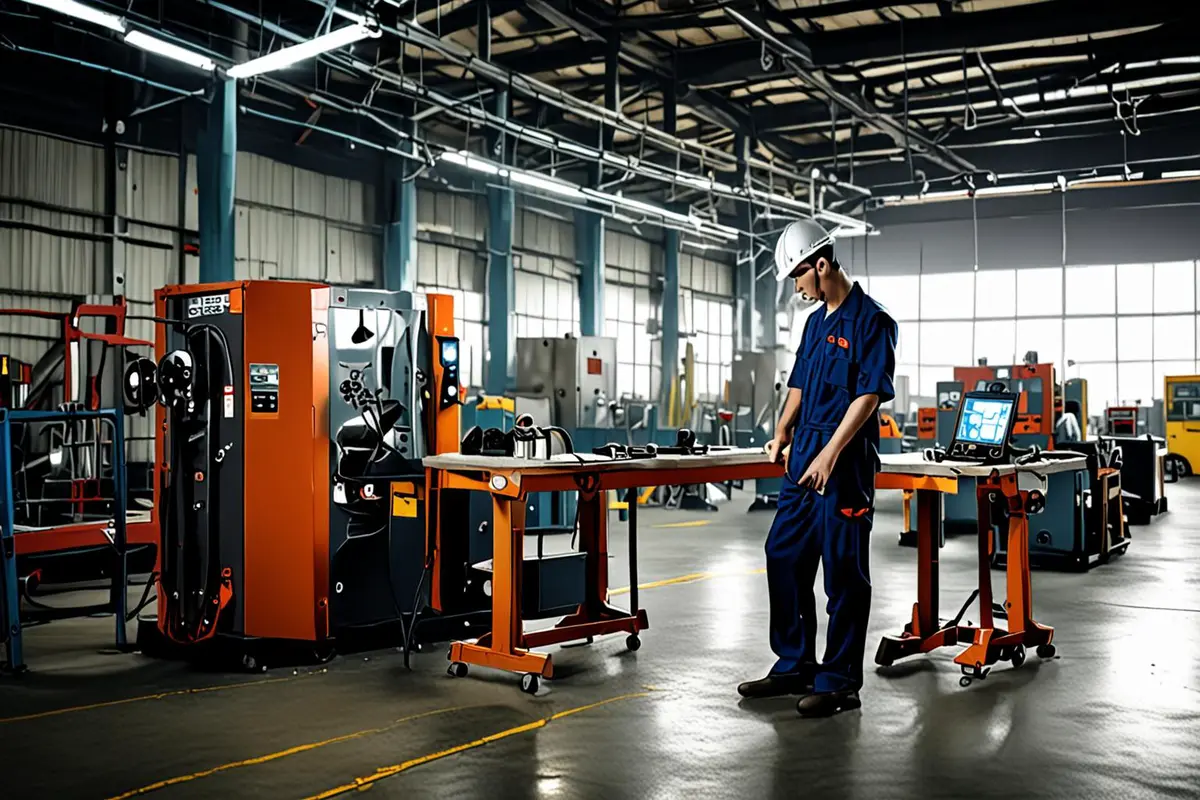
One of the most anxious moments during a factory shoot often arrives when the production line goes quiet. The machine is still, the conveyor is empty, and an operator is checking a fixture. Someone immediately asks whether the machine can start running so the frame will look busier.
Continuous motion is only one part of manufacturing capability. Knowing when to stop, who makes the decision, what gets checked, and how a restart is approved can reveal just as much about quality and risk. A corporate factory film that chases speed alone may miss the moments that make the operating system understandable.
A stopped machine is not an empty frame
Equipment may stop for a changeover, cleaning, calibration, preventive maintenance, or because an abnormal condition has been detected. Those situations should not be collapsed into a generic image of failure. The film needs to establish why the stop happened and then show how people and systems respond.
Toyota's official explanation of its production system treats detecting an abnormality and stopping in response as a central part of jidoka. A machine or worker stops the process so a problem does not continue downstream and the abnormal condition becomes visible. This does not mean every factory follows the same system. It shows why a stop can represent control rather than weak productivity.
Move from a still machine to an active system
A stationary machine does not tell a story by itself. The sequence needs relationships: a change in state is noticed, a person makes a decision, an inspection takes place, and the equipment or process returns to an approved condition. The final film may not use all four steps, but production should capture them so the edit has a truthful sequence to work with.
Establish what the equipment normally does
Use a wide frame to place the machine within the line, then show the fixture, sensor, material input, or product output in closer detail. Once viewers understand the step this machine performs, the inspection no longer looks like unrelated maintenance footage.
Make the human decision visible
A person simply staring at a machine communicates very little. More specific actions include comparing a reference part, checking alignment, confirming cleanliness, inspecting a mechanical connection, or verifying restart conditions with another role. The performance does not need artificial urgency. A pause in the hands, a shift in the eyes, and one clear confirmation can make the decision readable.
A restart is more than a button close-up
The valuable material is what happens before the trigger and which state afterward proves that the process has recovered. The button is only one event. The checks and feedback on either side form the complete action. If the brand wants to communicate stability, the edit should preserve that continuity rather than combine unrelated machines and different moments into one fictional successful restart.
Changeovers, calibration, and inspections need different images
- Changeovers show old material leaving, a new fixture or configuration entering, and the first output being checked. The point is managed change, not how fast an operator can move.
- Calibration shows the relationship among a reference, measurement, and adjustment. Tools and contact points can be filmed, while technical values and conclusions remain subject to client verification.
- Routine inspection shows a stable sequence and details that are easy to miss, such as fastening, cleaning, lubrication, or protective conditions. The action should feel like normal practice rather than a task invented for the camera.
- Preventive maintenance shows early detection and planned intervention. Siemens' official PM-MAINT material explains that maintenance can be planned ahead and that it creates ongoing communication between production and maintenance. A film can show that collaboration without claiming that one maintenance scene proves a lower failure rate.
These conditions are often closer to real manufacturing work than a montage in which every machine runs at full speed. They also move a corporate film from equipment display toward people, process, and judgement. For a related treatment of responsibility between roles, see our article on handoff shots in supply-chain brand films. This article focuses on equipment states; the handoff article focuses on how information and responsibility move between people.
Site safety decides the action, not the camera
Maintenance footage can create a dangerous misunderstanding: people may be positioned where they would not normally stand, or equipment may be asked to move briefly before protective conditions are complete. A production team cannot replace a factory safety procedure with the argument that the shot will take only a few seconds.
The US Occupational Safety and Health Administration's guidance on controlling hazardous energy describes shutdown, energy isolation, and verification as safeguards against unexpected start-up during service and maintenance. Requirements differ by jurisdiction, site, and machine, so every action must be approved by the client's safety and equipment leaders. The camera records an authorized process; it does not direct a fictional safety demonstration.
If the real process includes confidential interfaces, parameters, customer materials, or proprietary structures, the film can concentrate on hands, tools, indicator changes, communication, and the first part checked after a change. Protecting information does not require inventing a process. Preserve the real order of actions and never substitute one machine for another without disclosure.
Stillness needs sound design too
A factory does not become silent when one machine stops. Ventilation, distant lines, relays, tools, footsteps, and brief verbal confirmations keep the space alive. Sound can make the audience feel that the wider system continues to work, but high-speed machine audio from another location should not be placed over stationary equipment to create a false synchronized event.
Preserve the change in sound around the stop. Operating noise recedes, the room and human actions come forward, and the restart enters only after confirmation. That transition can provide the rhythm of the sequence without turning every inspection into a crisis through exaggerated music.
Some capabilities still require real operating footage
Downtime footage can communicate management, maintenance, calibration, and human judgement. It cannot prove throughput, cycle time, repeatability, speed, or continuous operating stability. When a film makes those objective claims, it needs real operating conditions, client-approved data, or traceable test material. A beautifully photographed stationary machine cannot demonstrate how many units it produces per minute.
A complete factory film can therefore assign different jobs to stillness and motion. Operating footage shows how a process happens. Downtime footage shows how the system detects, responds, and recovers. Together they present manufacturing capability as an understandable way of working rather than a generic impression of busyness.
If your company is planning content for a factory, laboratory, or automated system, review ONCE's corporate film and B2B video approach, then bring the shootable processes, stop conditions, confidential areas, and site safety requirements into the production discussion. We can separate the shots that explain operation from those that reveal judgement, then plan the live action, sound, and necessary post-production work.