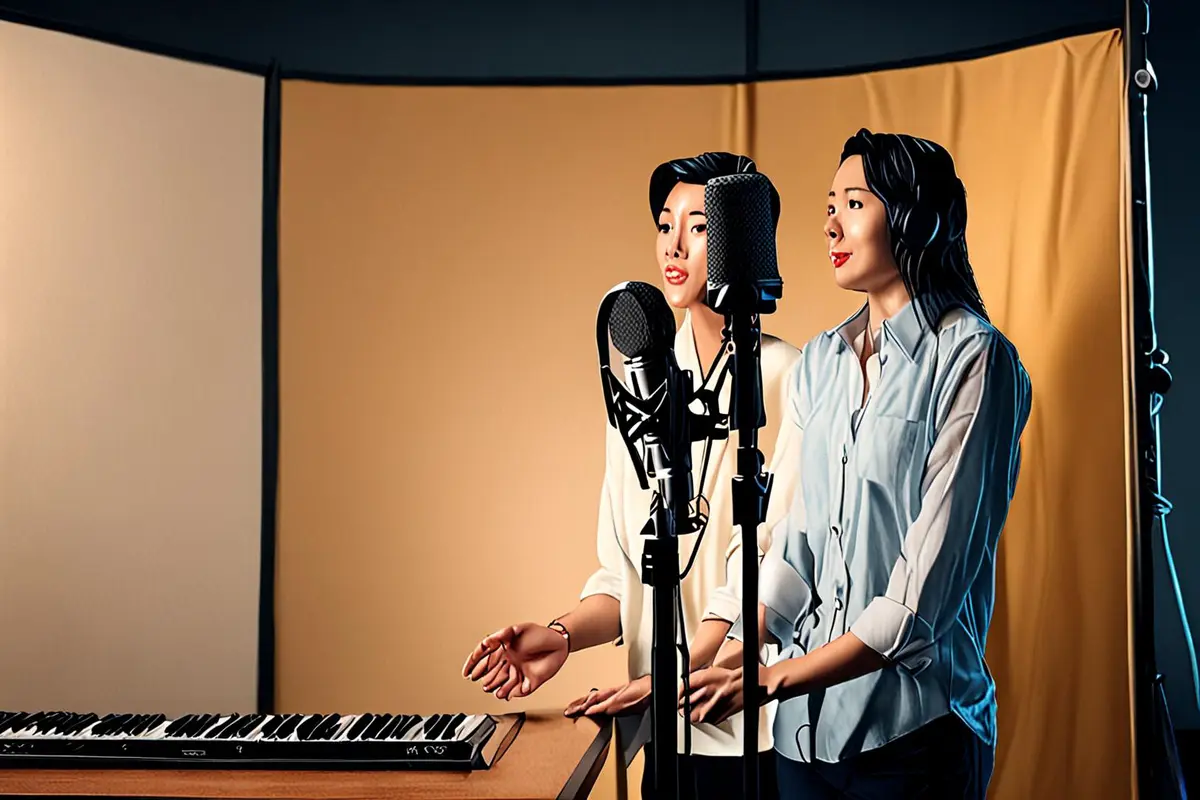
Many brand voiceovers fail for reasons that have little to do with vocal quality or pronunciation. Every sentence is treated as a highlight. The speaker lifts into the opening, stresses the nouns, raises the ending, and keeps the emotional intensity at one constant level. The performance sounds committed, but it rarely sounds like someone is actually thinking.
Credible commercial delivery needs energy and a clear distribution of that energy. Breath determines where a thought begins. Stress tells the audience what matters. Pauses let the image and the idea enter. Pace reveals whether the speaker is communicating, explaining, or rushing. When these relationships are designed, the voiceover becomes a person inside the film rather than a sound placed over it.
If every line is forceful, the real emphasis disappears
When every word is stressed, stress stops working. If the brand name, function, number, adjective, and call to action all compete for attention, the audience hears one continuous effort but cannot identify the hierarchy.
Before recording, assign each sentence a job. Is it opening a question, adding a fact, changing direction, or completing a decision? Most sentences need one primary landing point. The other words should carry the listener toward it. Natural delivery is not undesigned delivery; it is design that does not leave fingerprints everywhere.
Breath is where thought happens
Real speakers breathe when they form a judgment, change perspective, or prepare to say something important. A conventional advertising read often flattens those breaths and leaves only polished sentences. The pronunciation becomes complete, but the sense of thought disappears.
A breath can sit before a change in information or after an action. The first makes the speaker feel as if they are choosing how to express something. The second lets the previous image settle. Not every inhalation has to remain in the final mix, but the performance needs real breathing before the editor can choose what gives it life.
Find the action in the sentence before choosing the stress
Stress the change
In the line “It is not faster; it removes one step,” the meaningful change may not be “faster” but “removes one step.” If every product noun is stressed, the listener hears a specification. If the stress lands where the relationship changes, the listener hears a point of view.
Circle the verbs, turns, and results first, then select one main stress. A noun is not automatically important. The action that changes understanding often matters more.
Light words create room for important ones
Emphasis works because lighter connections surround it. A performer does not need to give every syllable equal fullness. Prepositions, repeated information, and words already explained by the picture can pass more lightly so the decisive action can come forward.
A pause does not slow the film; it gives understanding to the image
Brand films often fear empty space. The moment an action appears, the voice starts explaining it. The viewer has no time to observe before the next line arrives. A pause is not a device for artificial solemnity. It gives the image time to complete what it can communicate on its own.
Inside a voice performance, pauses are small and specific: half a beat after a product action, a hesitation before a reaction, or a brief settling before the conclusion. They help the audience move from hearing information to understanding it. Our article on empty shots in brand films explores the same respect for what the image can say without constant explanation.
Pace should follow the thought, not compress every second equally
One passage can use several speeds. It may establish the situation quickly, become steadier around the decisive action, and tighten again at the conclusion. Those changes make the listener feel that the idea is progressing. When the entire read is accelerated to fit fifteen seconds, all the information may be present but its hierarchy disappears.
If the script runs long, remove words the picture already communicates, then change the order of the sentences, and only then consider increasing speed. Faster speech does not automatically create information efficiency. The audience must still have time to understand the relationship.
The voice needs to stand at the same distance as the camera
Close views of breathing, hands, and facial reactions usually support a closer and more restrained voice. Large spaces, group movement, or rapid montage can hold more projection. When vocal distance and camera distance move in opposite directions without a deliberate idea, the image can feel overpowered by external narration.
Contrast between sound and image can be creative, but it needs a brand reason. A booming voice over a small, precise action should create a new meaning. Otherwise, the voice is merely competing with the scale of the picture.
“Warm, youthful, premium” is not useful performance direction
Abstract adjectives encourage performers to act out a label. Better direction describes what the speaker is doing: you are reminding someone who already knows the product; you have just noticed something unexpected; you do not want to exaggerate, only to make the fact clear; you want the listener to decide, but you are not rushing them.
These actions naturally change breath, stress, and pace. A recording director should give the performer a relationship and a situation rather than only an emotional color.
Record one restrained pass and one released pass
In the first pass, let the performer make the intention clear while reducing presentation. In the second, allow more energy at the decisive turn, call to action, or brand line. Keep complete breathing and natural connections in both. The edit then has two coherent directions to choose from instead of one overdriven performance that must be repeatedly compressed.
If needed, record a third “one person” pass. The performer imagines one specific listener instead of an abstract consumer audience. This often reveals which sentences do not sound like something a person would say and sends the team back to improve the script.
Do not edit every breath out of the recording
Removing every mouth sound, inhalation, and gap can make a voice track extremely clean while removing the body of the speaker. Editors should remove sounds that distract from understanding but preserve breaths that reveal attitude and thought. Small openings before a turn, after a judgment, and between human actions often carry structure.
Music does not need to fill every gap either. Let music enter when the voice steps back, and let product sound take over at decisive actions. The soundtrack gains hierarchy when three layers are not competing at every moment.
AI scratch voices can test length, but the final voice still needs a speaker
Synthetic voices can quickly test script duration, sentence density, and different tonal directions. They can also help a team preview picture-and-sound rhythm before production. But choosing only the most attractive voice without defining identity, relationship, and purpose can still produce a polished but empty result.
Whether the final voice is human or synthetic, three questions remain: who is speaking, who are they speaking to, and why must they say this now? Technology can generate a voice. The brand has to decide the position behind it.
Use three listening passes to judge credibility
First, close your eyes and ask whether the speaker sounds as if they are communicating with someone real. Second, mute the voice and identify what the image already explains. Third, watch and listen together to see whether the main stresses land where the picture changes. These passes usually produce more precise revisions than repeatedly asking for “more impact.”
If a sentence works only when the performer pushes very hard, the problem may be the script rather than the performance. Fix the thought before fixing the voice.
Credibility comes from choice, not continuous enthusiasm
A strong brand voice tells the listener that the speaker knows what deserves emphasis and what can pass lightly. The voice allows the image to speak and accepts responsibility for the decisive judgment. Breath, stress, pauses, and pace create that sense of proportion together.
If you are producing a brand film, product commercial, or multi-version social campaign, contact ONCE. We can begin with a script read, picture-and-sound rhythm, and recording direction to build a brand voice that is recognizable while still feeling human.
Related reading: performance restraint in seated scenes and consistency across a short-form video series.