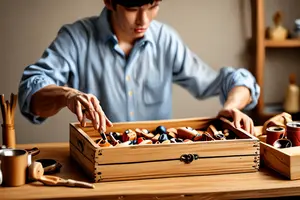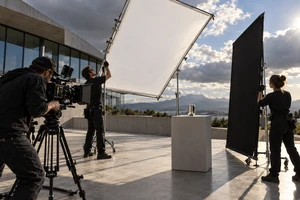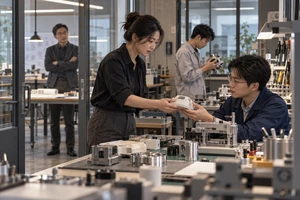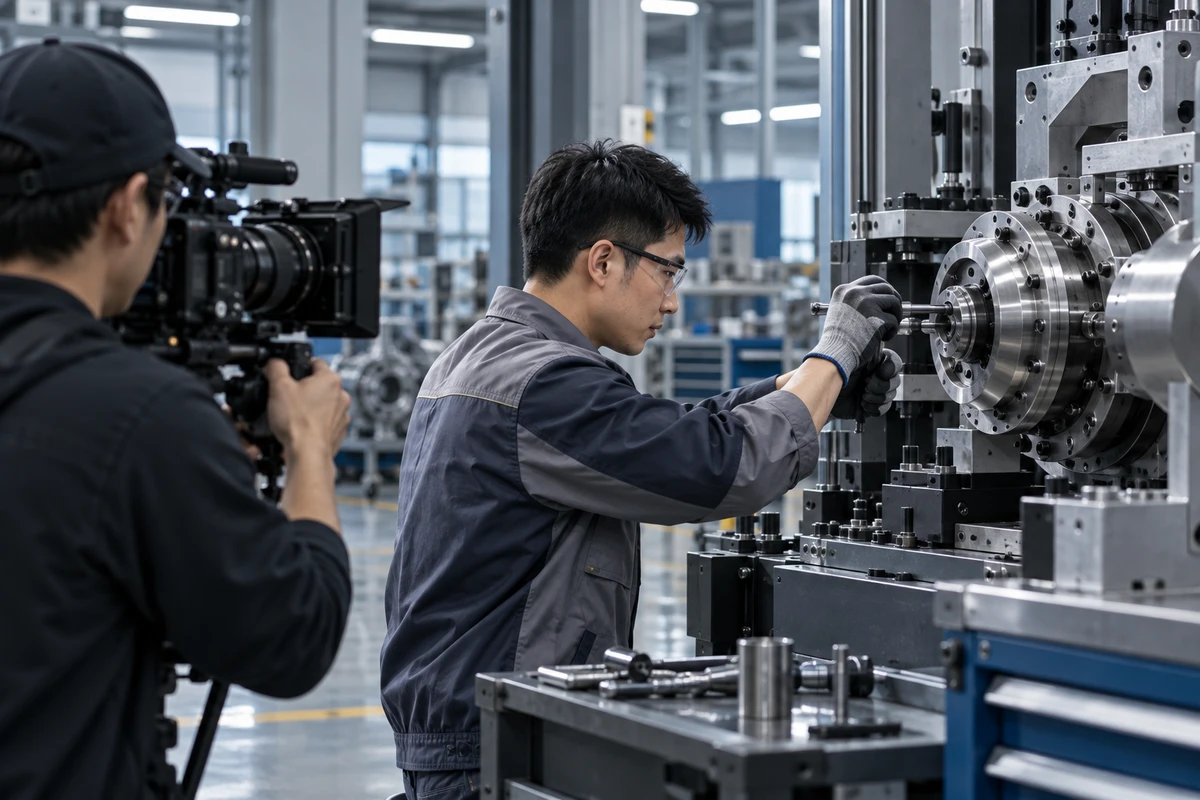
In corporate films, the easiest performance to expose is often not a spoken line but a pair of hands. An engineer stands beside a machine in workwear, hesitates over a control, changes the tool angle twice, and keeps looking toward the camera. The laboratory, equipment, and uniform are present, yet expertise is missing because the viewer sees cooperation with a shoot rather than familiar work.
A professional gesture does not need to be complex or deliberately slow. It comes from judgement inside the task: what is checked first, what can be touched, when to pause for feedback, how to reset the equipment, and where the eyes move before and after an action. When a corporate film makes those decisions visible, technical capability can exist through behavior instead of repeated claims about being professional, rigorous, or advanced.
Find the decision inside the action before designing a pose
The difference between an experienced operator and a temporary performer is often not speed. It is the reason each movement happens. An engineer checks a state before selecting an interface or tool. They know what should not be touched and when the machine needs time to respond. If the direction is only “do something on the machine,” the person can produce activity but no cause and effect.
Before filming, let the real specialist complete the task once without interruption or requests to make it more cinematic. Observe the decision points: where the eyes settle, which hand enters first, whether the other hand stabilizes an object, and how the body exits after confirmation. Build coverage around those decisions rather than collecting unrelated hand close-ups.
Grip reveals the relationship between person and tool
Familiarity is not a tighter grip
Skilled operation usually has clear points of force. The palm stabilizes, the fingertips make small adjustments, and the wrist remains ready for the next step. Asking someone to grip harder for visual power can make the action stiff. Establish the real method first, then decide whether the camera angle, product orientation, or composition needs to change.
A tool should not face the camera at the expense of use
Screwdrivers, probes, calipers, clamps, and controllers all have an operating direction. If the engineer must work backhanded, reach across the machine, or block their own view just to show the tool, one polished close-up can weaken the entire scene. Move the camera, change focal length, or create a separate display shot. Let the operation shot carry truth and the display shot carry clarity.
Sequence communicates expertise better than the number of movements
Corporate films often confuse busyness with ability, asking people to press, plug, turn, and record continuously. Real work usually has order: check the current state, perform one step, wait for feedback, then choose the next action. When editing destroys that sequence, even viewers unfamiliar with the machine can sense that the person is only generating movement.
Write the operation as observable nodes rather than a list of shot numbers: confirm the indicator, adjust a parameter, observe the change, record the result, restore the initial state. The equipment owner must confirm the actual nodes. The film crew should not invent them. Continuity notes should track switch positions, connections, tool placement, and the machine state after every take.
A pause can be the moment professional judgement happens
The pause that checks a result
After an action, an engineer often needs to confirm the response. Remove that pause and the gesture has no result. Extend it without purpose and it looks staged for the camera. Its useful duration depends on what the viewer needs to see: an indicator changing, a mechanism reaching position, a reading stabilizing, or the operator confirming that the next step can begin.
The pause that notices a problem
Expertise can also appear when a person does not continue immediately. They notice an unexpected state, keep their hand outside the machine, check again, and only then act. If the story truly includes troubleshooting, this is more credible than an exaggerated frown. Do not invent an abnormal condition for drama; the response and any visible information need confirmation from the specialist.
The related challenge of preserving thought without losing pace appears in corporate interview pauses. Interviews show verbal thought; equipment work shows operational judgement. In both cases, the pause needs a specific object.
Eyelines should follow the task, not the camera
During operation, attention moves between the control point, the feedback location, and the next object. A hand reaching an interface while the eyes stay on the lens instantly turns work into performance. If the engineer must speak, separate explanation from operation: complete the action and then look up, or use voice-over while the specialist stays focused.
Eyelines also guide the audience. Looking toward a control before reaching helps viewers understand the target. Moving the hand first and searching later can imply unfamiliarity. For another way gaze carries information beyond the frame, see off-screen space built with sound and eyelines.
Real actions can still be reorganized for the camera
Authenticity does not require recording one long procedure from a single angle. Some movements are too fast, hidden by the body, or located where the camera cannot see. Direction can adjust rhythm, angle, and start position while preserving the critical order and meaning. Record one complete truthful pass first, then capture clearer views of the decision points.
Begin before the final hand position
For a close-up, start one beat before contact rather than placing the hand directly in its final pose. The shot then includes approach, contact, force, and release, making it easier to return to the full action in the edit. The broader principle also appears in how physical behavior shapes brand personality.
Separate display shots from working shots
A working shot can include natural occlusion between hands, tools, and equipment. A display shot can present a part from a clearer angle under safe, approved conditions. Both can be visually strong, but they serve different purposes. Asking one take to preserve authentic operation, expose every component, face a mark toward camera, and form a perfect composition usually makes every goal weaker.
Safety and confidentiality come before the image
Industrial environments may involve moving parts, heat, electrical systems, clean-room rules, protective equipment, or unreleased structures. A film crew should not change protective gear, operating distance, or procedure to reduce reflections or reveal a face. Before filming, the company should confirm which actions can be shown, who can perform them, whether equipment must be powered down, and what information must remain private.
If an operation cannot be repeated safely for the camera, use a powered-down detail, an approved substitute, 3D animation, or narration. The image does not need to pretend that the machine is running. Respect for real conditions is the first sign of professional work.
Keep the cause and effect, not only the best hand pose
An operation sequence should let viewers understand three relationships: what the person needs to solve, what they do, and how they know the result. If the edit keeps only the instant of pressing a button, the gesture may look polished but has no cause or feedback. A wide shot can establish person and machine, a medium shot can show the operating relationship, a close-up can show contact, and the sequence can return to the outcome.
Sound can complete the action. A latch, relay, fan start, tool contact, and alert belong to different events. One generic technology sound should not cover every operation. When production sound cannot be used, recreate or design it against the actual movement rather than making the sound more dramatic than the gesture.
Let the engineer be an engineer before becoming on-camera talent
The engineer's value is not limited to a job title or a line of dialogue. It is the ability to make a judgement through the correct sequence, gaze, and pause. The camera should reveal that knowledge without asking the person to imitate a universal image of expertise.
Professional gestures are not a standard choreography for every industry. They come from a real person, a real machine, and a real task. The film crew makes the judgement visible; the company confirms the operation, information, and safety conditions. When both sides hold those responsibilities, expertise no longer needs to be acted.
If your corporate film includes R&D, testing, assembly, or equipment operation, ONCE can map the real process before designing camera positions, performance direction, and sound. Share your corporate-film brief with ONCE to discuss the creative and production approach.