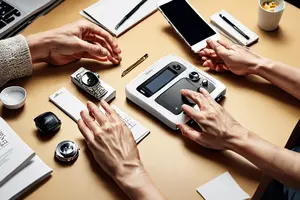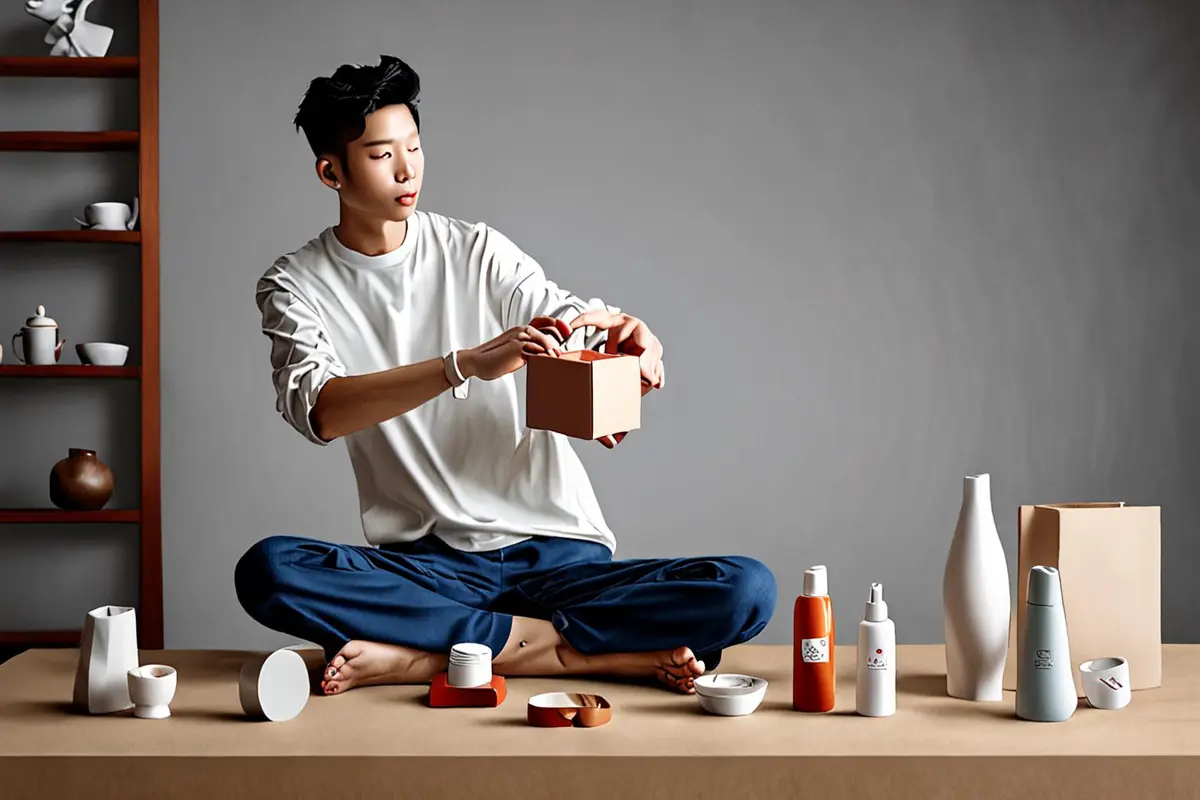
A performer sits at a table with a product in hand. The camera does not move and the script is minimal. It looks like an easy shot, yet it often reveals staging more quickly than any complex sequence: the shoulders appear locked, the fingers hover over the package, and the expression arrives before the action. The performer seems to be waiting for the director to call cut.
The problem is rarely that the actor cannot “be natural.” More often, the shot has given the body no continuous task. When a person genuinely observes, uses or waits for a product, breathing still changes the chest, shoulders, pressure in the palm and duration of an eyeline. If product ad performance ignores that small but continuous rhythm, stillness becomes a pose. When the rhythm is organised, even a few quiet seconds can place the performer, product and space inside the same believable moment.
Stillness is still an action
“Do not move” is rarely a playable direction. Actors who hear it often lock their breath, wrists and eyes at the same time. The result is tension, not calm. A better approach is to break stillness into processes that are still happening: what the performer has just completed, what they are evaluating, what they may do next, and how the product's weight or surface remains present in the hand.
After placing a fragrance bottle on a table, for example, the fingers can maintain contact for half a breath before releasing. After putting on headphones, the performer can finish an exhale before attention shifts toward a distant sound. Very little happens in story terms, but the body has a before and an after. Viewers may never identify the breath itself; they simply feel that the person is truly present.
Breathing is an action timeline, not an emotion effect
Commercials often use breath as a ready-made symbol: a deep inhale means relaxation, a sigh means relief, and holding the breath signals surprise. When those symbols are pushed too far, the performer becomes an illustration of the benefit. Breathing is more useful when it creates a repeatable timeline for the action.
An inhale prepares the body
An inhale naturally creates a small expansion through the chest and a slight adjustment of balance. It can support the moment before lifting, approaching, opening or trying a product. The director does not need to ask for a visible “deep breath.” Starting the action during the inhale is often enough to create preparation. With a small product, the change may appear only around the collarbone, wrist and fingertips. With a larger object, the feet and torso may join the preparation.
An exhale releases force
An exhale suits setting something down, pressing a control, settling into a chair or receiving a result. Pressure in the palm can release as the action finishes. If the shot requires the performer to hold for three seconds after placing the product, counting silently to three often produces an empty pause. Completing one steady exhale and shifting the eyeline before the next inhale gives the pause an internal rhythm that can be repeated across camera angles.
Hand pressure reveals whether the rhythm is alive
Product advertising often concentrates on the face, but staging usually becomes visible in the hands first. When a performer holds their breath, the fingers may clamp, lift or lose contact. Once breathing resumes, the grip redistributes itself around the actual shape. In close-ups of bottles, earbuds, wearables and compact appliances, the hand tells viewers whether the object is truly being held before the expression does.
The director can establish a truthful grip, then ask the performer to maintain it through two or three breaths. On the monitor, watch three areas: whether the thumb keeps covering important packaging information, whether fingertips suddenly leave the surface, and whether the wrist has been bent into an attractive angle that cannot be sustained. Breathing should not destroy product readability, but the product should not turn the body into a lifeless display stand.
When the message involves portability, support or perceived weight, breathing also needs to match the real load. Our guide to showing weight through lifting, support and sound examines that physical relationship. The question here is slightly different: even when the load never changes, how does the body keep acknowledging the product over several seconds?
Eyelines should not chase verbal cues
In a quiet shot, performers can end up switching instantly when the director says “look at the product,” “look at camera,” and “smile.” The result is three disconnected performance buttons. A believable eyeline usually begins with attention shifting, followed by the eyes or head, and only then by a change in expression. Breath can connect those steps.
One simple pattern is to let the performer complete half an exhale while looking at the product, move the eyes during the next inhale, and establish contact with the camera or another person as the exhale lands. This is not a fixed formula. It simply stops the eyes, head and expression from jumping at the same time. If a screen, indicator or mechanism produces feedback, the eyeline must also wait for the real feedback rather than anticipating a result.
The relationship does not always need to be admiration. A performer may be checking, doubting, comparing, using from habit or temporarily ignoring the object. Our article on directing the actor-product relationship starts with that intention. Once the reason for attention is clear, the director can decide how far an eyeline should travel during one breath.
Close-ups, wide frames and vertical crops need different amplitude
The same performance does not automatically work at every shot size. A face close-up magnifies changes around the nostrils, jaw and throat, so controlled breathing can look like a performance of relaxation. A medium shot reveals the relationship between shoulders, elbows, hands and product. A wide frame needs feet, posture and support points in the space, because tiny breathing cues can disappear into the environment.
Vertical framing creates another practical problem. The crop often begins around the chest, while the product sits in the lower half and shoulder movement occupies the upper half. If the breath is too large, the viewer notices the body rising before noticing the product. Productions can record a full-body version and a restrained vertical version with the same intention but different visible amplitude. That is more reliable than forcing one horizontal medium shot into every ratio during post.
Sound decides whether breath is felt or heard
Not every product commercial should place audible breathing in the final mix. A close lavalier can exaggerate airflow, fabric and mouth sounds, making a refined product feel uncomfortably intimate. Removing every trace of breath can make the performer feel like a model covered by voice-over. The team should decide whether viewers need to hear the breathing or simply feel its rhythm through the body and action.
Record one clean performance track on set with the finished action, including fabric, fingers, chair movement and product contact. The mix can then decide how much breath to reveal. If music carries the primary rhythm, breathing can sit behind the action sounds. If the image depends on quiet and distance, one soft inhale or exhale may give an edit point some life. The sound must remain consistent with the visible body: a relaxed image paired with rapid breathing will break the moment.
The edit needs more than the most attractive frame
Even a believable pause can become a pose in the edit. Cut in immediately after the action and the viewer never sees why the performer stopped. Cut away before the breath settles and the pause has no consequence. A quiet shot needs an entrance and an exit. The entrance explains the stillness; the exit shows what changed. Remove both and the sequence becomes a portrait of a product and an expression.
For each key action, capture a full-breath version, a shorter rhythm and a neutral safety take without a strong expression change. These are controlled variations inside the same action logic, not random improvisations. This differs from keeping small hesitations in creator-style dialogue, where spoken credibility and editability are central. Here, the issue is whether a low-dialogue performance remains continuous across shot sizes.
A practical rehearsal for quiet performance
The rehearsal does not need to begin with abstract notes such as “more relaxed” or “more premium.” An eight-second action can establish a shared language:
- The performer contacts the product during normal breathing, without pre-shaping the hand.
- They complete one truthful operation and allow a visible or audible product response.
- After the response, they keep one complete exhale while the hand continues to acknowledge weight and surface.
- Attention shifts on the next inhale and the following action begins as the exhale settles.
Capture the full movement in a medium shot before adding hand and face close-ups. Review it once without sound to test body continuity, once by listening to the action and breath without watching, and then as a complete shot to check whether fingers, reflections or body movement obscure the product. If every take requires second-by-second verbal cues, the action has not yet become repeatable. Return to the task instead of adding more adjectives.
When breathing should stay in the background
Fast functional demonstrations, timed performance comparisons and tutorials with a strict operating sequence rarely benefit from making breath the main rhythm. Product feedback and causal clarity come first; the body only needs to remain physically continuous. Health, medical and emotional products also require care: one exaggerated breath should not imply an immediate effect that the brand cannot support.
Motion-control shots, pure still life, CG and generative imagery do not need artificial “human breathing.” They need coherent motion curves, material response and spatial sound. In a hybrid production that places a live performer into a generated environment, preserve continuity in the chest, fabric and hands. The background should not drift in scale or change light independently each time the performer breathes.
Make stillness part of the brand voice
Some brands need speed, directness and energy. Others depend on restraint, attention and touch. Body rhythm is not a universal recipe for a cinematic look. It is one way for brand voice to enter performance. Before deciding how a performer breathes, decide what viewers should read from the stillness: waiting, confirmation, closeness, control or an effortless habit of use.
When breathing, hand pressure, eyeline, product feedback, sound and edit timing point toward the same intention, a quiet shot stops being decorative filler. It becomes time in which the audience understands product value, while preserving one performance logic for the horizontal master, vertical cutdowns and silent social versions.
If your product film needs believable quiet performance while protecting pack visibility, multiple shot sizes and platform versions, send the product, core action and delivery ratios to ONCE Visual. We can begin with a performance and camera test, then turn that body rhythm into a shot plan that can be filmed, repeated and edited reliably.