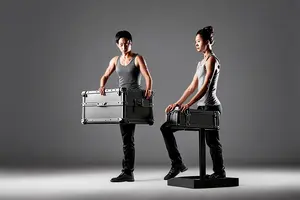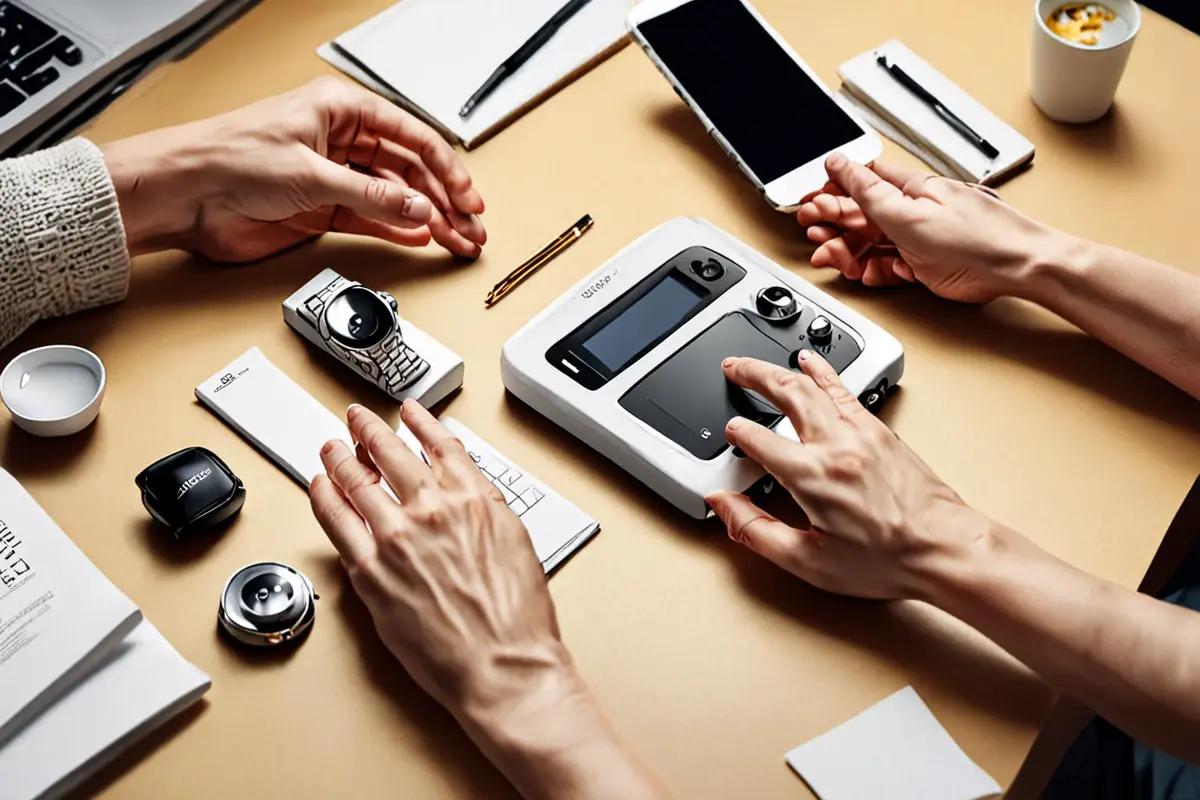
First-person product advertising is often reduced to a simple recipe: place a camera in front of the performer and let two hands enter the frame. A convincing point of view is more than a different kind of hand close-up. It gives the viewer a temporary body. Where are they standing? What do they notice first? Which hand reaches the product? What changes after the action? If those relationships break, the shot may resemble a game interface without ever feeling like real use.
First person is a body logic, not a visual style
A conventional product close-up positions the viewer as an observer. A first-person shot assumes the camera is the user's eyes. Table height, arm direction, product distance and gaze movement must belong to the same imagined body. If the camera sits at head height while both hands extend rigidly from the center of the chest, or a seated user reaches a product placed impossibly low, the action feels performed for the lens.
A storyboard therefore needs more than “POV uses product.” It should state the posture, the product's position relative to the body, the path of the gaze and the hands' starting state. Solve the spatial relationship before choosing a wide lens, gimbal or body mount.
Decide what the viewer needs to understand personally
First-person perspective works best for information tied to the user's position: whether a control is within reach, whether a button is easy to locate, how the other hand supports a lid, or what remains visible after the product is worn. It explains distance between action and object rather than merely making the product larger.
If the main value is the product silhouette, a facial reaction or a relationship between several people, an external camera usually communicates more. Ask one question before choosing POV: does the information become clearer only when the viewer occupies the user's position? If not, the angle may be a stylistic variation rather than a useful point of view.
Camera height determines the body the viewer inhabits
Human vision is not a wide-angle camera fixed to the center of the forehead. Standing, sitting, leaning and approaching a table change gaze height and the portion of the body that remains visible. Let the performer complete the real action first. Record eye-to-product distance, downward angle, elbow range and the route by which each arm enters. The camera can then imitate that relationship instead of forcing the body to accommodate a convenient rig position.
Focal length must serve distance. An excessively wide lens enlarges hands near the edge and pushes the product away. A longer lens compresses the gap and removes the sense of reaching. Our discussion of the relationship between actor and product asks which one leads the scene. In first person, the face disappears, but the camera still has to preserve that relationship.
The action begins before the hands appear
Many POV commercials open on two hands floating in empty space. The viewer does not know why they are reaching or what they were doing before. A stronger setup provides a cause: a prompt sounds and the gaze drops to the product; another object is set down and the hand continues naturally; the user reaches a doorway where the product already occupies a plausible pickup position. The hands enter because a task requires them, not because the shot needs to prove it is POV.
Arm movement also has to respect the joints. An oversized reach or twisted wrist usually means camera and performer are too far apart. Let the actor complete a comfortable motion, then adjust the product and camera around it.
Avoid the disembodied-hand effect
The frame does not need to show a chest, knees or feet every time, but it should occasionally provide bodily evidence. Knees entering when the user sits, a sleeve crossing during a turn, or the second hand joining a heavy lift confirms that the user exists. A cleaner hands-only image can still retain body presence through eye height, shadows, breath and room sound.
Keep the product legible while the action is happening
The central POV conflict is that more authentic hand movement often hides buttons, ports and feedback. Asking a performer to avoid every feature with delicate, unnatural fingers is rarely the answer. Change the camera offset, product orientation or order of actions. Hold the feedback for a beat after the finger leaves, or let the supporting hand move so the main structure stays visible.
One action can carry two layers of information. POV explains “how I do it,” while an external detail shot confirms “what happened to the product.” They do not need to repeat the entire process. They only need continuity at the point of contact, in movement direction and in the resulting state.
Stability should not erase every trace of the body
Real vision contains small rises, pauses and reorientations. Motion that floats perfectly can feel like a remote gimbal, while constant shake competes with product information. Let events motivate movement: displacement while approaching, a quick turn toward a prompt, then stillness while waiting for feedback. The camera does not need to keep searching for immediacy when nothing changes.
Head, chest and handheld simulations produce different bodies. A head mount follows gaze but may exaggerate hand distance. A chest mount is steadier but lowers the viewer. A camera operator can protect composition, but operator and performer must rehearse as one person. Choose the method by the credibility of the action, not the novelty of the rig.
Hand the same action between POV and external shots
An entire commercial in first person can lose emotion, product silhouette and spatial orientation. A practical structure uses an external shot to establish person and place, moves into POV for the use experience, cuts to a product detail for feedback, then returns to the person's reaction or result.
Switch viewpoints on an action that can match: a hand contacts a handle, the product lifts, a button depresses or the gaze rises. If an external shot uses the right hand and POV resumes from another direction or stage, bodily continuity disappears. Our article on perspective and camera position is useful here: decide where the viewer stands before making a lens choice.
When the film needs to return outside the body
Return to an external camera when the information depends on a facial expression, whole-body posture, interaction with another person or the complete product outline. POV brings the viewer inside an action, but it cannot explain identity and surrounding reactions at the same time. Switching viewpoints divides the work between lived experience and complete understanding.
Vertical framing magnifies hand occlusion
A vertical frame has less horizontal room, so two hands can cover the product quickly. Display landscape and portrait safe areas on set. Decide which hand performs the primary action and when the supporting hand exits. A process that spreads left to right may need a diagonal or vertical arrangement for the short-form version.
Fast gaze turns also feel more abrupt in portrait. A sound, light cue or preparatory hand movement can direct attention before the camera moves from environment to product. A short cut does not need to remove body establishment; one clear cause and one complete feedback beat can preserve the logic.
Sound restores the body that the camera cannot show
First-person images often hide the face and most of the body, so sound carries presence. Clothing movement, footsteps, breath, a palm on the table and product response can give the action weight and distance. Those sounds should follow body and room rather than turning every movement into amplified ASMR.
Emphasize decisive feedback: a latch seating, a magnet connecting, liquid flow stopping or an interface response completing. Timing has to match the visible action and remain materially consistent with surrounding external shots. POV does not push every sound close; it lets the viewer hear the change that matters at that moment.
AI and CG must preserve hands, gaze and product state
AI can previsualize POV composition, replace an environment or extend an action that is unsafe to film. The viewpoint is unforgiving of continuity errors. Finger count, left and right hand identity, sleeves, product orientation, button state and contact point must survive every cut. A polished frame cannot compensate for broken interaction logic.
In a hybrid workflow, keep physical hand contact and product feedback in live action while using CG or AI for environmental changes, peripheral extensions or hazardous situations. Lock one complete, repeatable body path before expanding the image.
Test the POV in one uncut rehearsal
Before the full shoot, run the sequence continuously from noticing the task through approaching the product, completing the operation and checking the response. The test does not need finished lighting or art direction. It needs to answer four questions: does the viewer know where the body is, why the hands appear, whether the product structure remains visible and whether the action produces clear feedback?
If the uncut test is confusing, additional angles only distribute the problem across more footage. If it works, decide which moments deserve an external view, macro detail, stronger sound or AI extension. First-person product advertising then becomes an experience design rather than a style label attached to two hands.
If you are planning a first-person use sequence for a product launch, crowdfunding film or short-form campaign, share the product, target platforms and key actions with ONCE. We can previsualize the body path, camera, hand performance, sound and multi-format coverage together.