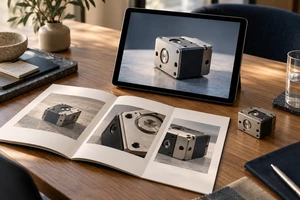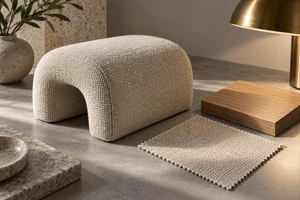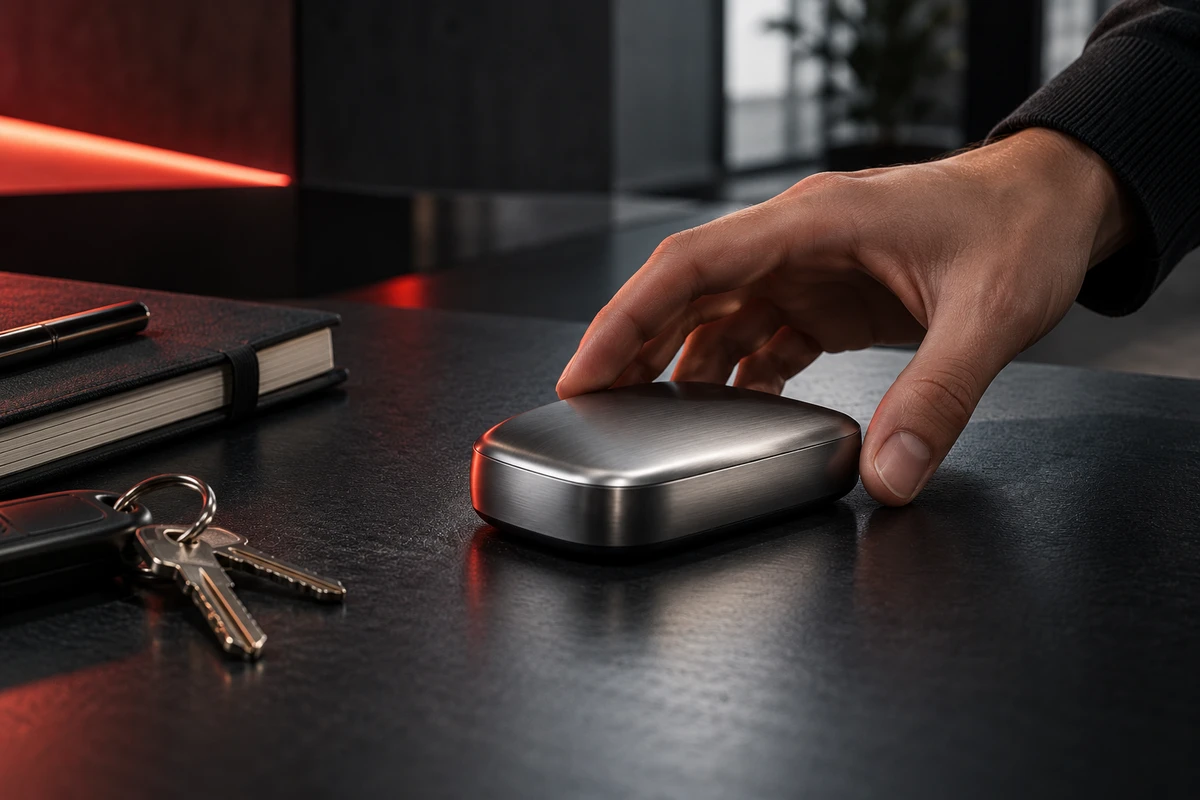
A device small enough to fit in a pocket can look like a building when it is filmed close, low and under hard light. An ad is allowed to do that. The problem is not that the product looks large. The problem is whether the film ever gives viewers a way to translate that grandeur back into the size of a hand, a desk and an actual use situation.
Scale in product advertising is never just a set of dimensions. It affects whether an object feels powerful, light, approachable or cumbersome, and whether a buyer later thinks, “I did not expect it to be this small.” Good creative work does not eliminate subjective scale. It arranges it: heighten desire first, restore proportion next, and leave viewers with evidence they can trust.
Scale is not one number. It is an expectation the ad creates
The same product can operate at three scales.
Hero scale turns the product into the protagonist. Macro detail, a low camera, shallow depth of field and slow movement temporarily remove everyday references. A small object can feel precise, solid and almost monumental. This is advertising rhetoric, not a dimension drawing.
Use scale returns the product to human actions and environments. How a hand grips it, how a lid opens, how it slips into a pocket or occupies a desk gives viewers a faster intuition than the phrase “compact and portable.”
Proof scale restores verifiability before a purchase decision. A neutral angle, a familiar reference on the same plane, several variants shown side by side, or accurate measurements in the information layer tell viewers that the earlier grandeur was an expressive choice, not a literal change in size.
These three scales do not need equal screen time. A brand film can stay longer in hero scale. A product-detail video should introduce proof earlier. Even a 15-second cut does not have to become a specification sheet, but it should retain at least one shot that lets embodied experience take over.
Hero shots create desire, but they cannot own the whole film
A product often feels enormous not because of one “magic focal length,” but because the camera is close, the viewpoint is low, and near-far relationships are emphasized. Focal length changes angle of view and working distance; perspective itself is governed by camera position in relation to the subject. Canon's guide to focal length is a useful technical reference for this distinction.
When a hero shot works, viewers do not need to know the product's exact width yet. They first need to see the way material turns under light, the resistance implied by a button, or the way an edge catches a highlight. Close photography turns industrial detail into landscape and gives an everyday object psychological weight.
If an entire film keeps that viewpoint, however, exaggeration stops being purposeful rhetoric and becomes the only information available. For portable devices, home products, storage systems and wearables, size can directly affect the purchase. The more powerful the hero image, the more clearly the film needs a later landing action.
Use scale turns bodies and environments into living references
The most natural size reference is usually not a ruler but an action. A thumb presses a control, a palm wraps around the body, earbuds return to their case, or a lamp moves beside a book. These actions communicate dimensions, implied weight and use at the same time.
A reference object feels natural only when it belongs to the scene. A cup placed motionless beside a product announces that it is there to “prove size.” If a person moves the cup to make room for the device, the spatial relationship gains a reason. The information becomes less intrusive and easier to remember.
There is another trap: the presence of a hand does not automatically make an image truthful. A hand can be close to the lens while the product sits farther away. A reliable use-scale shot keeps the key reference and product in a comparable spatial relationship and lets the action complete instead of extracting only its most dramatic instant.
For a detailed treatment of reference objects, shared planes and dimension shots, see ONCE's guide to showing true product size in video. The question here is different: where should that evidence appear in an ad, and how can it coexist with a heroic opening?
Proof scale brings imagination back to earth before purchase
Advertising may be romantic; product information still has to be accurate. Google Merchant Center requires a main image to accurately display the product being sold and prohibits misleading imagery. Its separate guidance for lifestyle imagery allows products to be shown in real-world use. The two image types are meant to do different jobs. See the current product data specification for the primary requirements.
Video can use the same division of labor. After a hero image creates desire, a more neutral front or side view can restore the outline. If there are several sizes, show them from the same camera position and at the same scale. If dimensions materially affect the purchase, state the actual numbers in the information layer rather than asking viewers to infer them from a dramatic shot.
Proof does not have to break the rhythm. It can be a one-second pocketing action, a reveal from macro detail to a full view, or a product family aligned at the end. Facts become awkward when they were never built into the creative structure and must be appended as an afterthought.
Two dimensions, three dimensions, backgrounds and color all alter perceived size
People do not always judge size accurately from a screen. A 2021 study in the Journal of Business Research found systematic biases in online product-size perception: small products tended to be overestimated, large products underestimated, and familiar typical sizes influenced judgments. A 2024 Journal of Consumer Behaviour study found across three surveys that 3D product images made products appear larger than 2D images in its tested conditions, with downstream effects on perceived weight and willingness to pay. The papers are available through the JBR study DOI and the open Wiley article.
This does not mean that 3D is always better or 2D is always more truthful. It means that adding a rotation, intensifying perspective or removing environmental references is not merely a format change. It may also change the size viewers feel.
Backgrounds are not neutral either. Experimental work suggests that greater visual complexity around a product can make it seem smaller, while more saturated color can enlarge perceived size under specific study conditions. When a brand adapts the same product across channels, it should check more than geometric distortion. The relationship among product, background, frame and color must still create the intended expectation.
AI backgrounds often steal proportion before they steal detail
Generative tools can already place products in new lifestyle scenes and extend limited assets into short videos. Google Product Studio, for example, explicitly offers scene and video generation for merchant assets. That capability is real, but spatial consistency remains something a production team must verify rather than assume. The current feature overview is in Google's Product Studio documentation.
Scale can drift quietly: a desktop has impossible depth, fingers no longer match buttons, a device changes size between shots, or a pocketable object suddenly occupies half a table. If AI or CG is used only for a conceptual atmosphere, some exaggeration can be stylistic. Once the image also carries product understanding or purchase intent, the real cutout or product model should have locked dimensions, key cameras should be fixed, and at least one credible reference should remain.
A practical approach is to design the hero environment and the size evidence separately. The former can be daring; the latter must be checkable. This prevents generated imagery from being forced to deliver absolute accuracy it may not reliably provide, without reducing every safe AI image to a dull white-background pack shot.
Write all three scales into the rhythm of one film
Imagine a palm-sized portable device. It first rotates slowly on a dark surface. A low camera and edge light turn the shell into a precise piece of architecture: hero scale. A hand then enters, lifts the device in one motion and slips it into a jacket pocket: use scale. Finally, the device rests on the same plane as a phone and keys, or several variants appear side by side from the same angle: proof scale.
The three parts do not need equal duration. What matters is the cognitive order: invite viewers closer, let bodily experience take over, and give the purchase decision somewhere to land. A short edit can compress time, but it should not preserve only the first part. That would reduce a complete piece of communication to a product portrait with attitude but no orientation.
Before production, the creative, camera, art and post teams should answer three questions together. How powerful should the product feel at first glance? Which action most naturally reveals its real size? Which shot will become the final reference for proportion? The answers shape the storyboard, lenses, props and the way AI assets are generated.
If you are planning a product ad that needs heroic presence without sacrificing product understanding, ONCE can design that scale curve across concept, live-action product photography, CG and AI-assisted production. Explore our video production services, then bring the product dimensions, primary channels and the use situations most likely to create confusion into the storyboard conversation.