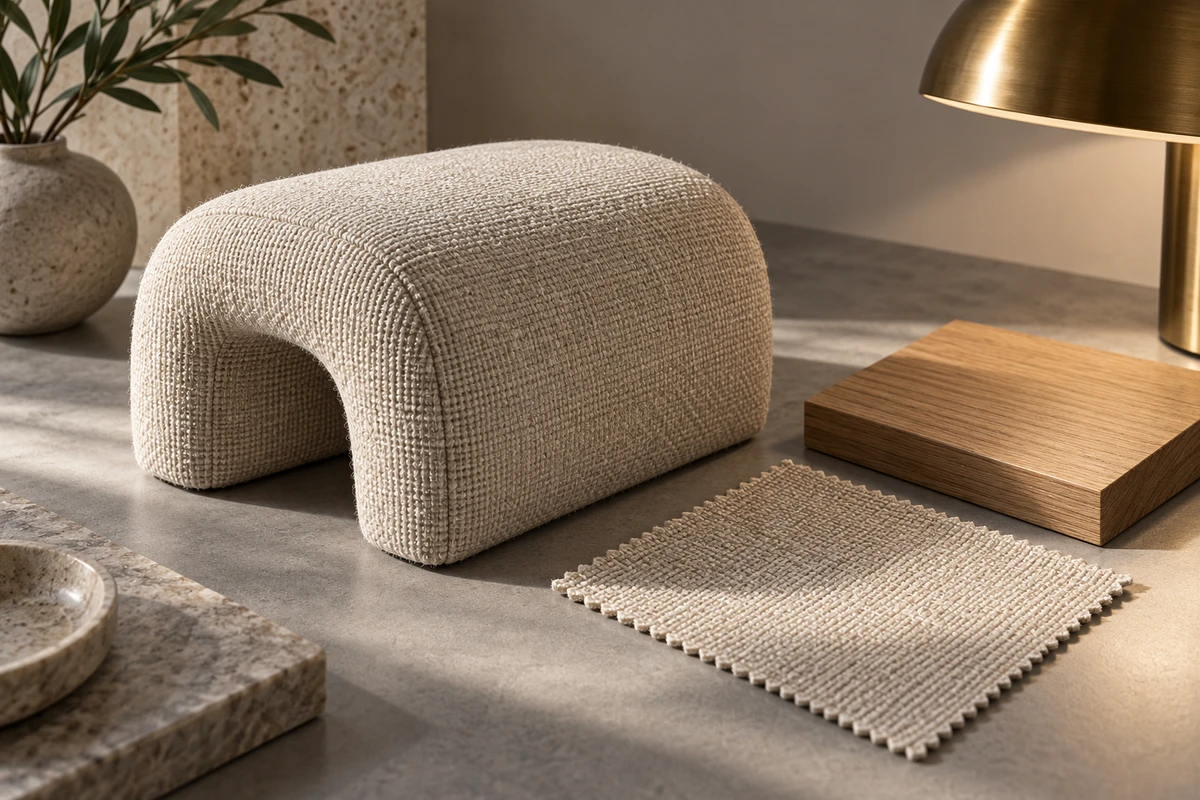
A furniture brand sends a campaign image to its next CGI partner, expecting the fabric to transfer into a new scene. The image is attractive, but it also contains the earlier lighting. The team has retained a finished appearance—not necessarily a material that can be relit. This is a hypothetical example, not an ONCE client case.
For overseas teams working with Chinese manufacturers, separate the current image requirement from future asset reuse. Some projects need only a finished picture. Others justify a material deliverable for a named application. Neither should be mistaken for the other.
A photograph and a material describe different things
Adobe's The PBR Guide – Part 2 explains that, in a metal/roughness workflow, Base Color represents albedo for non-metals and reflectance information for metals. It generally excludes lighting information such as ambient occlusion, with a specific exception discussed for micro-occlusion. The page displays no publication date; reviewed October 26, 2026.
For a non-metallic fabric, the procurement implication is straightforward: do not silently combine color texture and a photographed lighting result into a supposedly reusable base. Other maps and settings may be needed for the intended workflow. A file named Base Color does not establish a complete material.
A photo can be a reference or an input to processing. Resolution alone does not establish that it can be applied directly to any model. Likewise, a useful material preview need not look as dramatic as a finished ad: it has a different job.
Separate surface, geometry and final image
Danthree Studio's surface-digitization service describes preparing material samples as textures and settings for an agreed 3D application. It explicitly separates material scanning from the product model, technical measurement and workpiece quality inspection, and discusses scale, orientation and approved references. The undated page was reviewed October 26, 2026.
This is evidence of that supplier's stated scope, not a universal capture method. A chair's shape, seams and folds require the appropriate model or production work. Surface appearance needs material work. Lighting, camera and composition contribute to the final image. A new material cannot automatically correct incompatible geometry.
Name the intended use—such as a campaign close-up or product-page view—and the receiving software and rendering environment. For one fixed picture, commission the picture. For repeated scenes or confirmed product combinations, evaluate the extra material scope. Reuse is not an automatic savings guarantee.
ONCE's relighting comparison sample
Before digitizing an entire collection, choose one important surface that can expose a problem—for example, a fabric with a recognizable weave direction. This is a proposed sample workflow, not an executed test.
Identify the physical sample, available batch reference, real-world texture scale and direction. Keep the agreed model, camera and material revision fixed while changing the agreed lighting. Retain a neutral working preview and another lighting condition useful for inspecting reflection or surface structure. The production partner should explain those conditions and the brand should approve their purpose.
Do not require identical appearance under different lights. Real appearance changes with illumination and viewing conditions. Investigate suspicious highlights or shadows that remain fixed in the texture, oversized patterns, incorrect direction, or reflection and relief that conflict with the approved reference. Locate the problem in capture, scale, geometry, material setup or lighting instead of concealing everything with final grading.
| Retain | Question answered | Limit |
|---|---|---|
| Physical-sample and approved-reference identity | What does this asset represent? | Does not establish consistency across every manufactured batch |
| Scale, direction and material revision | Was it loaded as agreed? | Does not establish suitability for every product |
| Same-model relighting comparison | What changes with light and what stays in the texture? | Not industrial optical metrology |
| Target-environment loading record | Can the recipient reproduce the agreed setup? | Not a promise of identical display across all software and devices |
A suspicious highlight is a reason to investigate, not a complete diagnosis of every map. Strict color, optical or manufacturing validation needs separately agreed methods and appropriately qualified help. Marketing previews are not quality certification.
Approve the image and the reusable delivery separately
Image approval asks whether the campaign works. Reuse approval also asks which maps or material files are supplied, how channels and color spaces are interpreted, which scale units apply, what dependencies are included, and whether the recipient can load them in the agreed environment.
Define permitted reuse and handover: can the brand or a subsequent authorized supplier continue using the asset, which third-party elements cannot transfer, and who supplies software or plugin dependencies? This is a production-brief recommendation, not a substitute for reviewing the specific agreement. Technical access does not establish unlimited redistribution rights.
Separate sample preparation and capture, material processing, target-model adaptation, sample review, final imagery and asset handover in the quote. Identify shared work and variant-specific work. Agree who reassesses an asset when samples, finishes or batches change; a recurring fee should not conceal an unlimited scope.
For a partner such as ONCE, the durable asset is an authorized material tied to a sample, revision and stated use—not an unexplained folder of attractive images. Start the next brief by deciding whether you need a campaign image or a material that can be relit in a specified environment. Then supply the sample and the comparison conditions.
Sources reviewed October 26, 2026. No sample capture, rendering or customer-asset test was conducted for this article. The cover is an original concept image.