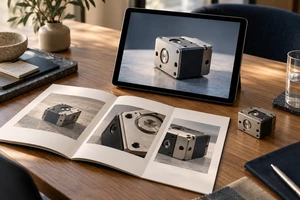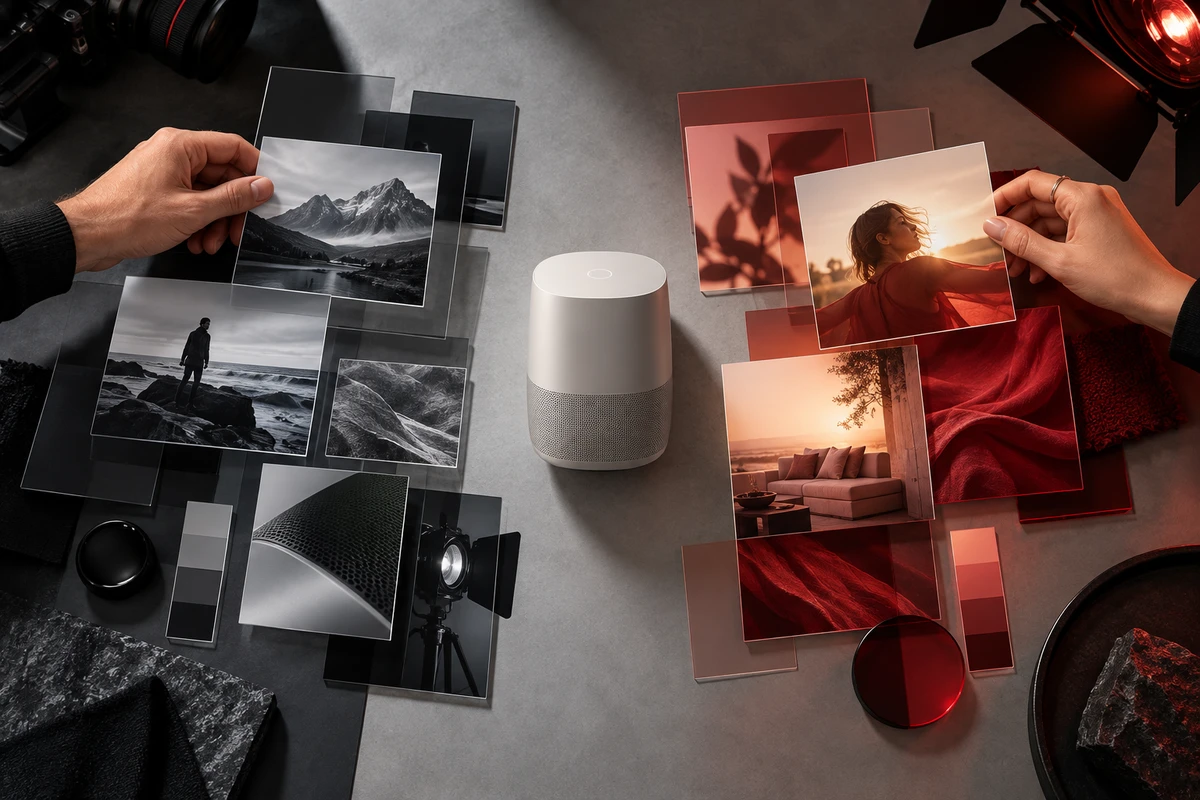
Imagine that an English product ad is finished. A person enters from the left, swipes across an app toward the right, feature callouts unfold left to right, and the final button lands in the lower-right corner. The Arabic version seems easy: replace the copy, then flip the whole picture.
That shortcut creates a chain of new errors. The reading direction may feel right, but the product logo is now backward. The interface flows naturally, but the actor uses the opposite hand. Packaging, model names, ports, and controls may no longer match the item customers can buy. RTL product ad localization is not a global mirror command. It is a shot-by-shot decision about reading order, physical truth, and brand identity.
Start with a distinction: scripts have direction, not entire markets
The W3C explains that direction belongs to the script being used, not to a language as an abstract whole. A language may even be written in more than one script. Arabic- and Hebrew-script content affects page and interface organization, but it does not mean that every photograph, person, or real-world action should be reversed.
Apple, Android, and Microsoft all treat RTL mirroring as a selective interface adaptation. Navigation order, text alignment, and directional controls often change with the reading direction. Google Material Design also identifies objects that should remain fixed, including clockwise motion in clocks and some media controls. Microsoft notes that an image may require one part to flip while another part stays unchanged, which calls for a dedicated asset rather than a full-image mirror.
For a commercial production team, the implication is clear: RTL is not a post-production effect. It is a layered directing decision.
Three directions determine whether a shot can be adapted
Semantic direction: the order in which information is read
Captions, feature headings, numbered steps, arrows, progress cues, card entrances, and calls to action all establish what the viewer sees first and what follows. These elements can often be rearranged in post, with motion originating from the right for an RTL version.
Rearranging is not the same as reversing an old animation. If the English cut guides the eye from the product to a feature claim, the Arabic cut should preserve that information priority. The starting edge and composition change; the cause-and-effect order does not. Keep text, icons, masks, and motion paths on separate layers, then typeset the real Arabic copy instead of judging space with English placeholders.
Physical direction: the product must remain true
Logos printed on a device, model names, ports, camera modules, hinges, dial markings, left and right labels, and the real app interface are product evidence. Mirroring them can create a product variant that does not exist.
The useful question is whether the action is bound to the object. A hand moving across a plain table may be recut. A finger pulling a menu from the edge of a screen must match the real RTL interface. Someone placing earbuds into a case marked L and R usually cannot be fixed by flipping the shot. If mirroring changes a connector, wordmark, left-right component, or operating result, move to screen replacement, a pickup shot, or a reshoot.
Brand direction: recognition cannot be reversed with the layout
Wordmarks, logo lockups, packaging fronts, certification marks, and long-term brand signatures usually remain in their correct orientation. Their position and surrounding space may change, but their form should not be reversed.
That is why an end card should not be flattened into a single image. Keep the logo, product, Arabic headline, price, button, and legal copy as separate layers. The RTL composition can start on the right while the wordmark and product stay physically correct.
Decide between rearranging, compositing, and reshooting
The footage can be sorted into three groups.
The first group needs only an information-layer change. The product is centered, the background is clean, the action has no fixed left-right meaning, and all text was added in post. Preserve the live action and rebuild headings, captions, arrows, and the end card.
The second group needs selective compositing. The phone footage is good, but its screen shows an English LTR interface. A product label can be replaced, or a display needs an Arabic menu. If production captured a clean screen, reflections, tracking references, and an unobstructed plate, post-production can replace the interface without mirroring the product. ONCE's guide to multilingual visual safe areas explains why adaptable layers must be planned before final graphics are locked.
The third group binds action and direction together. Eye-lines, handoffs, swipes, hinges, and walking paths occur at the same time as a real interface or asymmetric product detail. Mirroring one element breaks another. If this is the hero demonstration, a reshoot is often more credible than a stack of masks, warps, and partial reversals. In a hand close-up, the viewer checks fingertip placement, interface response, and product construction at once. One broken relationship can make the feature feel false.
Do not shoot one supposedly universal direction
If an RTL market is known at the planning stage, not every shot needs two complete takes. The team should identify the actions whose meaning changes with direction.
- Capture alternate entrances, handoffs, and swipes when they carry the feature explanation.
- Log details that must never be mirrored, including logos, labels, ports, left-right parts, and dials.
- For devices with screens, record clean plates, target-interface references, and unobstructed finger positions.
- Leave eye-line space on both sides so vertical crops do not force the wrong direction.
- Keep end cards and feature graphics layered instead of baking text, logo, and product into one image.
- Preserve a textless master, M&E tracks, and separate project branches for each market.
The goal is not a longer deliverables checklist. It is to put direction into the storyboard. ONCE has previously explained why a global launch film and its ad cutdowns can share shots without sharing one timeline. RTL localization adds another distinction: some shots cannot share the same left-right relationship, even when they share the same product truth, lighting, and visual character.
Review directional conflicts before judging polish
The Unicode Bidirectional Algorithm and its writing-direction FAQ explain why Arabic or Hebrew text mixed with Latin names and numerals can display differently depending on paragraph direction and character properties. Product ads create this situation constantly: an Arabic sentence appears beside an English brand name, model number, price, or percentage. A caption that looks approximately right is not enough. It must be checked in the final font, player, frame size, and export.
A practical RTL review can use four passes:
- Mute the film and inspect the entry point, arrows, actions, and call to action.
- Hide text and check whether product construction, hand use, or real operation was mirrored incorrectly.
- Restore all layers and inspect Arabic, Latin brand names, numbers, and punctuation together.
- Ask a fluent reader from the target market to review the actual delivery size and platform context.
The final pass is not a ceremonial language check. Ask concrete questions: Where does your eye enter? Which arrow feels like Back? Is the person opening or closing the product? Is the model number reversed? If the only question is whether the translation is correct, many directional errors remain invisible.
A scalable master allows markets to use different directions
Multi-market consistency does not require every frame to be identical. What should remain stable is the product truth, core claim, visual character, and brand identity. Text entry points, frame balance, motion direction, and a few action shots can change to fit the market.
The strongest RTL version is therefore neither a mirrored copy of the English film nor an unrelated reshoot. It is the same creative logic expressed through a different spatial grammar: share what can travel, rearrange what carries reading order, and reshoot what must remain physically true.
If you are planning an Arabic or another RTL product campaign, send ONCE VISUAL the target markets, real product variants, storyboard, interface files, and delivery formats. Our ecommerce product video production team can map semantic, physical, and brand direction before deciding which shots can be derived and which should be planned as market-specific takes.
Source scope: reviewed in October 2026 against W3C guidance on RTL scripts, Unicode UAX #9 and the Bidi FAQ, Apple's Right to Left Human Interface Guidelines, Android RTL support and pseudolocale testing, Microsoft guidance on RTL layouts and image mirroring, and Google Material Design bidirectionality. The three-direction method and footage grouping are ONCE's production analysis, not platform-mandated standards.