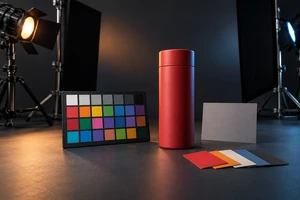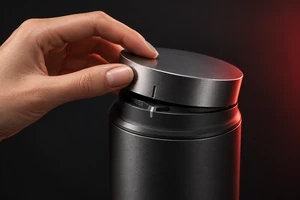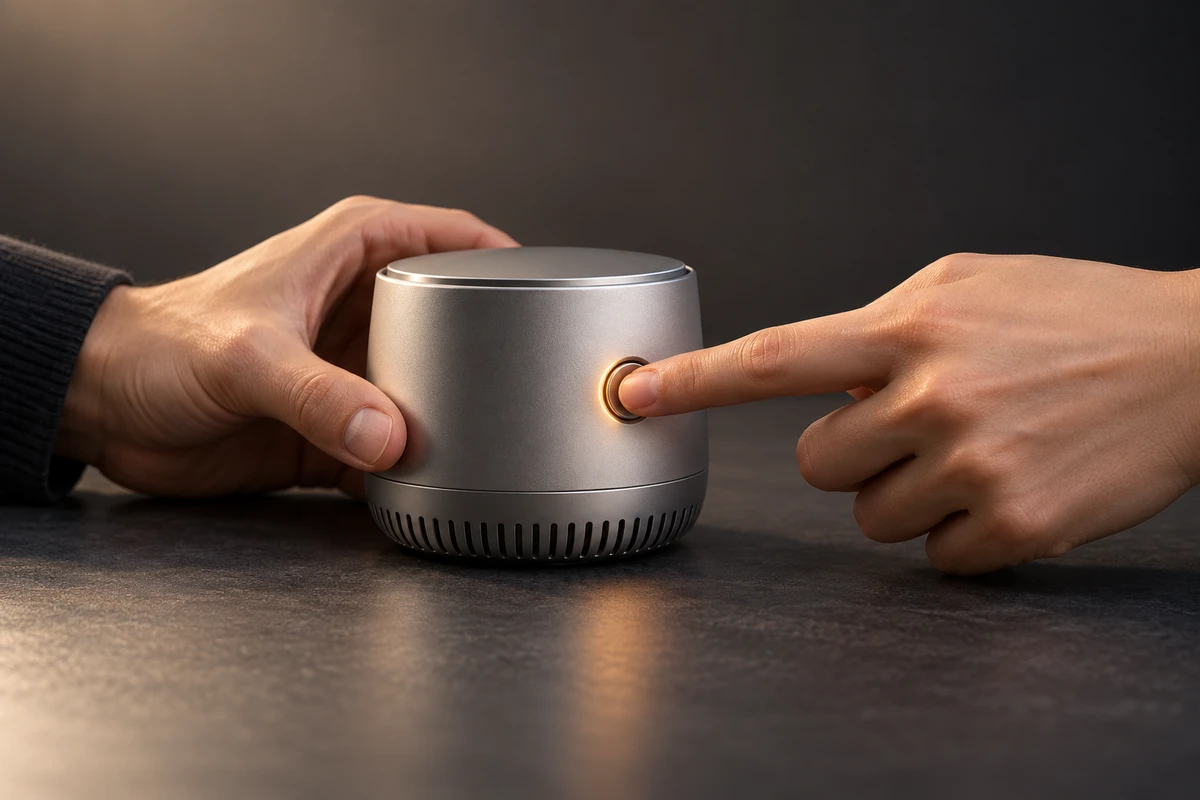
A hand enters the frame, lifts the product, presses a button, and leaves with perfect control. The skin looks polished. The product looks expensive. Yet the viewer still cannot tell how far the button moved, when the device responded, why the lid opened, or what changed after the action.
The problem may not be the product or the hand model. The shot has captured the appearance of an action without showing how that action affects the product. In product advertising, hand acting has a more important job: turning a feature into visible cause and effect.
Hand acting is a functional interface, not decoration
Product demonstrations often skip the very process that helps viewers understand a function. A peer-reviewed study of digital product demonstrations compared process-focused presentations with outcome-focused ones. Across five studies, the authors found that step-by-step process demonstrations encouraged cognitive flow under the tested conditions and influenced purchase intention. The research does not guarantee performance for any individual ad, but it does offer a useful creative warning: if a film keeps only the beautiful end result, it may remove the viewer's way into the product logic. Read the study record from the University of Manchester.
A good hand shot can compress that logic into seconds. It should preserve five connected moments:
- Preparation: why the hand approaches and where force will come from.
- Contact: where the fingertip, finger pad, or palm meets the product.
- Force: what moves, bends, resists, or pauses.
- Feedback: what clicks, rebounds, lights up, unlocks, or sounds.
- Result: what remains changed after the hand releases.
These moments do not require five separate shots. They simply cannot all disappear behind styling, framing, or an energetic edit.
Viewers read the hand-product relationship, not just a gesture
People do not grasp every object in the same way. An open-access grasping study found that finger placement changed with object shape, weight, and the intended end goal. Even with the same bottle, moving it and preparing to pour from it produced different finger configurations. See the PLOS ONE study.
Action observation research adds another useful clue. When the width of an observed grasp did not match the size of the object, the usual action-compatibility effect was reduced. The experiments were not advertising tests, but they support a practical inference: viewers integrate what a hand is doing with what the object appears to permit. Read the full open-access paper.
That is why an attractive hand is not the complete casting brief. The action must fit the product. Will the nails obscure a scale? Will the palm cover the brand mark? Can the fingers reach the control naturally? Does the grip acknowledge the product's weight and center of mass? If a product promises one-handed operation while a second hand quietly stabilizes it throughout the shot, the picture is already arguing against the claim.
Pick up, press, open, place: every action needs a result
Pick up: begin with the center of mass
Picking up a product is more than movement from table to air. Viewers infer weight from finger aperture, wrist adjustment, and the instant the product leaves its support. A lightweight object gripped too tightly can feel cumbersome. A weighty object lifted without preparation by two relaxed fingers may feel physically unconvincing.
Let the hand make a small alignment before contact, then show the product separating from the surface. That preparation often communicates more than slowing the entire move. It connects with our earlier article on communicating product weight, but the focus here is different: not how the image creates weight, but how the performance acknowledges real weight.
Press: keep displacement and feedback on one causal line
Button shots often show a fingertip landing and then cut to a lit product. If the press travel, rebound, or sound is missing, the illumination can feel added in post rather than triggered by the action.
A readable press has a direction, a distance, and an endpoint. The camera angle should reveal the finger's movement. Lighting should preserve a slight change at the edge or surface of the control. The product response should follow the application of force. A touch interface has no mechanical travel, so its completion may need to come from interface response, a deliberate pause, or sound. But sound should not invent a mechanical click that the product does not make.
Open: resistance proves the structure exists
Unscrewing a cap, lifting a lid, or releasing a catch all require a transition from locked to free. If an edit jumps directly from closed to open, the package mechanism loses credibility.
Opening often needs a second point of support. One hand stabilizes the body while the other applies force. Their roles, directions, and release momentum should agree with the real structure. The performer does not need an exaggerated expression of effort. The shot needs the moment when resistance gives way.
Place: the action does not end when the hand leaves
Placing a product communicates its landing, stability, and relationship with the surface. A precision device dropped casually can change the brand tone in half a second. A base promoted as stable should not wobble after contact.
A complete placement lets the hand confirm stability before leaving. It can be fast to communicate efficiency or slower to communicate care. The speed should come from the product and use context, not from a universal formula for premium slow motion.
Camera and editing should protect the contact moment
Closer is not always clearer. Extreme macro can enlarge skin texture while cropping out wrist direction, the second support point, or the product's overall state. Start with the question the viewer must answer. If force direction matters, retain the joint and product axis. If button travel matters, a side view can reveal more than a frontal hero angle. If one-handed use is the claim, the composition must not make off-screen assistance suspicious.
Edit points should follow more than music. When preparation, contact, and feedback cross a cut, finger position, product orientation, and motion speed must remain coherent. Otherwise, two beautiful shots combine into what feels like two different operations.
Motion blur also affects readability. Sony's official movie-recording guide explains how frame rate and shutter speed shape motion blur: a faster shutter can make individual frames clearer, while continuous playback may feel choppier. The goal is not to freeze every action. It is to choose the right balance between a legible contact moment, fluid movement, and material detail. See Sony's movie-recording basics.
Sound can reveal resistance, but it must not lie for the product
Hand-object interaction may produce very small sounds: skin friction, a button bottoming out, a catch releasing, metal seating, or a housing resonating. Their purpose is not spectacle. They can complete information about resistance and completion that the image alone does not reveal.
Separate four sound functions: contact begins, force continues, structure releases, and the action completes. If every interaction receives the same crisp click, different materials and mechanisms collapse into one imaginary product. Production sound can provide timing and material reference before deciding what to clean, reinforce, or recreate with Foley.
Let contact difficulty decide the roles of live action, CG, and AIGC
Hand-product contact remains a demanding area for generated video. Two CVPR 2025 projects, ManiVideo and Re-HOLD, introduce specialized hand structures, object layouts, or motion signals to improve plausible manipulation and interaction reenactment. Their methods show meaningful progress, but they also demonstrate why a generic prompt is not equivalent to a controllable, verifiable product operation. See ManiVideo and Re-HOLD.
When the product promise depends on exact button position, fingertip force, two-hand coordination, or continuous opening and closing, live action usually provides the most direct record of product fact. CG is useful for internal mechanisms, invisible transitions, and tightly controlled transformations. AIGC is often better suited to environments, stylistic expansion, and connective shots that do not carry the burden of functional proof.
A hybrid production is not stronger because every technology appears somewhere. It is stronger when the least verifiable technique is not asked to prove the most important function.
Test the action before drawing the beautiful storyboard
Before the storyboard is polished, record one real operation on a locked phone camera. Do not add music, slow motion, or an edit that hides mistakes. Then ask three questions: When does the hand begin to apply force? When does the product respond? After the action ends, can a viewer explain what happened?
If those moments do not exist in the rough test, lighting, casting, and post-production will usually make the problem look more expensive, not more intelligible. Once the causal action is clear, cinematography, art direction, editing, and sound can turn it into brand expression.
If your product needs to be understood through picking up, pressing, opening, or placing, ONCE VISUAL can design the action test, storyboard, live-action shoot, and CG or AIGC extensions as one coherent product advertising production plan.