Assessing the Controllability of AI-Generated Imagery During Project Initiation
Before launching an AIGC commercial project, brands and production teams must jointly conduct a controllability stress test. The core purpose is to confirm the current model's reproduction limits for specific product forms, typography, and human anatomy. We recommend selecting three to five key selling-point shots as test samples and running multiple generation cycles using the same prompt strategies and parameters intended for actual production. If the error rate for critical product structures exceeds acceptable thresholds or the proportion of legible text falls below expectations across twenty consecutive generations, the shot should be deemed unsuitable for a pure AI generation workflow.
The evaluation process must document failure types and correction costs for each generation. For instance, abnormal finger joint counts are structural errors typically unfixable via local inpainting, whereas lighting inconsistencies are stylistic issues mitigatable through color grading. Categorizing errors helps formulate contingency plans. If testing reveals recurring errors without stable solutions, risks must be explicitly noted in project documentation, with backup budgets reserved for traditional filming or 3D modeling. Skipping this step often leads to endless revision loops during post-production, ultimately delaying delivery or forcing compromised quality standards.
During pre-production, the team must establish standardized prompt libraries and parameter archives. Seed values, sampling steps, and control weights from every test generation must be fully recorded, as this data forms the technical foundation for subsequent batch generation. Live-action base image libraries and 3D white models should also be prepared; when pure generation fails, these assets can serve as control bases directly integrated into the pipeline. Comprehensive pre-production materials provide greater flexibility when addressing structural defects later.
Matching Principles for Scenes and Personnel Allocation
AIGC commercial production teams differ significantly from traditional film crews. Upon project launch, four core roles must be established: AIGC Director, Prompt Engineer, Post-Production Compositor, and Art Director. The AIGC Director oversees overall visual tone and generation logic. The Prompt Engineer specializes in constructing and debugging generation instructions. The Post-Production Compositor handles edge artifacts and texture repairs. The Art Director ensures the final imagery complies with brand visual standards.
Staffing adequacy is determined by response times across all stages. If a prompt engineer takes over four hours to adjust instructions and generate test frames, it indicates bottlenecks in compute scheduling or personnel skills. In such cases, add parallel processing nodes or engage external technical support. For scene planning, define the boundaries between live-action shooting and AI generation in advance. For scenes combining live action and AI, on-site scouts must capture HDRI environment maps and reference photos to ensure AI-generated lighting aligns seamlessly with live footage.
Personnel assignments must also clarify modification permission levels. Prompt engineers may only adjust generation parameters and must not directly modify output frames. Post-production compositors handle defect repairs, but structural product changes require AIGC director approval. Establishing a clear permission hierarchy prevents version conflicts caused by simultaneous multi-user edits. All team members must work on a unified asset management platform, performing daily asset synchronization and version locking at fixed times.
Shooting Execution and Live-Action Asset Capture Standards
When a project uses a hybrid virtual-live production approach, on-set execution must follow strict capture protocols. The first step is multi-angle fixed-position shooting of the product using a full-frame camera, including documentation of the key light direction within the scene. For human interaction scenes, models must perform segmented actions per the storyboard, prioritizing close-ups of hand-product contact. These live-action assets serve as the foundational structure for AI stylization transfer.
Live-action asset quality is judged by edge sharpness and complete lighting information. Hand footage must clearly show bone structure and skin texture without motion blur. Product footage must retain sufficient highlight and shadow detail, avoiding pure black areas. A standard color chart and gray ball must be photographed on set for post-production color space unification and lighting matching. Footage with focus errors or overexposure is strictly prohibited from entering the AI pipeline and requires immediate reshoots.
Production must also capture environmental establishing shots and background elements. AI often generates perspective errors in backgrounds; real-world environment assets serve as reference images to guide generation. For highly reflective products, use polarizing filters on set to eliminate stray light while preserving material texture. All captured assets must be immediately backed up to dual hard drives and organized by shot number to ensure rapid retrieval during post-production.
Structured Visual Asset Checklist Required from Brands
AIGC ad quality depends heavily on input data precision. Brands must submit a structured visual asset package containing at least high-resolution six-view product photos, dimensioned engineering drawings, official color specifications, font source files, and licensing proof. For shots involving human interaction, provide model hand close-up references, action breakdown diagrams, and clothing texture details. All images must be in RAW or lossless format to prevent JPEG artifacts from interfering with AI texture interpretation.
Missing data directly causes generation errors. For example, lacking rear product photos leads AI to hallucinate structures inconsistent with the physical item. Without font files, generated text appears as mere symbols unsuitable for commercial release. The production team must verify asset completeness within 48 hours of receipt and provide written feedback on missing items. If critical assets cannot be supplied, both parties must renegotiate shot execution or adjust the creative script. Never assume AI can auto-fill information gaps; this assumption causes most AIGC project rework.
Preprocessing Standards for Hands and Human Anatomy
Hands are currently one of the most error-prone areas in AIGC. Even with the latest models, finger proportions, nail shapes, and joint articulation frequently appear distorted. The best strategy is to avoid high-risk compositions during pre-production. During scripting, avoid designing shots featuring complex hand gestures, overlapping hands, or hands holding small objects. If such actions are essential to the narrative, prioritize using live-action hand footage as a control base before applying AI stylization.
When purely AI-generated hands are unavoidable, include anatomical constraints in the prompt and use pose control tools to lock the skeletal structure. Generated output must be reviewed frame-by-frame by personnel with art training, focusing on thumb opposition, finger segment ratios, and skin fold direction. Minor flaws should be immediately flagged for local inpainting. If repairing a single frame takes over fifteen minutes, discard the result and adjust the prompt or control method. Allowing low-quality hand imagery into editing will severely damage the brand's professional image.
Principles for Separating Text and Logo Generation
AI-generated text essentially mimics glyph patterns without semantic understanding. Therefore, all readable text, brand logos, and product specifications must be produced separately from the background. The correct workflow is to generate a clean, text-free background with AI, then overlay licensed vector text layers in design software. Attempting to have AI directly render correctly spelled brand names or technical specs has an extremely low success rate and incurs high post-production correction costs.
Even when creating only a textual atmosphere, such as blurred signs or book covers in the background, explicitly instruct the AI that no readable content is needed in that area. Add restrictive terms to prompts to prevent plausible-looking gibberish from distracting viewers. Before delivery, verify every visible text element frame-by-frame against brand guidelines, including font weight, spacing, color, and copyright status. No AI-generated text may appear in the final cut without manual verification; this is a fundamental baseline for legal compliance and brand safety.
Post-Production Repair Pathways for Product Edges and Materials
When processing highly reflective, transparent, or textured products, AI often produces melting edges, structural distortions, or material inconsistencies. These issues cannot be resolved solely through prompt optimization; a dedicated post-production repair pipeline is required. Repairs should begin with mask precision, using rotary brushes or depth map tools to accurately extract product contours while avoiding excessive feathering that causes soft edges. Structural errors require manually rebuilding geometric relationships using product engineering drawings before using AI to fill in texture details.
Material restoration requires special attention to consistent environmental reflections. AI-generated product surfaces often lack realistic lighting logic, causing them to disconnect from the scene. During repair, extract environment maps from live footage or 3D renders and overlay them onto the AI layer via blending modes to match highlights and shadows with surrounding objects. For products with dynamic properties, such as flowing liquids or fluttering fabric, process keyframes in segments with interpolated transitions to prevent temporal flickering or abrupt changes. All repair operations must retain original generation layers to allow modification tracking during client review.
Error-Tolerant Design in Storyboarding and Scripting
Effective AIGC commercial scripts inherently incorporate error-tolerance mechanisms. Writers and directors should anticipate AI capability limits during conception, proactively designing replaceable and trimmable flexible shots. For example, break long takes into multiple short cuts to reduce per-frame complexity. Reserve static close-up backups for key product displays in case dynamic generation fails. In dialogue scenes, favor over-the-shoulder shots or partial close-ups to minimize full-body action requirements. This proactive design significantly enhances production efficiency and final output stability.
When drawing storyboards, mark the AI compatibility level for each shot. Highly compatible shots can proceed directly to generation, moderately compatible shots require control plans, and low-compatibility shots should be marked as backups or removed. The post-production supervisor must attend storyboard reviews to ensure creative concepts and technical feasibility are aligned. If multiple key shots fall into the low-compatibility range, adjust the creative direction promptly. Compromising during scripting is far more cost-effective than fixing issues in post-production.
Compositing and Quality Control Workflow in Post-Production
Upon entering post-production, the first step is to set up a layered compositing project. AI-generated assets must be separated into foreground subjects, midground environments, and background atmosphere. Compositors must perform color matching and spatial perspective correction on each layer. Compositing quality is judged by consistent lighting direction across all elements. If highlights on the product come from the left while background lighting comes from the right, lighting must be repainted using digital matte painting techniques or the background layer replaced.
The quality control process requires frame-by-frame review. For shots with motion, use onion skinning to check edge continuity between adjacent frames. Wavy flickering on product edges indicates temporal instability in AI-generated edges, requiring stabilization tracking tools to re-anchor contours. Create dedicated inspection layers for faces or hands, zooming to 200% to detect pixel-level defects. All repaired shots must be exported as low-bitrate preview videos for internal review; only after confirming no flickering or structural errors may they proceed to fine editing.
Tiered Acceptance Standards for AIGC Commercials
AIGC projects should not follow the traditional single-final-cut review model but instead adopt tiered, progressive acceptance. Tier one focuses on basic asset quality, including structural accuracy, text compliance, and edge integrity; unqualified assets cannot proceed to editing. Tier two evaluates narrative continuity and pacing, allowing minor flaws that do not affect communication but must be documented. Tier three is final refinement confirmation, reviewing only repaired keyframes without accepting further structural changes.
Each acceptance tier requires a signed confirmation form specifying passed items, pending fixes, and exemptions. The brand must provide specific revision feedback within the agreed timeframe, avoiding vague language. The production team must supply before-and-after comparisons and repair notes to help clients understand technical limitations and trade-offs. If a shot fails to meet standards after three repair attempts, activate contingency plans and switch to alternatives rather than refining indefinitely. Standardizing the acceptance process is key to ensuring on-time delivery and mutual trust.
Delivery Specifications and Risk Retention
Formal delivery begins upon acceptance approval. The production team must compile a complete project package containing raw generated assets, prompt logs, parameter configuration sheets, layered compositing projects, and the final video. All files must follow unified naming conventions, and handover documentation must specify the generation models and repair tools used for each shot. Delivery compliance is determined by file traceability. Deliverables are considered complete and valid if client technicians can reproduce the generation and repair processes using the handover documentation.
Regarding risk retention, potential legal risks must be noted in deliverables. For example, assets generated with open-source models must include the relevant license documentation. If AI-generated virtual characters appear, proof that they do not resemble living persons must be provided. Brands must also be informed of copyright registration requirements for AI-generated content in specific countries or regions. Production teams must remind brands to monitor regulatory changes and retain a three-month technical support period post-delivery to address potential asset compliance inquiries.
Identifying Unsuitable Scenarios for AIGC Commercials
Despite rapid advancements in AIGC technology, clear application restrictions remain. Videos involving precision mechanical demonstrations, medical procedures, food safety certifications, or legal evidence should not use AI-generated imagery. These fields demand extreme visual accuracy, and even minor distortions can trigger compliance risks or public skepticism. Similarly, for content emphasizing craftsmanship, authentic human connection, or brand heritage, AI struggles to convey genuine warmth and credibility, and its forced use may undermine brand value.
Projects with extremely low budgets and tight deadlines are also unsuitable for AIGC. In practice, AIGC imposes higher demands on pre-production planning, asset preparation, and post-production correction. Without sufficient time for testing and iteration, the final output is often less reliable than traditional simple filming. Furthermore, in markets where target audiences are highly sensitive to or hold negative views on AI content, public opinion risks must be carefully assessed. In these scenarios, honestly choosing more mature production methods is the truly responsible approach for the brand.
Recommended Next Steps
If you are considering an AIGC commercial project, we recommend organizing existing visual assets and clarifying core communication goals before conducting small-scale feasibility tests with a team experienced in AIGC execution. ONCE provides AIGC commercials, AI product videos, and brand AI video workflow services, assisting you with end-to-end management from project evaluation to final delivery. Please visit our website to review our service scope and submit a project brief; we will offer practical technical recommendations based on your specific needs. Rational assessment, thorough preparation, and step-by-step validation provide a solid foundation for effectively integrating AI into brand content creation.
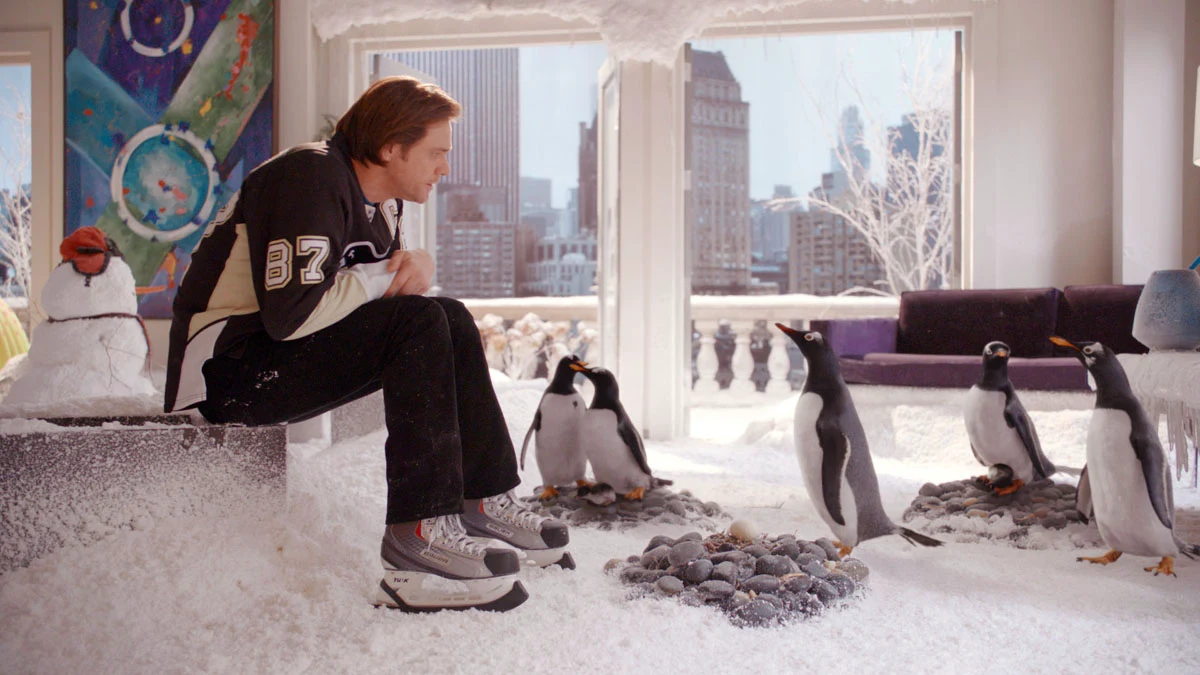
If you are preparing an AIGC commercial project, start by organizing your brief, reference images, product or corporate materials, delivery platforms, and copyright scope before reviewingAIGC Video Services Page, translating abstract preferences into actionable production boundaries.