Visual Definition of Extra Order During Project Initiation
At the start of a TVC commercial project, the brand and production team must reach a visual consensus on order. Order refers to the high alignment between extras' behavioral logic and brand tonality. If the script requires grand narratives or group resonance, extras' positioning density, gaze direction, and movement amplitude must be included in storyboard design. At this stage, confirm whether crowd dynamics in reference visuals are static backgrounds or dynamic narrative elements. If used as background, the focus is on color blocks and compositional balance. If used as narrative elements, individual movement trajectories must be detailed. Skipping this step leads to vague on-set instructions and increased post-production repair costs.
Specifically, the director must output crowd coordination concept maps, defining the function of extras in each shot. The criterion is whether the concept map can be directly translated into on-set positioning coordinates by the director of photography and assistant director. If the concept map remains at the level of emotional description, it must be refined to the spatial position level.
Material Preparation and Selection Criteria in Pre-Production
Brands must provide clear core selling points and audience profiles so casting directors can match extra temperaments. The production team must develop a detailed extra coordination schedule based on the storyboard, including headcount, gender ratio, age range, and clothing color schemes. When selecting extras, beyond appearance, assess their ability to understand instructions and cooperate. For shots requiring complex movements, organize rehearsals or provide video demonstrations in advance. Clarify copyright scope to ensure extra likeness rights cover all intended distribution channels. Ignoring authorization details may lead to legal risks or forced reshoots later.
Specific actions include building a visual archive for extras, with full-body photos, half-body photos, and motion videos for each person. Clothing colors must be strictly screened against the palette provided by the art director. The criterion is whether extras blend into the scene's color system after fitting without visually conflicting with main actors. Likeness release forms must be reviewed by legal counsel to confirm no geographic or time restrictions.
Physical Assessment of Scene Environment and Personnel Arrangement
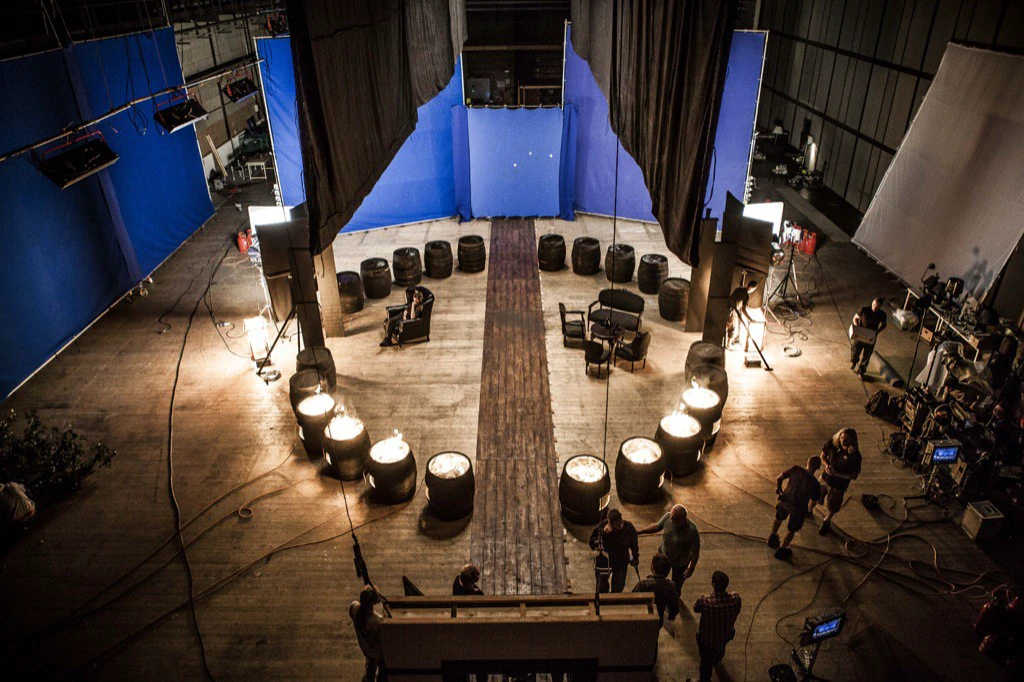
Establishing extra order relies on rational planning of physical space. The production team must precisely calculate venue capacity during location scouting to confirm the safe number of people per unit area. If the site has elevation changes, obstacles, or narrow passages, extra movement routes must avoid these bottleneck areas. For personnel arrangement, divide extras into functional groups and assign leaders to relay assistant director instructions. Each group needs independent rest and dining areas to prevent cross-movement from interfering with filming.
Specific actions include drawing a site plan marking extra positions, movement trajectories, and main actor paths. The criterion is whether trajectories on the plan have crossing conflict points and whether the distance from rest areas to filming zones is too long. If the venue cannot accommodate the planned number, immediately feedback to the directing team to adjust storyboards or adopt segmented shooting strategies.
On-Set Coordination Logic and Risk Control
On-set execution is key to establishing visual order. The directing team must designate a dedicated extra coordinator to convey instructions and maintain discipline. Rehearse movements before shooting to ensure extra paths do not conflict with main actors or block key product exposure. Lighting technicians must adjust lighting plans based on extra distribution to avoid messy shadows from crowd movement. The director of photography must anticipate the impact of extra movement on focus, using deep depth of field or follow-focus strategies if necessary. If uncontrollable factors arise, such as loss of expression or action deviation, pause shooting immediately for individual guidance; do not rely entirely on post-production fixes.
Specific actions require assistant directors to use amplification equipment for zone-based command, with hand signals or flag signals as auxiliary cues. Lighting technicians must set base light for extra areas to prevent severe facial shadows during movement. The criterion is whether extras can reach designated coordinates accurately within three instructions during rehearsal, and whether product logo exposure duration meets script requirements. If chaos persists after multiple rehearsals, simplify movement logic.
Matching Execution of Lens Language and Extra Dynamics
Visual tension in TVC commercials comes from precise coordination between camera movement and extra dynamics. Camera trajectories must align with or form reasonable angles to main extra movement lines, avoiding reversechuan cha that causes visual fragmentation. For shots showing crowds running or walking briskly, set uniform step frequency and start times. Directors must clarify where extras look: at the product, main actors, or straight ahead. Scattered gazes directly destroy visual cohesion.
Specific actions include creating a timeline table for camera movement and extra coordination, precise to the second. Mark extra gaze points on the ground with tape. The criterion is whether extra step frequency synchronizes with camera speed in the monitor view, and whether gaze focus concentrates on predetermined markers. If gazes wander, reshoot the take immediately.
Order Reconstruction and Detail Polishing in Post-Production
During editing, review the rhythm of extra shots to ensure group actions sync with music beats or voiceover emotions. If minor flaws exist from shooting, use digital intermediate techniques for local adjustments, such as removing visible crew or correcting inconsistent actions. Color grading must unify the color relationship between extra clothing and the environment to enhance overall texture. Sound design is also important; process ambient noise from extras to prevent clutter from interfering with core message delivery. If using CGI or AIGC to supplement crowds, ensure natural light-shadow matching and movement patterns to avoid the uncanny valley effect.
Specific actions include editors cutting extra action peaks according to audio waveforms. Colorists must create secondary grading nodes for extra clothing to unify hue and brightness. The criterion is whether the dynamic rhythm of the extra group coincides with music drumbeats, and whether group colors form a harmonious overall block in the frame without abrupt highlights or stray colors.
Multi-Dimensional Acceptance Checklist and Delivery Standards
Acceptance should proceed in stages. The rough cut focuses on checking narrative logic and basic extra positioning accuracy. The fine cut confirms rhythm, color grading, and sound mixing effects. Before delivering the final master, verify subtitle accuracy, copyright marks, and platform specification requirements. Brands should compare against previously confirmed storyboards and reference visuals, focusing on whether extra scenes convey the expected sense of order and brand tonality. Record all revision comments in writing to avoid omissions from verbal communication. Archiving source and project files is part of the delivery, facilitating future secondary creation or version iterations.
Specific actions include creating a quantitative scoring sheet covering extra positioning accuracy, gaze direction, and clothing color consistency. The criterion is that all metrics meet the baseline set by the storyboard, and extra likeness release files correspond correctly to the final footage. If an extra's performance in a shot is substandard and cannot be fixed in post-production, mark it on the acceptance form and arrange a reshoot plan.
Assessment of Inapplicable Scenarios and Alternatives
Not all TVC commercials suit large-scale extra coordination. If budgets are limited or schedules tight, forcing large crowds may lower execution quality. Consider alternatives like small-sample repeated shooting, forced perspective tricks, or digital generation. For creatives emphasizing individual emotion or product details, too many extras may distract viewers. Additionally, in narrow spaces or special venues, extra numbers are limited by physical conditions, requiring creative adjustments. Brands should assess resource matching during project initiation to choose the optimal execution path.
Specific actions include listing the ratio of extra count to venue area in production meetings. If the ratio exceeds safe capacity, trigger the alternative assessment process. The criterion is whether the alternative can achieve narrative goals without losing visual quality. For example, when using digitally synthesized crowds, check if perspective matches the live-action environment; mismatched perspective renders the solution unusable.
Risk Contingency Plans and On-Set Emergency Response
Extra coordination involves managing many people, making on-set emergencies likely. Sudden weather changes may prevent outdoor extras from wearing specified costumes as planned. Late arrivals or last-minute absences disrupt positioning layouts. Keep backup costumes and rain gear on site. Assistant directors must manage an extra substitution mechanism, quickly promoting background extras to fill key positions if needed. For extras involved in dangerous actions or complex scenes, equip safety personnel and first aid kits.
Specific actions include creating a tree diagram for extra substitutes, identifying backups for each key position. The criterion is whether filming can resume within fifteen minutes after an emergency. If the substitution mechanism cannot meet positioning requirements, the director must have backup storyboard adjustments ready to ensure shooting progress is not blocked.
Next Step Recommendations
Marketing heads are advised toshu li existing brand assets and communication goals before starting new projects, clarifying the functional role of extras in visuals. When communicating with production teams, provide specific reference cases and prohibitions to reduce trial-and-error costs. For complex crowd coordination, request detailed contingency plans and alternatives from producers. Through refined pre-production planning and strict on-set control, ensure TVC commercials achieve professional visual order, effectively supporting brand communication intent.
Specific actions include building a project review database, archiving extra coordination sheets, site plans, and acceptance reports from each shoot. The criterion is whether this database provides directly usable reference templates for the next TVC commercial, thereby shortening pre-production communication time and improving overall production efficiency.
If you are preparing a TVC commercial project, first organize the brief, reference visuals, product or corporate materials, delivery platforms, and copyright scope, then viewthe TVC commercial service pageto translate abstract preferences into executable production boundaries.